

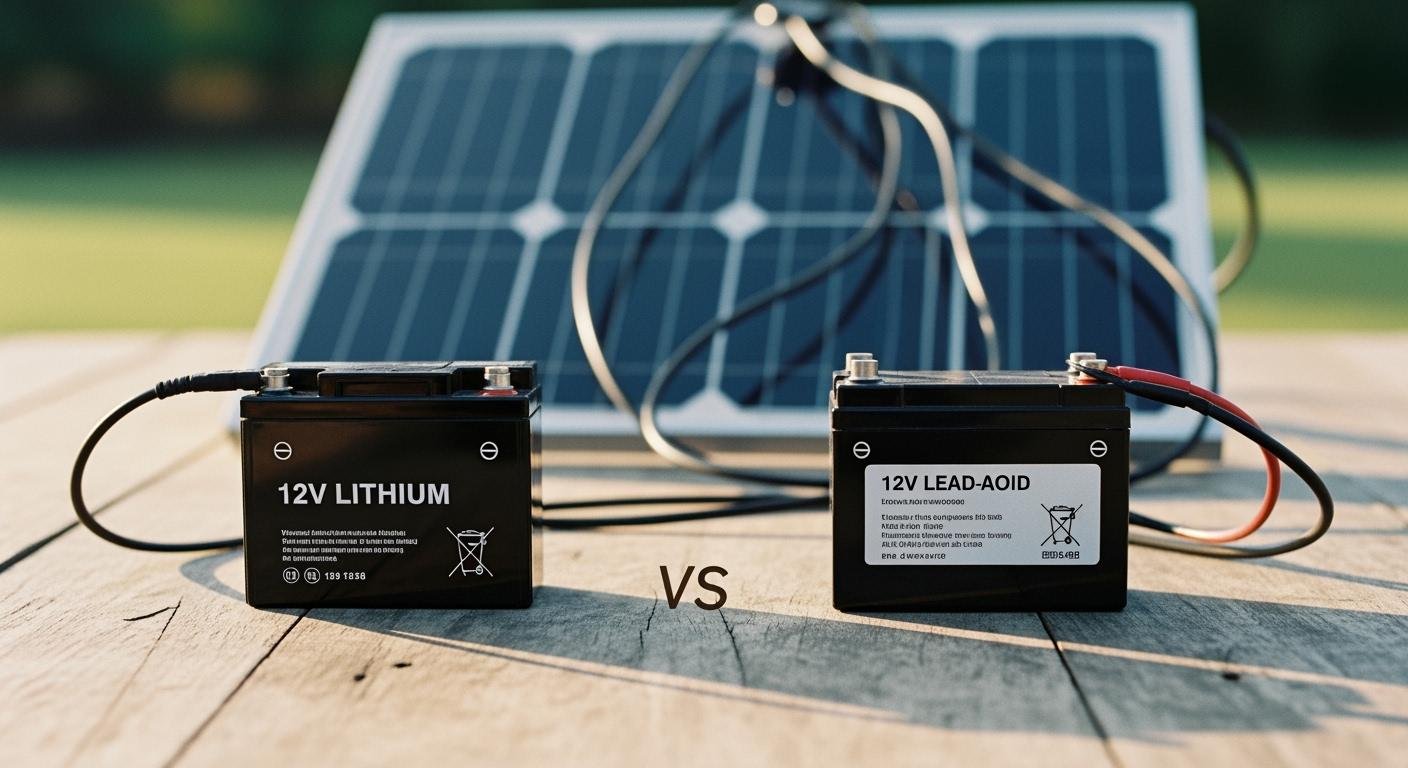
If you want reliable solar power, 12v lithium batteries offer better performance and longer lifespan than lead-acid batteries. You get more usable energy, safer operation, and less maintenance. LiFePO4 stands out as the top choice among lithium-ion batteries for solar setups. Many people believe lead-acid batteries work better in cold weather or cost less overall. In reality, lithium batteries retain more capacity in cold temperatures, and their total cost of ownership is often lower. Some think lead-acid chargers work for lithium batteries, but they do not charge them fully. Both battery types have safety risks, but lithium batteries are safe when used correctly.
- Common misconceptions about batteries for solar power:
- Lithium batteries perform better than lead-acid in cold conditions.
- Lead-acid chargers cannot fully charge lithium batteries.
- Both batteries have safety concerns.
- Lithium batteries can cost less over time.
Quick Answer: 12V Lithium Batteries or Lead-Acid for Solar?
Main Recommendation
If you want the best results for your solar power system, you should choose 12v lithium batteries, especially lifepo4. These batteries give you more usable energy, last much longer, and need almost no maintenance. You can use more of the battery’s capacity each day, which means you get more out of every charge. Lifepo4 batteries also work well in many conditions and keep your solar power running smoothly.
Here is a quick comparison to help you see the main differences:
| 特点 | Lithium (LiFePO4) | 铅酸 |
|---|---|---|
| Depth of Discharge | 80-100% usable capacity | 50% usable capacity |
| Round-Trip Efficiency | 95% or higher | 80-85% |
| Charge/Discharge Rates | Higher rates possible | Slower, controlled rates |
| 周期寿命 | 3,000 to 7,000 cycles | 300 to 1,000 cycles |
| Maintenance Requirements | Virtually maintenance-free | Regular maintenance needed |
You can see that lifepo4 batteries give you more energy, last longer, and are easier to care for. Lead-acid batteries need regular checks and can only use half their capacity without damage. Lifepo4 batteries let you use almost all their stored energy, so you get more power for your needs.
小贴士 If you want a battery that will last for years and give you the most energy for your solar power system, lifepo4 is the top choice.
Why LiFePO4 Is Preferred
Lifepo4 batteries stand out among all lithium-ion batteries for solar use. You get a battery that is safe, strong, and reliable. Lifepo4 batteries can handle over 3,000 charge cycles, which means they can last 10 至 15 年 or more. You do not have to worry about regular maintenance or losing power quickly over time.
Here are the main reasons you should pick lifepo4 for your solar setup:
- Lifepo4 batteries are much safer than other lithium types. They do not catch fire or explode easily, even if damaged.
- You get a long lifespan, which means you save money over time. Lifepo4 batteries can last up to 15 years.
- Lifepo4 batteries work well in high temperatures and can take more physical stress.
- You do not need to check water levels or clean terminals. Lifepo4 batteries are almost maintenance-free.
- These batteries give you more usable energy every day. You can use up to 100% of their capacity without hurting the battery.
- Lifepo4 batteries have a built-in battery management system. This system protects against overcharging, deep discharging, and overheating.
When you compare costs, you might see that lifepo4 batteries cost more at first. Over time, you spend less because you do not need to replace them as often. You also save money on maintenance and get more energy from each charge. This makes lifepo4 the best value for solar power in the long run.
请注意: Lifepo4 batteries are the safest and most reliable choice for solar energy storage. You get peace of mind and steady power for your home, RV, or off-grid setup.
12V Lithium Batteries and Lead-Acid: What’s the Difference?
12V Lithium Batteries Overview
When you look at 12v lithium batteries, you see a modern solution for storing energy. These batteries use lithium compounds and graphite inside sealed cases. The design keeps leaks from happening and makes the batteries lightweight. You get 高能量密度, which means you can store more energy in a smaller space. Lifepo4 stands out among lithium-ion batteries because it lasts longer and works safely. You can use lifepo4 batteries for solar power systems, backup power, and off-grid setups. Lifepo4 batteries let you use almost all their stored energy, so you get more power for your needs. You also find that lifepo4 batteries have a low self-discharge rate, so they keep their charge longer.
| 电池类型 | Composition | Design Characteristics |
|---|---|---|
| 铅酸 | Lead dioxide (cathode), sponge lead (anode), sulfuric acid (electrolyte) | Cells connected in series, available in flooded and sealed designs. Reliable, robust, high surge currents. |
| 锂离子电池 | Graphite anode, lithium compound cathode, electrolyte facilitating ion movement | Sealed design preventing leakage, intercalation of lithium ions. High energy density, lightweight, long cycle life. |
Lead-Acid Batteries Overview
Lead-acid batteries have been used for many years. You find them in cars and large solar batteries. These batteries use lead plates and sulfuric acid to store energy. The design can be flooded or sealed. Flooded types need regular checks and water refills. Sealed types need less care but still weigh more than lifepo4 batteries. Lead-acid batteries give strong surge currents, but you can only use half their energy before you risk damage. You also see that lead-acid batteries are heavier and bulkier than lifepo4 batteries.
- Lithium-ion batteries have an energy density exceeding 150 Wh/kg.
- Lead-acid batteries have an energy density around 45−50 Wh/kg.
- Lithium-ion batteries are lighter and more compact, providing higher energy density.
- Lead-acid batteries are heavier and bulkier, requiring more space for the same energy output.
Common Solar Uses
You use different types of solar batteries for different jobs. Lifepo4 batteries work best for off-grid systems, recreational vehicles, and backup power. Lead-acid batteries still serve in vehicle starting, large energy storage, and some solar power systems. You see lifepo4 batteries in modern solar setups because they last longer and need less care. You choose the right types of solar batteries based on your needs, space, and budget.
| 电池类型 | 常见应用 |
|---|---|
| 12V Lithium | Off-grid systems, recreational vehicles, backup power solutions |
| 铅酸 | Vehicle starting, large energy storage, solar power systems |
Tip: Lifepo4 batteries give you more usable energy and last longer than other types of solar batteries. You get better results for solar power when you choose lifepo4.
Lifespan and Durability of Solar Batteries
Cycle Life Comparison
When you choose solar batteries, you want them to last as long as possible. Lifepo4 batteries give you much more stability and durability than lead-acid batteries. You can see the difference in how many times you can charge and discharge each type. Lifepo4 batteries often reach thousands of cycles, while lead-acid batteries wear out much faster. The table below shows how cycle life compares:
| 电池类型 | Average Cycle Life (Cycles) |
|---|---|
| Lithium (High-Quality) | 3,000 – 15,000 |
| 铅酸 | 300 – 500 |
If you use lifepo4 batteries in your solar power system, you get years of reliable energy. Lead-acid batteries need replacement much sooner, which means more work and higher costs over time. Lifepo4 batteries offer better stability and keep your solar setup running smoothly.
Tip: Lifepo4 batteries help you avoid frequent battery changes and give you more stability for your solar power needs.
Performance Over Time
You want your solar batteries to keep their performance steady year after year. Lifepo4 batteries deliver strong stability and energy output even after thousands of cycles. Lead-acid batteries lose performance quickly, especially if you use them in tough conditions. Here is what you can expect:
- Lifepo4 batteries can last up to 15,000 cycles with proper care. You get stable performance and reliable energy for many years.
- Lead-acid batteries usually last for 1,000 cycles or less. Their performance drops faster, and you lose energy over time.
- Lifepo4 batteries run up to 45% longer than lead-acid batteries in real solar setups.
- You get better stability with lifepo4 batteries, so your solar power system works well without surprises.
If you want the best performance and stability for your solar batteries, lifepo4 is the top choice. You get more energy, longer life, and less worry about battery failure.
Note: Lifepo4 batteries give you the most stability and performance for solar power. You save time and money by choosing batteries that last.
Performance: 12V 100Ah LiFePO4 Battery vs Lead-Acid
Charging and Discharging
When you use a 12v 100ah lifepo4 battery in your solar setup, you get fast charging and discharging. These batteries accept higher charge rates, so you can fill them up quickly when the sun shines. Lead-acid batteries charge slower and need careful control to avoid damage. You lose less energy with lifepo4 batteries because they have a round-trip efficiency over 90%. Lead-acid batteries only reach about 85%, so you waste more energy during each cycle. This difference matters when you want to get the most out of your solar power.
Here is a table that shows how cycle life and usable capacity compare:
| 特点 | LiFePO4 Battery | Lead-Acid Battery |
|---|---|---|
| Cycle Life (80% DoD) | 3,000 – 7,000+ Cycles | 300 – 800 Cycles |
| Usable Capacity | 80-100% | 50% Recommended |
Tip: You get more energy density and longer life with a 12v 100ah lifepo4 battery. You also save time because you do not need to wait as long for charging.
Depth of Discharge (DOD)
Depth of discharge tells you how much of the battery’s power you can use before recharging. With a 12v 100ah lifepo4 battery, you can use up to 80% or even 100% of its power safely. Lead-acid batteries only let you use about half before you risk damage. This means you get more usable power from lifepo4 batteries in your solar system.
| 电池类型 | Typical Depth of Discharge |
|---|---|
| 铅酸 | Not below 50% SOC |
| 锂 | Up to 80% DoD |
You get higher energy density with lifepo4 batteries. You do not need to oversize your battery bank to get enough power for your needs.
功率输出
A 12v 100ah lifepo4 battery gives you steady power even under heavy loads. You can run appliances, lights, and tools without worrying about voltage drops. Lead-acid batteries lose voltage faster when you use a lot of power at once. Lifepo4 batteries keep their energy density high, so you get reliable power for longer periods.
| 电池类型 | Deep Discharge Cycles | Service Life |
|---|---|---|
| 磷酸铁锂 | 3,000 – 7,000 | Exceeds a decade |
| 铅酸 | 300 – 800 | Shorter lifespan |
Note: If you want strong power output and high energy density, choose a 12v 100ah lifepo4 battery. You get more solar power and better performance from your solar batteries.
You see that lifepo4 batteries give you more energy density, longer service life, and better power output than lead-acid batteries. You get the most from your solar batteries when you choose lithium technology for your solar power system.
Safety and Maintenance for Solar Setups
Lithium Battery Safety
You need to pay close attention to safety when you install a lithium-ion battery pack for solar use. Not all lithium chemistries have the same safety profile. Lifepo4 batteries offer a much better safety profile than other lithium types. You get strong protection against fire risks because lifepo4 batteries resist thermal runaway. Residential batteries go through strict testing, including overcharge protection. New safety standards like UL 9540 and 9540A help lower the risk of overheating and fires.
Here are some important safety risks to watch for with lithium-ion battery packs:
- Overheating can cause fires, especially with poor-quality batteries.
- Manufacturing defects may lead to dangerous failures.
- Lithium battery fires are hard to put out and can start again.
- Smoke and gases from battery fires can harm your health.
- You need special cleanup methods for damaged batteries.
You can lower these risks by choosing high-quality lifepo4 batteries and making sure you install them correctly. Always follow the manufacturer’s safety instructions for your solar batteries.
Tip: Lifepo4 batteries give you a strong safety profile for solar setups. You get peace of mind when you use batteries with advanced safety features.
Lead-Acid Battery Safety
Lead-acid batteries have their own safety concerns in solar systems. You must handle them with care because they contain acid and heavy metals. You may face risks like dehydration, thermal runaway, and contamination. Overcharging or under-charging can damage the batteries and cause leaks. Catastrophic failures happen because of design problems, while progressive failures come from slow damage like grid corrosion.
You should always wear gloves and eye protection when you work with lead-acid batteries. Make sure you keep them in a well-ventilated area to avoid dangerous fumes.
Note: Lead-acid batteries need careful handling to keep your solar system safe. Regular checks help you spot problems early.
Maintenance Needs
You will notice big differences in maintenance between lifepo4 and lead-acid solar batteries. Lifepo4 batteries need very little care because they have built-in battery management systems. You do not need to check electrolyte levels or add water. Lead-acid batteries require regular checks and cleaning. You must look at electrolyte levels, clean terminals, and sometimes add distilled water for flooded types.
下面的表格显示了 maintenance needs for each battery type:
| 电池类型 | Maintenance Requirements |
|---|---|
| 锂电池 | Minimal maintenance due to built-in battery management systems (BMS); no need for electrolyte checks. |
| Lead-Acid Batteries | Regular checks of electrolyte levels, terminal connections; may need distilled water replenishing for flooded types. |
You save time and effort with lifepo4 batteries in your solar setup. You get more energy and fewer worries about battery care.
Tip: Lifepo4 batteries help you spend less time on maintenance and more time enjoying reliable solar energy.
Cost of 12V Lithium and Lead-Acid Solar Batteries
Upfront vs Long-Term Costs
When you compare solar batteries, you might notice that lithium options cost more at first. Lead-acid batteries seem cheaper when you look at the price tag. However, you need to think about the total cost of ownership. Lithium batteries last much longer and give you more storage for your money. Over time, you will see that the total cost of ownership for both types can be the same, even if you pay more for lithium at the start.
Here is a table that shows how the costs compare over a 10-year period:
| 电池类型 | Cost per kWh per Year | Lifespan (Years) | Total Cost per kWh |
|---|---|---|---|
| 铅酸 | $100 | 5 | $500 |
| Lithium (LFP) | $50 | 10 | $500 |
You can see that both storage types reach the same total cost per kWh after 10 years. If you upgrade to lithium storage, you may pay more upfront, but you save money over time. In one case study, a home solar system with a 10 kWh lithium battery had a net cost of $10,000. The annual savings reached $1,500, so you could recover your investment in about 6.7 years.
Tip: Always look beyond the sticker price. Think about how long your batteries will last and how much energy they will store for you.
Value for Money
You want the best value from your solar storage. Lithium batteries give you more storage cycles, higher efficiency, and less maintenance. Lead-acid batteries need more care and do not last as long. When you look at value, you should consider how much energy you get over the life of your batteries.
| 特点 | 锂电池 | Lead-Acid Batteries |
|---|---|---|
| 寿命 | 10 years or more | 3-5 years |
| 周期寿命 | 4000 cycles or more | 200-400 cycles |
| 排放深度 (DoD) | Up to 100% | Should not be below 50% |
| 效率 | High efficiency, minimal energy loss | Lower efficiency, more energy loss |
| 维护 | Minimal maintenance required | Regular maintenance required |
| Space and Weight | Lighter and more compact | Heavier and bulkier |
You get more value from lithium storage because you can use more of the stored energy. You also spend less time on maintenance and enjoy better safety. The higher efficiency means you lose less energy during charging and discharging. This makes lithium storage a smart choice for solar batteries if you want the best value for your money.
Note: Lithium storage gives you better safety, more storage cycles, and higher value over time.
Environmental Impact of Solar Batteries
Manufacturing and Disposal
You should think about how batteries affect the environment before you choose a solar system. Lead-acid batteries cause more harm during manufacturing and disposal. These batteries contain toxic lead that can leak into soil and water. This lead contamination puts both people and animals at risk. You also need to replace lead-acid batteries often because they last only three to five years. This short lifespan means more waste and more old batteries piling up.
Lead-acid batteries use more materials because they store less energy in each battery. This makes production less efficient and increases resource use. On the other hand, lithium batteries last much longer—up to fifteen years. You do not need to replace them as often, so you create less waste. Lithium batteries do not have harmful heavy metals, which makes them safer for the environment. They also store more energy in a smaller package, so manufacturers use fewer materials.
You can recycle both types of batteries, but recycling rates are very different. Look at the table below:
| 电池类型 | Recycling Rate |
|---|---|
| Lead-Acid Batteries | > 99% |
| 锂离子电池 | ~ 5% |
Lead-acid batteries get recycled almost all the time, while lithium batteries have a low recycling rate. You should always recycle batteries to protect the environment and improve safety.
- Lead contamination from lead-acid batteries harms ecosystems.
- Frequent replacements increase waste and pollution.
- Lithium batteries last longer and use fewer materials.
- Higher recycling rates for lead-acid batteries help reduce environmental impact.
Tip: Choose batteries with longer lifespans and safer materials to lower your impact on the planet.
Energy Efficiency
You want your solar batteries to store and deliver energy with high efficiency. Lithium batteries give you better round-trip efficiency than lead-acid batteries. This means you lose less energy when you charge and use your batteries. You get more power for your solar needs and waste less electricity.
Here is a table that shows the difference in energy efficiency:
| 电池类型 | Round Trip Efficiency |
|---|---|
| Lithium (LiFePO4) | Over 95% |
| 铅酸 | 80% – 85% |
Lithium batteries help you use more of the energy your solar panels produce. You save money and reduce your carbon footprint. Lead-acid batteries waste more energy, so you need to generate more electricity to get the same results.
Note: Higher energy efficiency means you get more power and better safety from your solar batteries.
Choosing the Right Solar Battery for Your Needs
Factors to Consider
When you choose the right solar battery, you need to look at several important factors. Each type of battery has strengths and weaknesses. The table below helps you compare the main features:
| 系数 | 12V Lithium Batteries | Lead-Acid Batteries |
|---|---|---|
| 寿命 | 2000–5000 cycles | 300–500 cycles |
| 排放深度 (DoD) | Can be discharged to 100% | Should not be discharged beyond 50% |
| 重量 | Lighter and more compact | Heavier and bulkier |
| 效率 | 95-98% round-trip efficiency | 70-85% round-trip efficiency |
| 维护 | Low maintenance, no fluid top-ups | Requires regular maintenance |
| 安全 | Advanced BMS for safety | Prone to leaks and hazardous materials |
| 费用 | Higher upfront cost, lower lifetime cost | Lower upfront cost, higher lifetime cost |
You should also think about your setup. If you want backup power for your home solar energy storage, you may need more than one battery. Parallel setups let you add more batteries for extra backup. Single battery setups work for small off-grid power systems.
12V 100Ah LiFePO4 for RV and Off-Grid
If you use an rv or live off-grid, a 12V 100Ah LiFePO4 battery gives you many benefits. You get a long cycle life, often between 3,000 and 7,000 cycles. You can use up to 100% of the battery’s energy, so you get more backup power each day. These batteries are about half the weight of lead-acid batteries, which makes them easy to move and install. You do not need to do any maintenance, so you spend more time enjoying your setup. LiFePO4 batteries also have high efficiency, so you lose less energy when you charge and use them. Applications favoring lifepo4 include off-grid cabins, rv travel, and backup power for remote sites.
Tip: For cold climates, you can look at LTO batteries. They work well in low temperatures and last even longer.
When to Choose Lead-Acid
You may want to choose lead-acid batteries if you have a tight budget or only need backup power for a short time. These batteries cost less at first and work well for simple backup needs. They fit applications that do not need high energy density or fast charging. If you only need backup power for emergencies or small solar setups, lead-acid batteries can be a practical choice.
Note: Always choose the right solar battery for your needs. Think about how much backup power you need, your budget, and how often you use your setup.
By looking at your needs and the features of each battery, you can choose the right solar battery for your solar, off-grid, or backup power setup.
You get better results with 12V lithium batteries for solar power. Lithium batteries last longer, need less care, and give you more energy. Lead-acid batteries cost less at first but need regular checks and do not last as long. Look at the table below to compare:
| 电池类型 | Initial Cost | 维护 | Lifespan (Cycles) |
|---|---|---|---|
| Lithium (LiFePO₄) | 更高 | Minimal | >2000 |
| 铅酸 | 较低 | Regular | <1000 |
Think about your budget, how much power you need, and how often you use your system. You can learn more about battery choices by reading guides on solar applications and battery benefits.
常见问题
Can you replace lead-acid batteries with lithium in your solar system?
Yes, you can swap lead-acid batteries for lithium batteries in most solar setups. You may need to update your charge controller or inverter to match lithium charging profiles. Always check compatibility before making changes.
Do lithium batteries need special chargers for solar use?
You need a charger designed for lithium batteries. Standard lead-acid chargers do not fully charge lithium batteries and may shorten their lifespan. Look for chargers with a lithium profile for best results.
How do lithium batteries perform in cold weather?
Lithium batteries, especially LiFePO4, keep more capacity in cold temperatures than lead-acid batteries. You get reliable power even when it is cold outside. For extreme cold, consider batteries like LTO.
Are lithium batteries safer than lead-acid for solar storage?
LiFePO4 batteries offer strong safety features. They resist overheating and do not leak harmful chemicals. Lead-acid batteries can spill acid and release toxic fumes. You get safer operation with lithium batteries.
What is the main advantage of lithium batteries for solar?
You get more usable energy, longer lifespan, and less maintenance with lithium batteries. They store more power in a smaller space. You save money over time and enjoy reliable solar energy.
 EN
EN ES
ES FR
FR DE
DE RU
RU ZH
ZH