

You might hope your dead li-ion battery just needs a little boost. Some rechargeable batteries can enter a sleep mode. However, trying to wake them up is a dangerous gamble. Your safety is the top priority.
Safety Alert ⚠️ You must handle some lithium-ion batteries as permanently dead. If your battery is swollen, damaged, or leaking, it is a fire hazard. You need to dispose of it safely and immediately.
Why a Li-ion battery ‘dies’
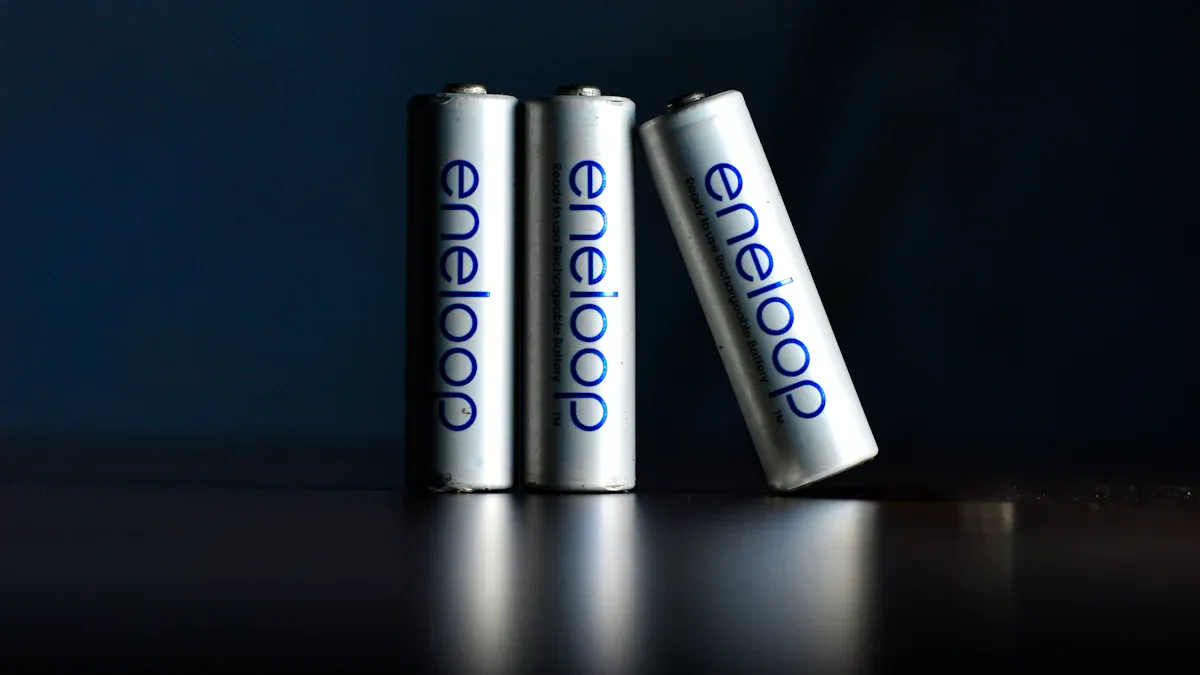
Understanding why a battery stops working helps you know when it’s truly finished. A battery can fail from being drained too much, reaching its natural age limit, or suffering from damage.
Deep discharge and sleep mode
Your rechargeable batteries have a built-in safety feature. An internal protection circuit monitors the battery’s voltage. If the voltage drops too low, usually between 2.5V and 3.0V per cell, this circuit activates. It disconnects the battery to prevent further draining, which could cause permanent damage. This state is often called “sleep mode.”
请注意: While it sounds temporary, this “sleep mode” is a critical safety response. It indicates the battery has been severely depleted.
Different battery chemistries have slightly different voltage limits, as shown below.

End-of-life from normal use
All rechargeable batteries have a limited lifespan. You can typically charge and discharge a battery in a smartphone or laptop 300 to 500 times. After that, its ability to hold a charge drops below 80% of its original capacity. The battery also ages even when you don’t use it. This process, called calendar aging, happens faster when a battery is stored in a hot place or kept at a full 100% charge.
Internal or external damage
Physical damage is a clear sign of a permanently dead li-ion battery.
- Internal Failure: Manufacturing defects or stress can cause the thin separator between internal layers to fail. This creates a short circuit inside the battery.
- External Damage: Dropping, crushing, or puncturing a battery can force internal components to touch. This also causes a short circuit, which can generate intense heat and lead to a fire or explosion.
If you see any physical damage, you must treat the battery as a serious hazard.
Can you revive a dead li-ion battery?
You might find articles or videos online that claim you can “wake up” a dead li-ion battery. While the theory has some scientific basis, attempting these methods is extremely dangerous. You should treat a non-responsive battery as a serious hazard.
The theory behind ‘waking up’ a battery
Your rechargeable batteries contain a safety device called a Protection Circuit Module (PCM). This circuit acts like a tiny bodyguard for the battery cell. Its main job is to prevent damage from over-charging or over-discharging.
When a battery’s voltage drops too low (usually below 2.5V), the PCM trips and disconnects the battery to prevent permanent failure. This puts the battery into a “sleep” state. Here is how the protection circuit works:
- The circuit’s IC continuously monitors the cell’s voltage.
- It identifies an over-discharge state when the voltage falls below its safety threshold.
- The IC then signals a switch (a MOSFET) to turn off.
- This action cuts off the discharge circuit, stopping the battery from draining any further.
In theory, applying a very small charge can raise the voltage just enough to “wake up” the PCM. The circuit then allows the battery to accept a normal charge again. However, this simple theory ignores the dangerous chemical changes happening inside the battery.
The serious risks of revival attempts
You should never try to revive a battery that has entered this deep discharge state. DIY methods, like briefly “jumping” the battery with another power source or using a specialized charger on a very low current setting, are incredibly risky.
🔥 Fire and Explosion Hazard 🔥 Forcing a charge into a deeply discharged battery can cause the growth of tiny, needle-like structures called dendrites. These dendrites can puncture the internal separator, creating a short circuit. A short circuit can lead to thermal runaway, causing the battery to overheat, swell, catch fire, or even explode. The small chance of saving a few dollars is not worth the risk to your safety and property.
These revival attempts can also cause hidden damage. A “revived” battery may seem to work, but its internal structure is compromised. It will have a shorter lifespan and a much higher risk of failing dangerously in the future.
Signs of a permanently dead battery
You can easily identify a battery that is permanently damaged and unsafe to use. If you see any of these signs, you must stop using the battery immediately and prepare to dispose of it safely.
- Swelling or Bulging: The battery casing looks puffy or deformed.
- 物理损坏: You see dents, punctures, or cracks on the battery’s surface.
- Discoloration: There are strange stains or scorch marks on the casing.
- Leaking: You notice any fluid, crusty deposits, or crystalline formations on the battery or in the device’s battery compartment.
- Strange Odors: The battery gives off a sharp, chemical, or vinegary smell.
- Unusual Sounds: You hear any hissing, popping, or crackling noises from the battery, especially during charging or use.
You can also use a multimeter to check a battery’s voltage. Set the multimeter to DC voltage (V⎓). Carefully touch the red probe to the positive (+) terminal and the black probe to the negative (-) terminal. If the voltage is far below its normal level, the battery is likely unrecoverable. For most common rechargeable batteries, any reading below 2.5V per cell indicates a permanent failure.

A low voltage reading confirms that the battery’s chemistry is unstable. At this point, attempting to charge it is a gamble you should not take.
How to handle a dead battery safely
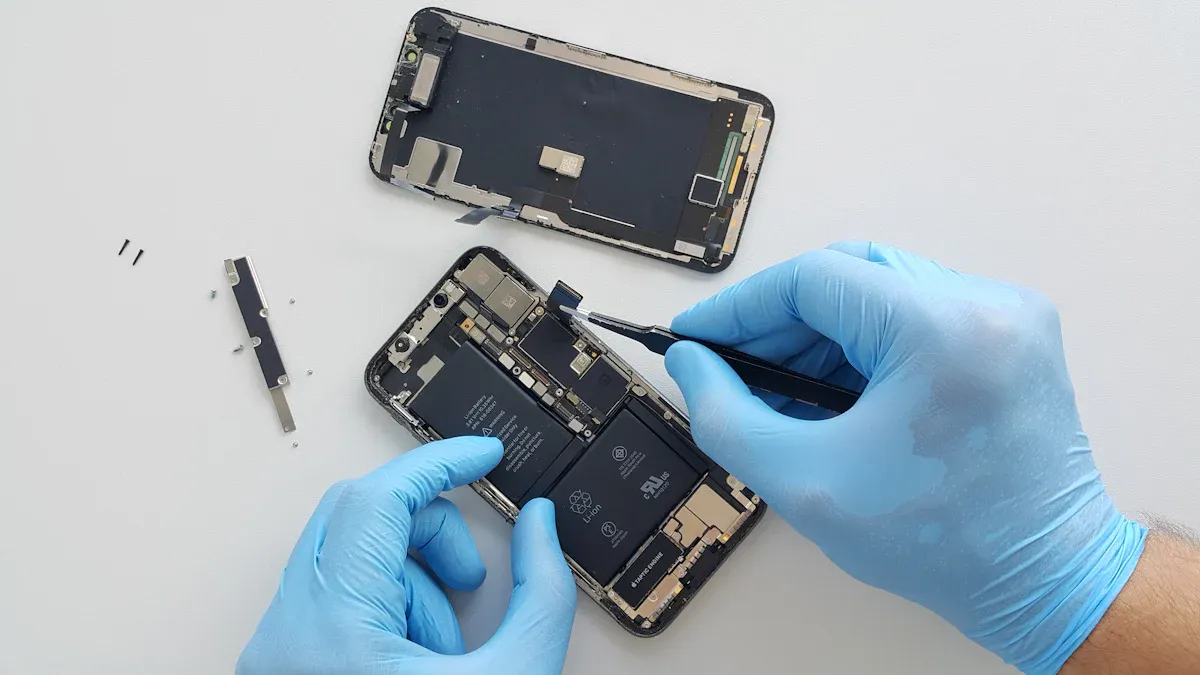
Once you determine a battery is dead, you must handle it with extreme care. You should treat it as household hazardous waste. Following the correct steps protects you, your home, and the environment from harm.
Step 1: Remove and isolate it
Your first priority is to safely remove and isolate the battery. This process requires caution, especially if the battery is swollen or damaged.
⚠️ Safety First: Protect Yourself Before you touch the battery, you need to put on the right protective gear. Wear chemical-resistant gloves and safety glasses or a face shield. If possible, wear flame-resistant clothing. You should also work in a well-ventilated area.
If you feel comfortable removing the battery yourself, follow these steps carefully:
- Power Off: Turn the device off completely and unplug it from any power source.
- Prepare Your Workspace: Work on a clean, flat, non-flammable surface.
- Open the Device: Use plastic prying tools, not metal ones, to open the device casing. Metal tools can puncture the battery and cause a fire.
- Disconnect and Remove: Carefully disconnect the battery connector with a plastic tool. If the battery is glued in, pry it out gently. Never bend or puncture the dead li-ion battery.
- Seek Professional Help: If you are unsure about any step or if the battery is firmly stuck, take the entire device to a professional repair shop.
Once you remove the battery, you must isolate it immediately.
- Place the battery in a fireproof battery bag if you have one.
- If you do not have a special bag, put the battery in a container filled with sand or kitty litter. This helps prevent a fire if the battery fails.
- Store the container in a cool, dry place away from flammable materials. Do not store it with other batteries. This is a temporary step before you take it for proper recycling. This is a piece of household hazardous waste.
Step 2: Find a proper recycling center
You cannot throw a lithium-ion battery away. You must take it to a facility that can handle household hazardous waste. Many convenient options exist for proper battery recycling.
You can easily find drop-off locations near you.
- Call2Recycle: This organization has thousands of collection sites. You can find one by visiting their website or calling their toll-free number.
- Earth911: This service helps you find recycling options for all types of batteries.
- Retail Stores: Many major retailers have
battery recycling programs. Stores like The Home Depot, Lowe’s和 Best Buy often have collection bins near their entrances or at the customer service desk.
It is important to use a certified recycler. Look for facilities with a Responsible Recycling (R2) certification. This certification means the company follows strict rules for environmental protection, worker safety, and data security. A certified facility will safely manage the household hazardous waste and recycle valuable materials.
Step 3: Never use household trash bins
You must never put lithium-ion batteries in your regular trash or curbside recycling bins. Doing so creates serious dangers for sanitation workers, recycling facilities, and the environment. This type of household hazardous waste requires special handling.
🔥 Fire Hazard in Trucks and Facilities 🔥 Garbage trucks and recycling centers use equipment to crush and compact waste. This pressure can easily puncture a battery, causing it to short-circuit and explode. The resulting fire can ignite all the surrounding trash, leading to massive, hard-to-control fires in trucks and buildings.
Throwing batteries in landfills also causes long-term environmental damage.
- Toxic Leaks: As batteries break down, heavy metals like lead, mercury, and cobalt leak into the ground. These toxins contaminate the soil and can enter groundwater, poisoning our water supply.
- Air Pollution: Landfill fires caused by batteries release toxic fumes into the air. These pollutants harm air quality and contribute to health problems.
Finally, there are rules for disposing of this kind of household hazardous waste. The Environmental Protection Agency (EPA) has regulations for battery disposal. You or your business could face fines for throwing them away improperly. The best choice is to always recycle your batteries. Take them to a place that knows how to handle household hazardous waste. Do not be afraid to recycle.
For your safety, you must treat any damaged or non-responsive dead li-ion battery as a permanent hazard. Never attempt DIY revival methods on rechargeable batteries. The risk of fire or explosion is not worth the small chance of success. The best action is always proper recycling.
Protect Yourself and the Planet 🌎 You have the power to prevent accidents and environmental harm. Always recycle your old lithium-ion batteries and other rechargeable batteries. Take them to a certified e-waste facility or a collection site like Call2Recycle.
常见问题
Why do batteries swell up?
Gas builds up inside the battery when internal components break down. This process creates pressure, causing the battery casing to swell.
⚠️ Important: You must treat a swollen battery as a serious fire risk and handle it with extreme caution.
Can I mail a dead battery for recycling?
You must follow specific shipping rules. Damaged batteries are often forbidden in standard mail. Many recycling programs provide special shipping kits. You should always check the carrier’s regulations first to ensure you are compliant and safe.
Is it safe to store a dead battery at home before recycling?
You can store it temporarily in a safe place. Put the battery in a fireproof bag or a container with sand. Keep it in a cool, dry area away from anything flammable. You should take it to a recycler quickly.
What if my battery just won’t hold a charge anymore?
This is a sign of normal end-of-life aging. The battery’s capacity has faded. It is not dangerous like a swollen battery, but you should still recycle it properly. It is simply time for a replacement.
 EN
EN ES
ES FR
FR DE
DE RU
RU ZH
ZH