

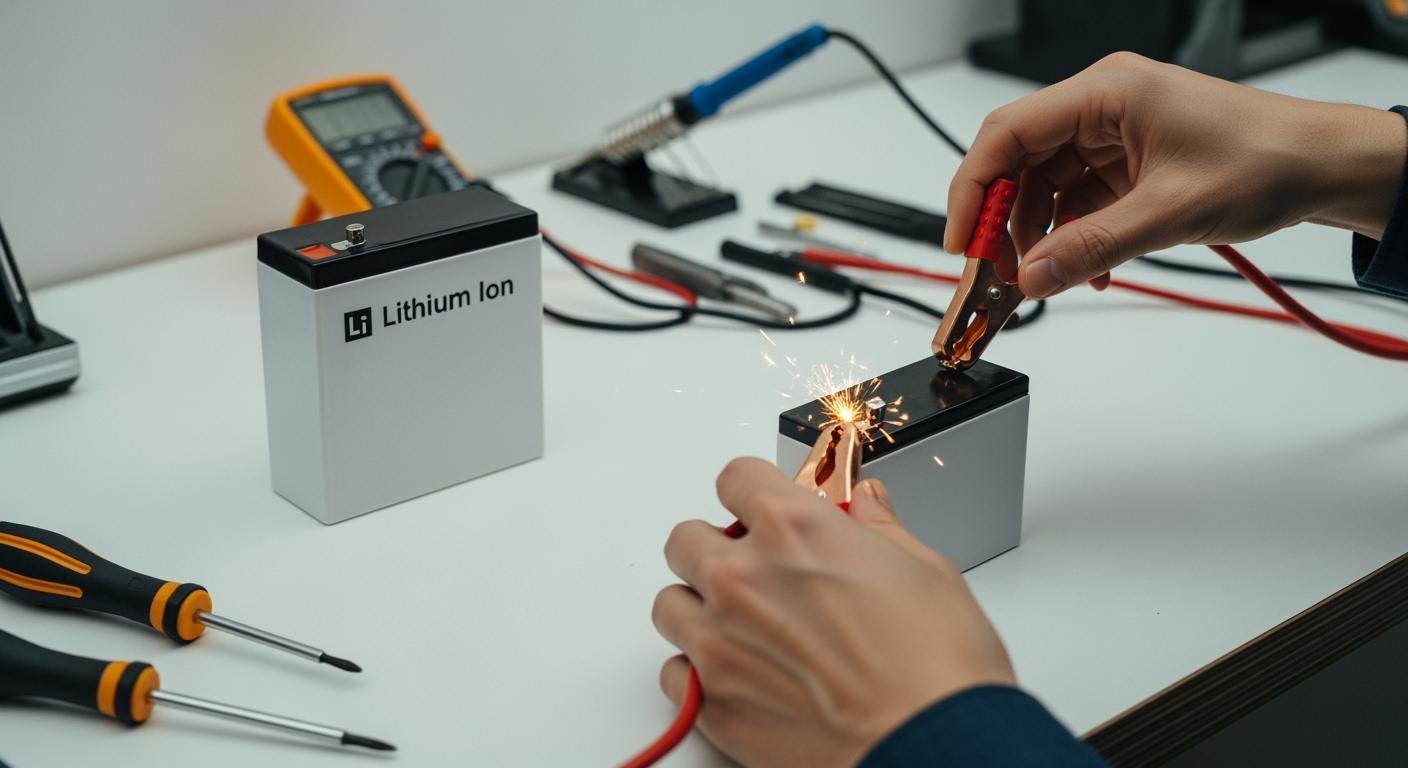
You can often revive a dead lithium battery. Many people believe a dead lithium-ion battery is gone forever, but that is not always true. You can sometimes kickstart dead lithium battery packs with the right approach. This allows you to revive the unit for continued use.
🚨 CRITICAL SAFETY WARNING
You must inspect your lithium-ion battery first. Stop if the battery is swollen, cracked, or leaking. Do not attempt to revive a damaged or dead lithium-ion battery. You should dispose of it properly.
Safety and Tool Checklist

Safety is your top priority. You must gather the right gear and tools before you try to kickstart dead lithium battery packs. This preparation prevents accidents and protects you from harm.
Essential Safety Gear
You should always wear protective gear when handling batteries. Your safety kit must include:
- Safety Goggles: Protect your eyes from potential sparks or chemical splashes.
- Insulated Gloves: Prevent electrical shocks and contact with battery chemicals.
- Fire Extinguisher: Keep a Class ABC or Class D fire extinguisher nearby for emergencies.
Required Revival Tools
Having the correct tools makes the process safer and more effective. You will need a specific type of charger for a dead lithium battery.
- Lithium-Specific Charger with a Reset Feature: Look for a charger with a “BMS Reset,” “0V,” or “Wake Up” mode. These chargers send a small pulse to awaken the battery’s safety circuit.
- An example for 2025 is the OptiMate TM-271 Lithium Charger. It has a special SAVE mode that can start from as low as 0.5V to reset the BMS.
- A Healthy “Donor” Battery (for the parallel method): This battery must have the same nominal voltage as the dead one.
- Jumper Wires with Alligator Clips: You will use these to connect the batteries in parallel.
- Voltmeter or Multimeter: This tool is essential for checking the voltage of both batteries.
Why Standard Chargers are Dangerous
You must never use a standard charger (like one for a lead-acid car battery) on a lithium battery. These chargers use different methods that are unsafe for lithium chemistry.
Incorrect charging of a lithium battery can cause the battery to overheat. An overheated lithium battery poses a risk of explosion and fire, especially if the charger does not stop charging properly.
The table below shows why a lithium-specific charger is the only safe choice.
| 特点 | Lithium-Specific Charger | Standard Charger |
|---|---|---|
| 充电方法 | Uses a multi-stage CC/CV process. | Uses a simple constant voltage method. |
| Voltage Control | Regulates voltage precisely to prevent overcharging. | Lacks precise voltage control. |
| 安全功能 | Includes overcharge and short-circuit protection. | Lacks safety features for lithium batteries. |
| Risk of Damage | Low risk. Protects the battery. | High risk of fire, explosion, and battery damage. |
Method 1: Use a Charger with a Reset Feature
This method is the safest way to kickstart dead lithium battery packs. It uses a smart charger designed for this exact problem. This approach works for a lithium-ion battery that is not damaged but has a voltage too low for a standard charger to detect.
Understanding the Battery’s “Sleep Mode”
Your battery has a built-in safety computer. It is called the Battery Management System (BMS). The BMS protects the battery from dangers like over-discharging. It puts the battery into a “sleep” or “protection” mode if the voltage drops too low. A standard charger cannot see a sleeping battery, so it will not start charging. A special charger can wake the BMS up.
Step 1: Connect the Compatible Charger
You must first confirm your charger is right for your battery. Using the wrong charger is dangerous and can cause permanent damage. Check the labels on both the battery and the charger.
You need to verify a few key things:
- "(《世界人权宣言》) charger must match the battery’s chemistry (e.g., LiFePO4 vs. Li-ion).
- The charger’s output voltage must match the battery’s rated voltage (e.g., a 12V charger for a 12V battery).
- The charger’s current rating should be appropriate for the battery’s capacity.
Connect the charger’s positive (red) clip to the battery’s positive terminal. Then, connect the negative (black) clip to the negative terminal. Plug the charger into a wall outlet last.
Step 2: Activate the Charger’s Reset Mode
Modern lithium chargers with a reset feature make this step simple. These chargers automatically detect the low voltage of a sleeping battery. They then send a series of small, safe electrical pulses to the BMS. These pulses gently wake the BMS from its protection mode.
Once the BMS is active, the charger will recognize the battery. The normal charging process will begin. Some chargers may have a button you need to press to start this “Wake Up” or “BMS Reset” mode. Always read your charger’s manual to understand its specific functions.
Step 3: Monitor the Charging Process
You must watch the battery closely during the first hour. This is the most critical part of the charging process. A successful revival will follow a normal charge cycle.
- First 30-60 Minutes: Stay with the battery. Check its temperature with your hand every 5-10 minutes. It should not feel hot. If the battery gets warmer than 40°C (104°F), unplug the charger immediately.
- Voltage Checks: Use your multimeter to check the voltage every 10 minutes. You should see the voltage slowly and steadily increase.
- Normal Charging: A healthy charge happens in two phases. First, the charger uses a constant current to raise the voltage. Second, it holds a constant voltage while the current slowly drops. This ensures a full and safe charge.
Never leave a reviving battery unattended. Charge it on a non-flammable surface like concrete or metal in a well-ventilated area.
Step 4: Test the Final Voltage
After the charger indicates the battery is full, you should test the final voltage. This test confirms if you were able to revive the dead lithium battery. Disconnect the charger from the wall first, then from the battery. Let the battery rest for about 30 minutes.
Use your multimeter to measure the voltage. The ideal voltage depends on the battery type:
- A 12V LiFePO4 battery should read near 14.6V when fully charged.
- A 12V lithium-ion battery pack should read between 12.6V and 12.8V.
- A single 3.7V Li-ion cell should read 4.2V.
If the battery holds this voltage, your attempt was successful. If the voltage quickly drops again or the battery fails to hold a charge, it is likely beyond repair and you must dispose of it properly.
Method 2: How to Jumpstart a Dead Lithium Battery in Parallel

⚠️ ADVANCED METHOD: HIGH RISK
This method is for advanced users only. You must be comfortable working with electronics. Incorrectly performing this procedure can cause sparks, short circuits, fire, or permanent battery damage. If you are not confident, do not attempt this. This is one of the more dangerous ways to jump start a dead lithium battery.
This technique uses a healthy, charged battery (the “donor”) to transfer a small amount of energy to the dead battery. This process aims to raise the voltage just enough for your compatible lithium charger to recognize it. This is a common way to kickstart dead lithium battery packs when a reset charger is not available.
Step 1: Confirm Both Batteries Match Voltage
You must first ensure the donor battery and the dead battery are a match. Connecting batteries with different voltages can create a dangerous, uncontrolled rush of current.
- Check the Labels: Look at the labels on both batteries. The nominal voltage must be the same. For example, you can only jumpstart a 12V battery with another 12V battery.
- Use Your Multimeter: Measure the voltage of the healthy donor battery. It should be fully charged (e.g., around 14.6V for a 12V LiFePO4 battery). Then, measure the dead battery’s voltage to confirm it is very low.
| Donor Battery | Dead Battery | Result |
|---|---|---|
| 12V | 12V | ✅ Safe to Proceed |
| 12V | 24V | ❌ DANGEROUS MISMATCH |
| 3.7V Cell | 3.7V Cell | ✅ Safe to Proceed |
Step 2: Connect the Batteries in Parallel
This is the most critical step where you will perform the jumpstart. You must wear your safety goggles and insulated gloves. Ensure you are in a well-ventilated area away from flammable materials.
For this step, you need jumper wires with alligator clips. The wire thickness (gauge) is important. While some manufacturers suggest 6 AWG wire for jumpers, using a thicker wire like 2/0 AWG is a safer choice because it can handle the initial current rush with less risk of overheating.
Follow this connection order precisely:
- Connect the positive (red) clip to the positive (+) terminal of the healthy donor battery.
- Connect the other end of the positive (red) clip to the positive (+) terminal of the dead lithium battery.
- Connect the negative (black) clip to the negative (-) terminal of the healthy donor battery.
- Connect the other end of the negative (black) clip to the negative (-) terminal of the dead battery.
You will likely see a small spark when you make the final connection. This is normal. Leave the batteries connected for only 30-60 seconds. This is just enough time to transfer a small surface charge and wake up the BMS. Do not leave them connected for longer.
Step 3: Disconnect and Use a Compatible Charger
After a short time, you must disconnect the batteries. This stops the energy transfer and prepares the battery for a proper charge. Disconnecting in the correct order is just as important as connecting.
Follow this disconnection order to minimize sparks:
- Disconnect the negative (black) clip from the dead battery.
- Disconnect the negative (black) clip from the healthy donor battery.
- Disconnect the positive (red) clip from the dead battery.
- Disconnect the positive (red) clip from the healthy donor battery.
Now, immediately use your multimeter to test the revived battery’s voltage. The goal of the jumpstart was to raise the voltage above the minimum level your charger can detect. Most lithium chargers need to see at least 9 to 10 volts to begin a charging cycle. If the voltage is above this range, you can proceed to charge it normally with your compatible lithium charger. If not, you can try the jumpstart process one more time for 30 seconds.
Step 4: Safely Jumpstart a Dead Lithium-Ion Battery
You have now completed the parallel jumpstart. The final step is to charge the lithium-ion battery correctly. This step confirms if you can truly revive the battery.
- Connect the Charger: Attach your lithium-specific charger to the battery as described in Method 1.
- Monitor Closely: Watch the battery for the first hour of charging. Check for any signs of overheating, swelling, or strange noises. If you notice anything unusual, unplug the charger immediately.
- Test Functionality: Once the charger indicates a full charge, let the battery rest for 30 minutes. Test its voltage again. If it holds a stable, full charge, you have successfully managed to jumpstart a dead lithium-ion battery.
This process is one of two primary ways to jump start a dead lithium battery. Remember, your safety is the top priority.
🚨 Final Safety Check
- Always have a fire extinguisher nearby.
- If you feel unsure or uncomfortable at any point, seek professional help.
- Successfully performing a jumpstart a dead lithium-ion battery requires care and attention.
If the battery fails to hold a charge after this process, it is beyond repair. You must dispose of it at a proper recycling facility.
Signs of a Truly Dead Lithium Battery
Sometimes, a battery is beyond saving. You need to recognize the signs of a dead lithium-ion battery to stay safe and avoid wasting time. If you see any of these issues, you must stop trying to revive the battery and dispose of it properly.
Obvious Physical Damage
Your first step is always a visual inspection. A damaged battery is a dangerous battery. You should look for clear signs of a dead lithium-ion battery.
- Swelling or Bulging: The battery case looks puffy or bloated.
- Cracks: You can see cracks or splits in the battery’s housing.
- Leaking Fluid: Any moisture or residue on the battery is a major red flag.
If you notice any of these physical problems, your battery is a fire hazard. Do not attempt to charge or use it. These are definitive signs of a dead lithium-ion battery.
Failure to Hold a Charge
A successful revival means the battery holds its voltage. If it does not, it is a sign the internal chemistry is damaged. This is one of the most common signs of a dead lithium-ion battery.
After you fully charge the battery, let it rest for an hour. Then, you can test its voltage with a multimeter. If the voltage drops quickly, the battery cannot store energy anymore. A lithium-ion battery is considered to have failed when it loses 20% of its original capacity. If your battery can only hold 80% or less of its initial charge, it has reached the end of its life. This dead lithium battery is no longer reliable.
Overheating During Charging
A battery should not get excessively hot when you charge it. A little warmth is normal, but extreme heat is a serious warning.
You should monitor the battery’s temperature during the revival process. If the surface temperature rises above 45°C (113°F), you must unplug the charger immediately. Charging a battery above this temperature is very dangerous. It speeds up internal damage and can cause the battery to swell or even catch fire. This overheating is a clear indicator of a dead lithium-ion battery that you cannot save.
How to Prevent a Dead Lithium Battery
You can extend your battery’s life with proper care. Following a few simple rules helps you avoid a dead lithium battery and get the most value from your investment. Prevention is always the best strategy.
Avoid Complete Discharges
You should avoid draining your battery completely. A deep discharge can cause permanent damage. When the voltage drops too low, it can cause the copper foil inside the anode to oxidize. This process degrades the battery’s performance and can ruin it. Always try to recharge your battery before it gets close to empty.
Pro Tip: Recharge your lithium-ion battery when it reaches about 20% capacity. This simple habit protects its internal components and extends its lifespan.
Store at a Partial Charge
You need to store your batteries correctly if you will not use them for a while. Storing a battery at 100% charge can speed up its aging process. The ideal storage level for most lithium batteries is between 40% and 60% state of charge (SOC). This partial charge minimizes stress on the battery.
You should also store your battery in a cool, dry place. The best temperature is between 15°C and 25°C (59°F to 77°F). Extreme heat or cold can damage the battery over time.
| Storage SOC | Primary Benefit | 最适合 |
|---|---|---|
| 100% | Ready for immediate use | Emergency systems, short-term |
| 40% – 60% | Maximizes lifespan | Long-term storage (months) |
| <20% | (Not Recommended) | Risk of cell damage |
使用正确的充电器
You must always use a charger designed for your battery’s specific chemistry. Using the wrong charger is a common mistake that can cause serious problems. An incompatible charger can send too much current, which creates heat and reduces the battery’s lifespan. If the charger’s voltage is too high, it can overcharge the battery and cause permanent damage. If the voltage is too low, the battery will never reach a full charge.
Different lithium chemistries have unique charging needs. A charger for a LiFePO4 battery is not the same as one for an LCO battery.
| 特点 | 磷酸铁锂 | LCO |
|---|---|---|
| Full Charge Voltage | 3.65V per cell | 每个电池 4.2V |
| Overcharge Sensitivity | More tolerant | Very sensitive |
Always match your charger to your battery to ensure a safe and effective charge.
You can often kickstart dead lithium battery packs with the right tools and a focus on safety. The safest option is using a charger with a reset feature. The parallel jumpstart method is an advanced technique that carries significant risk. Your goal is to revive the battery for continued use.
Remember: You must replace the battery if it is physically damaged or fails to hold a charge after an attempt. Proper charging and storage habits are the best ways to ensure a long battery life.
常见问题
Can I use a car battery to jumpstart a lithium battery?
No, you must not use a standard car battery. Lead-acid batteries have different voltage properties that are dangerous for lithium chemistry. You should only use a donor battery with the same nominal voltage. This practice avoids a dangerous current rush and potential damage.
How long does it take to revive a dead lithium battery?
The parallel jumpstart itself takes only 30-60 seconds. The full charging process afterward can take several hours. The exact time depends on your battery’s capacity and the charger’s output. You must monitor the first hour of charging very closely for safety.
What should I do if the battery won’t revive?
You must dispose of the battery properly if it fails to revive. Do not throw it in the regular trash. You can take it to a local electronics store or a designated battery recycling center. These facilities handle hazardous materials safely.
 EN
EN ES
ES FR
FR DE
DE RU
RU ZH
ZH