

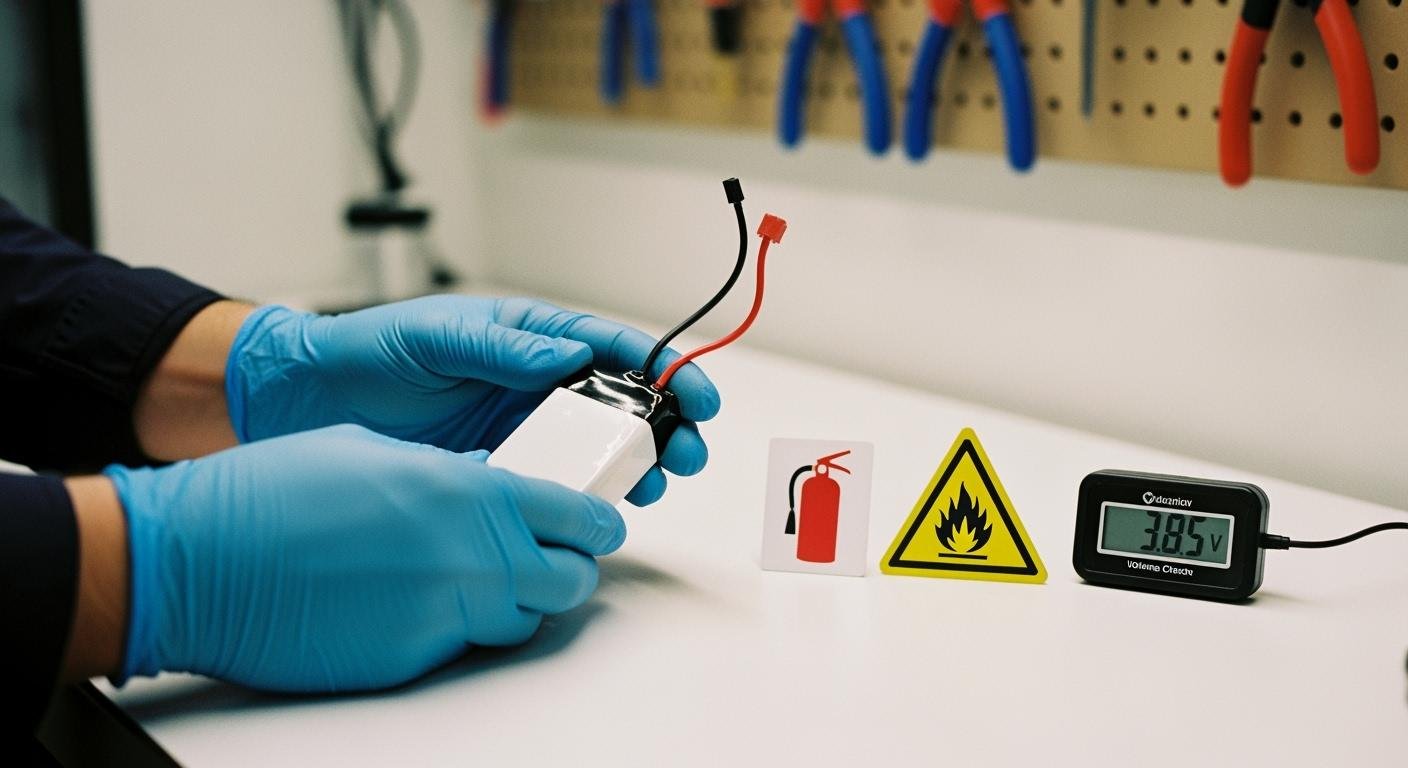
You may wonder if lithium polymer batteries are safe. The answer is yes, with proper care. Mishandling these LiPo batteries, however, creates serious risks. While major incidents are uncommon, misuse is a significant factor in battery fires.
- LiPo batteries are involved in 45% of lithium battery fires in consumer electronics.
- Fires involving these batteries in e-scooters increased by 200% between 2019 and 2023.
This guide provides the essential lithium polymer safety tips you need. Following these steps ensures your safety and the longevity of your batteries.
Understanding lithium polymer batteries risks:
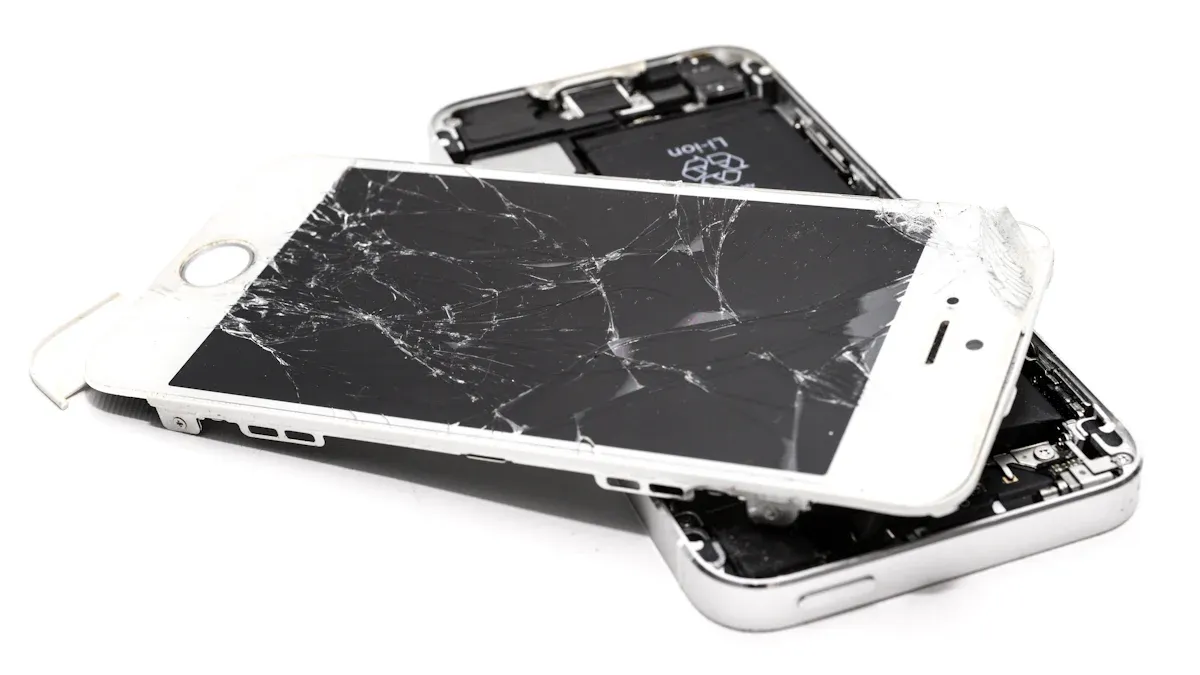
While lithium polymer batteries are a reliable power source, misuse is what creates danger. Understanding the risks is the first step toward proper safety. Many batteries lack built-in safety circuits, placing the responsibility for correct handling entirely on you.
The danger of thermal runaway:
Thermal runaway is a dangerous chain reaction inside a lipo battery. It starts when the battery gets too hot from triggers like over-charging or physical damage. This heat causes internal chemical reactions that produce even more heat. The process quickly spirals out of control, releasing stored energy and generating toxic, flammable gases. These gases can ignite, causing a violent fire that produces its own oxygen, making it extremely difficult to extinguish.
Common triggers for thermal runaway include:
- Overcharging the battery or using excessive charging currents.
- Physical damage from punctures or impacts.
- Internal or external short circuits.
- Repeatedly over-discharging the lipo cells before charging.
Примечание: Different battery chemistries have different safety profiles. A battery with a Nickel Manganese Cobalt (NMC) chemistry can enter thermal runaway at a lower temperature than a Lithium Iron Phosphate (LiFePO4) one, making the latter a more stable option.
| Характеристика | LiFePO4 (Lithium Iron Phosphate) | NMC (никель-марганец-кобальт) |
|---|---|---|
| Thermal Runaway Threshold | ~270°C / 518°F | ~210°C / 410°F |
| Chemical Stability | Very High | Умеренный |
| Oxygen Release at High Temp | Minimal | Significant |
What causes a battery to swell:
A swollen lipo battery is a clear warning sign of internal failure. Swelling happens when the electrolyte inside the battery breaks down, producing gases like hydrogen and carbon dioxide. This gas buildup causes the battery’s flexible pouch to puff up. Several issues can cause your batteries to swell:
- Over-charging or Over-discharging: Pushing the battery beyond its voltage limits damages its internal structure and creates gas.
- High Temperatures: Heat speeds up chemical reactions, leading to gas production.
- Manufacturing Defects: Poor sealing can let moisture in, which reacts with the electrolyte.
- Физический ущерб: Even minor damage can initiate these harmful reactions.
Risks from physical damage and shorts:
You must handle your lipo batteries with care. Dropping, crushing, or puncturing them can cause an internal short circuit. This happens when the thin separator between the positive and negative layers inside the battery is breached. A direct connection forms, causing a massive, uncontrolled current flow. This generates intense heat almost instantly, which can easily lead to a fire. Always treat damaged batteries as a serious hazard and follow proper disposal cautions.
Essential LiPo handling and safety practices:
Proper handling is your best defense against lipo battery failure. You can significantly reduce risks by adopting a few key habits. These practices protect you, your equipment, and the batteries themselves.
How to inspect your batteries:
You should inspect your batteries before and after every use. A quick visual check can reveal serious problems before they become dangerous. Look for any signs of damage or wear. A damaged battery is a hazard and you should not use it.
Safety Tip: If you find any of the issues below, immediately stop using the battery. Safely discharge it and prepare it for proper disposal.
Check your lipo for these warning signs:
- Swelling, puffiness, or a ballooned appearance
- Any deformity or dents in the cell
- Damaged or frayed leads (wires)
- Cracked or broken connectors
- Torn or damaged shrink wrap
Avoiding punctures, drops, and impacts:
Physical damage is a primary cause of battery fires. You must protect your batteries from punctures, drops, and impacts. A sharp object can easily pierce the soft outer pouch of a lipo, causing an internal short circuit and immediate fire. For hobbies like RC racing, you should use hard case batteries. These offer much better protection against physical shock. Following proper handling cautions is essential for safety.
Всегда используйте fireproof storage solutions, like a specialized battery bag, when your batteries are not in use. This simple step contains a fire if one occurs during transport or storage.
Proper connection and disconnection:
Using the correct connectors prevents short circuits and ensures a reliable power flow. A loose connection can create sparks or excessive heat. Always use connectors rated for your device’s current draw. For high-power applications, specific connectors are recommended.
| Тип разъема | Текущая мощность |
|---|---|
| EC5 | До 120 А |
| XT90 | Более 90A |
| EC8 | Более 200 А |
When connecting, plug in the main power leads first. When disconnecting, unplug them last. This practice helps prevent accidental shorts across the balance leads.
Operating within safe temperatures:
Temperature greatly affects a lipo battery’s performance and health. Operating outside the safe temperature range can cause permanent damage and create dangerous conditions. Both extreme heat and cold are harmful. Heat accelerates chemical breakdown, while cold increases internal resistance and reduces capacity.
Сайт ideal temperature for charging is different from the discharging range.
| Состояние | Min Temp | Max Temp |
|---|---|---|
| Зарядка | 0°C (32°F) | 45°C (113°F) |
| Разгрузка | -20°C (-4°F) | 60°C (140°F) |
| Ideal Storage | 10°C (50°F) | 25°C (77°F) |
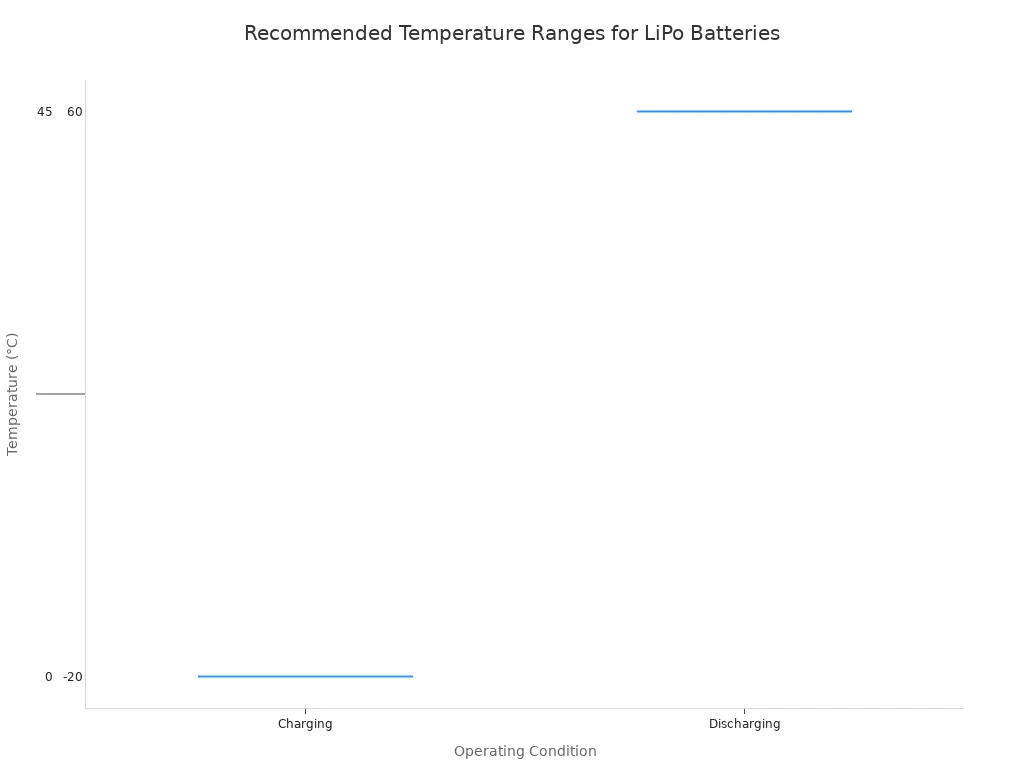
Charging a battery below 0°C (32°F) is especially dangerous. It can cause lithium plating on the anode, which permanently damages the cell and can lead to an internal short. Always bring a cold battery to room temperature before starting the charging process.
A guide to safe LiPo charging:
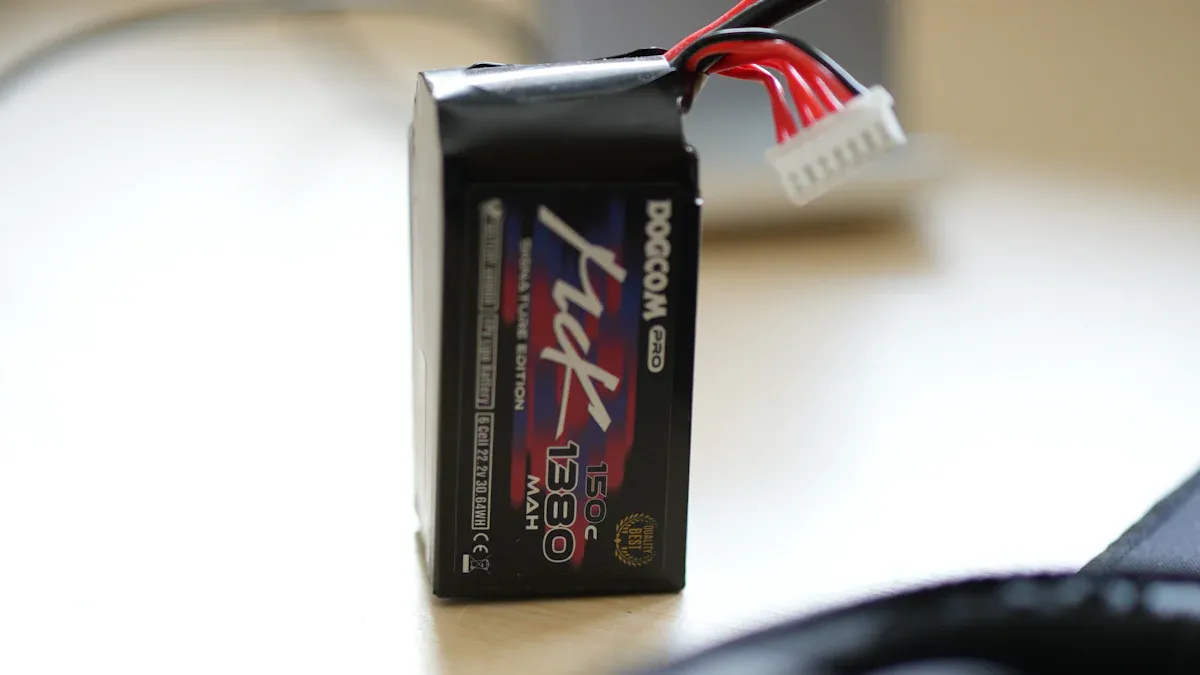
Safe charging is the most critical part of lipo battery safety. You must follow correct procedures to prevent accidents. This section will guide you through the essential steps for safe and effective charging.
Choosing the correct charger and settings:
You need to select a charger that matches your battery’s needs. A quality charger protects your batteries and prevents dangerous situations. Look for chargers with key features that ensure compatibility and protection.
- Voltage Range: The charger must support your battery pack’s full voltage range.
- Balancing Current: Active balancers with 1–2A of current are best for high-drain batteries.
- Balance Plug Type: Ensure the charger’s plug matches your battery’s connector, like the common JST-XH.
- Особенности безопасности: Overvoltage and temperature monitoring are essential for fire prevention.
Reputable chargers often carry certifications that prove they meet international safety standards. These certifications show the charger has passed tests for electrical, thermal, and environmental safety.
| Certification Standard | Описание |
|---|---|
| IEC62133 | The international standard for battery safety. |
| UN38.3 | A required test for safely transporting lithium batteries by air. |
| UL 94 | A flammability standard for plastics in devices and appliances. |
| 2006/66/EC | An EU directive covering battery environmental rules. |
Once you have a suitable charger, you must configure it correctly for each charging session. You can follow these steps to set up your charger properly:
- Find Battery Specs: Look at your lipo battery’s label to find its voltage and capacity.
- Select Chemistry: Set your charger to the ‘LiPo’ chemistry setting.
- Set Voltage: Match the charger’s voltage to the battery’s voltage.
- Set Current: Calculate the charging current. A 1C rate is standard. For a 5000mAh battery, 1C is 5 amps.
- Connect Leads: Plug in the main power lead and the balance lead.
- Start Balance Charging: Choose the balance charging mode on your charger.
- Check Max Voltage: Never charge a lipo cell beyond 4.2V.
The importance of balance charging:
Balance charging is essential for multi-cell lipo packs. It ensures every cell in the pack has the same voltage. Without it, cells can become unbalanced during charging or discharging. One cell might reach a higher voltage faster than others. This imbalance can lead to overcharging a single cell, which is a major fire risk.
Charging LiPo batteries without a balance function enabled is straight dangerous. This is exactly why we had so many fires in the early days of LiPos.
An imbalanced pack also performs poorly. Some cells will not charge to their full 4.2-volt capacity. If you notice a cell is very low, you may need to charge it manually to match the others. Always use the balance charging/discharging function to keep your pack healthy and safe.
Never leave charging batteries unattended:
You must always supervise the charging process. A residential fire in Wisconsin was started by a lithium-ion battery left charging indoors. Incidents like this are increasing nationwide due to improper charging. Overcharging can cause thermal runaway, which leads to a violent fire or explosion.
Always follow these rules for safe charging:
- NEVER leave charging batteries unattended.
- Constantly watch the charging process.
- React immediately to any problems, like swelling or overheating.
Place your charger and battery on a fire-proof surface, like concrete or a ceramic tile. Keep a fire extinguisher nearby. Your attention is the best defense against a charging fire.
Using a LiPo safe bag for charging:
Using a LiPo safe bag or a fire-safe container adds another layer of protection. These bags are designed to contain a fire if a battery fails during charging. They are made from multiple layers of fire-resistant materials.
- Inner Layer: Often made of aluminum-coated or E-Glass fiberglass.
- Mid Layer: A non-woven fabric or other flame-retardant material.
- Outer Layer: Typically a silicone-coated fiberglass or flame-retardant polyester.
These bags can withstand temperatures up to 1800°F (982°C) and often meet standards like UL 94 for flammability. However, you should know their limitations. LiPo bags contain flames and heat but do not stop toxic smoke and vapors. Never seal the bag completely, as gas buildup can cause an explosion. The bag is a containment tool, not a substitute for supervision.
Storage and disposal safety information:
Proper storage and disposal are final, critical steps in lipo battery safety. This safety information will help you prevent accidents and extend the life of your batteries.
Best practices for long-term storage:
You must store your lipo batteries correctly to prevent a fire. A cool, dry place is the best environment. The ideal temperature range is between 40°F and 80°F (4°C and 27°C).
Внимание: Never store a lipo in a hot car, a garage, or in direct sunlight. High temperatures can cause the battery to fail and ignite.
Follow these simple storage rules:
- Keep batteries away from liquids and heat sources.
- Store them in a fire-resistant container or bag.
- Remove the battery from your device for long-term storage.
Using storage charge for longevity:
You should never store a lipo battery fully charged or completely empty. Storing a battery at its limits puts stress on its internal parts. This stress can cause permanent damage. You should use your charger’s “storage” mode. This function brings each cell to its optimal storage voltage, around 3.8 to 3.85 volts. This partial charging state maintains chemical balance and protects the battery. This is a key step in your charging/discharging routine.
How to safely discharge a battery:
Discharging a lipo below its minimum voltage causes irreversible damage. This damage might not be visible, but it creates a serious fire risk for the next charging session. Discharging too quickly also generates intense heat, which can cause the battery to swell or catch fire. Always follow the manufacturer’s recommended discharge rates. Be especially careful with loose cells, as they lack external protection. Proper handling of loose cells is vital for safety.
Finding a proper disposal location:
You must never throw a lipo in the household trash. Damaged batteries or loose cells can be punctured or crushed in a garbage truck, starting a dangerous fire. Proper disposal is a legal and safety requirement.
- Discharge the battery to its storage voltage before disposal.
- Find a certified e-waste or battery recycling center.
- Websites like Call2Recycle.org can help you find a local drop-off spot.
- Many local hobby shops also offer battery disposal programs.
Your safety with lithium polymer batteries rests in your hands. You can confidently use your lipo batteries by following these safety guidelines. Proper handling, correct charging, and safe storage are essential. Understanding your lipo specifications prevents risks and ensures reliable performance.
Take charge of your safety. Your vigilance protects you and your powerful lipo devices, making responsible ownership the ultimate safeguard for these lithium polymer batteries.
ЧАСТО ЗАДАВАЕМЫЕ ВОПРОСЫ
What should I do with a swollen LiPo battery?
You must stop using a swollen battery immediately. Do not attempt to charge or puncture it. You should carefully discharge it to storage voltage. Then, take the battery to a certified e-waste or battery recycling center for safe and proper disposal.
How do I put out a LiPo battery fire? 🔥
You cannot use water on a LiPo fire, as it can worsen the reaction. Use a Class D fire extinguisher, which is made for metal fires. If you do not have one, you can use sand or dirt to smother the flames and help contain the fire.
What does the “C” rating on a LiPo battery mean?
The “C” rating indicates the battery’s maximum safe continuous discharge rate. You find the safe current by multiplying the C rating by the battery’s capacity. For example, a 5000mAh (5Ah) battery with a 20C rating can safely provide 100 amps (20 x 5 = 100).
 EN
EN ES
ES FR
FR DE
DE RU
RU ZH
ZH