

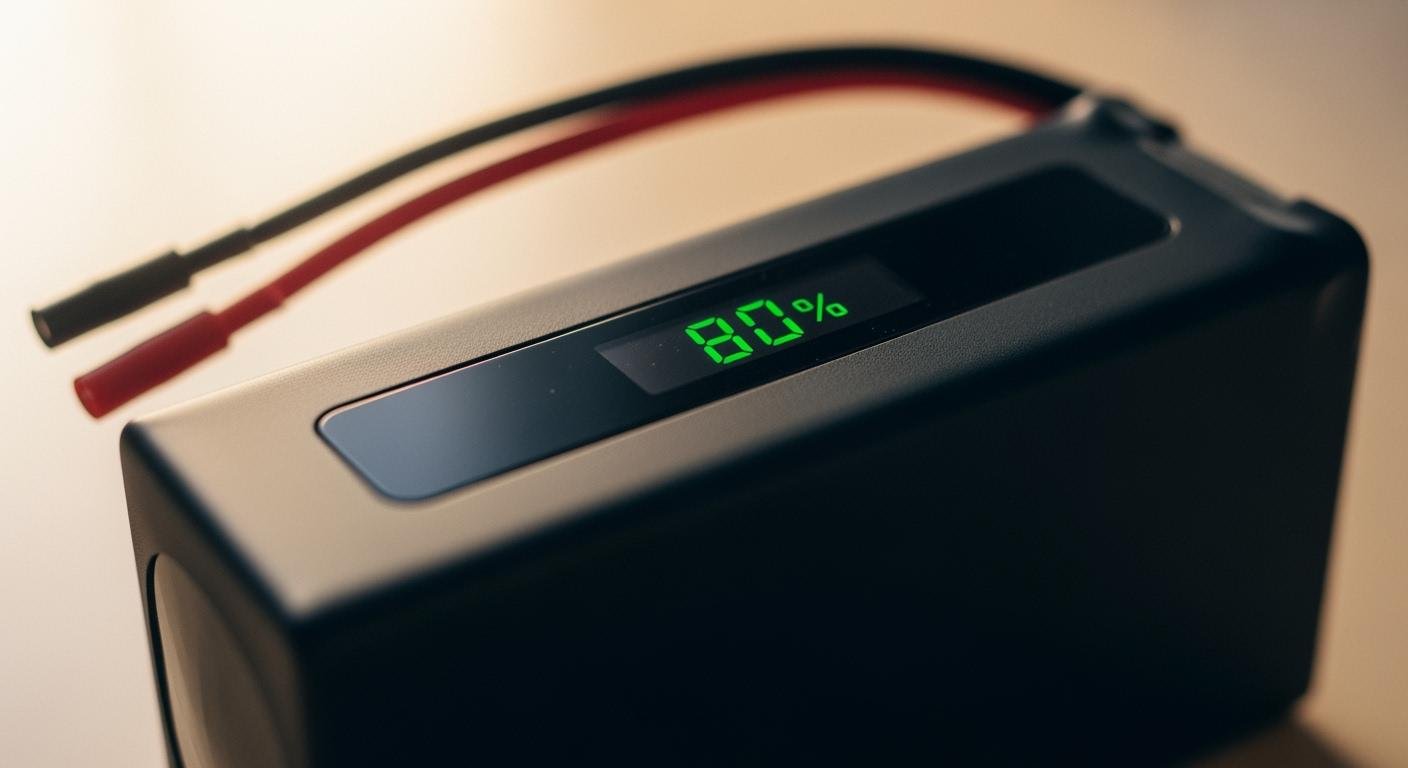
You can master the “80% rule” for your lipo battery. This rule has two simple parts. First, avoid using more than 80% of its total capacity in one go. Second, your daily charging should stop around an 80% charge level. This simple habit dramatically improves battery life and ensures reliable performance. 🔋
Charging to 80% and discharging to 40% can further extend the battery’s lifespan.
This practice helps you unlock hundreds of extra cycles from every battery.
Why the 80% Rule Matters for Your LiPo Battery
The 80% rule is more than just a guideline; it is a fundamental practice for battery health. Pushing your battery to its absolute limits—charging to 100% or running it completely flat—puts immense stress on its internal chemistry. This stress accelerates wear and tear, shortening the battery’s useful life. Think of it like an engine. You can redline it constantly, but it will not last as long as an engine operated within its optimal range.
Reduce Internal Chemical Stress
Your LiPo battery experiences the most chemical stress at a very high or very low charge level. When you charge a battery to its maximum 4.2V per cell, you are forcing its internal components into an unstable state. This high-voltage environment causes several damaging effects:
- It creates tiny cracks in the battery’s cathode materials. This damage allows the internal electrolyte liquid to seep in, forming a resistive film that hinders performance.
- It can cause active materials inside the battery to dissolve. These dissolved particles then contaminate the electrolyte, leading to rapid capacity loss.
- It can corrode the thin aluminum collector inside the battery, weakening its structure.
Similarly, over-discharging your pack causes its own set of problems, permanently damaging the anode. The 20-80% rule helps you avoid these extremes, keeping your battery in a stable and low-stress condition.
Maximize Your Charge Cycles
A “charge cycle” represents one full discharge and recharge of a battery. The number of cycles a battery can endure before it significantly degrades determines its lifespan. How you use your battery directly impacts this number. A battery consistently cycled from 100% down to 0% will wear out much faster.
Consider the typical lifespan for different usage patterns:
| Depth of Discharge (DoD) | Typical LiPo Discharge Cycles |
|---|---|
| 100% DoD (Full Cycle) | ~300-500 Cycles |
| 60% DoD (20-80% Rule) | >1,500 Cycles |
The data is clear. By following the 20-80% rule, you can potentially triple your battery’s lifespan, getting thousands of reliable cycles instead of just a few hundred. This simple habit translates directly into long-term savings and more consistent performance.
How to Apply the 80% Rule in Practice

Understanding the theory is one thing, but putting it into action is what saves your batteries. You can easily apply the 20-80% rule with a few simple calculations and the right tools. This section shows you how to master the practical side of battery care.
The Discharge Rule: Use Only 80% Capacity
The first part of the 80% rule is about how much energy you use. You should never run your battery completely flat. Instead, aim to land with at least 20% charge remaining. This simple habit prevents the damaging effects of deep discharge.
Calculating your limit is straightforward. You just multiply your battery’s total milliamp-hour (mAh) rating by 0.8.
- Calculation:
Total mAh x 0.8 = Usable mAh - Example: For a 1000mAh lipo battery, you should use no more than 800mAh per session (1000 x 0.8 = 800).
So, how do you track this in real-time? You have a few great options:
- Set a Timer: After a few flights or runs, check how much capacity you used. You can then set a conservative timer on your transmitter to remind you when to stop.
- Use a Voltage Checker: Voltage is a good guideline for remaining charge. A battery cell at rest near 3.3V is almost empty. You should stop using it well before it reaches this point.
- Install Telemetry: Modern RC systems can send live battery data back to your transmitter. Tools like the ISDT BG-8S or other telemetry modules give you real-time voltage readings, so you know exactly when to land. Many even have alarms you can set.
Mastering LiPo Battery Charging Limits
The second part of the 20-80% rule involves your charging routine. A standard LiPo charger will fill a battery to 4.2V per cell, which is 100% full. For daily use, you should avoid this. Instead, stop the charging process when each cell reaches about 4.0V. This voltage corresponds to an approximate 80% charge level.
Charging a LiPo cell to 4.1V instead of 4.2V can nearly double its cycle life. This small change significantly reduces the chemical stress on the battery, especially in large packs, ensuring a much longer lifespan.
Most modern smart chargers allow you to adjust the final charging voltage. Simply set the charger to stop at 4.0V or 4.1V per cell. This one-time setting makes following the rule effortless for every charging session.
The Golden Rule for Storage
How you store your battery is just as important as how you use it. If you will not use a battery for more than a day or two, you must put it at its proper storage voltage. Storing a battery fully charged or completely empty will cause permanent damage.
The ideal storage voltage is approximately 3,8 В на ячейку. This represents about 50-60% of its total capacity. The easiest way to do this is by using the “Storage” function found on nearly all modern LiPo chargers. This function will automatically charge or discharge the battery to the perfect 3.8V level.
Failing to store your batteries correctly introduces serious risks.
| Danger | Причина | Potential Outcome |
|---|---|---|
| Fire | Storing at full charge, overheating | Property damage, explosions |
| Отек | High voltage storage (fully charged) | Loss of capacity, risk of rupture |
| Переразряд | Storing at low voltage for too long | Permanent cell damage, unsafe to recharge |
Proper storage is the single best insurance policy for the safety and longevity of your equipment.
When to Break the 80% Rule
The 80% rule is a fantastic guideline for daily use, but it is not an absolute law. There are specific situations where you need every bit of power your equipment can offer. Understanding when to push the limits—and what the consequences are—is part of mastering your gear.
For Maximum Performance
You might need to break the rule for a critical event. Imagine you are in a competition, or you need the longest possible flight time for a specific mission. In these cases, charging your battery to a full 100% (4.2V per cell) gives you maximum power and runtime. This ensures you get the best possible performance when it counts the most. This approach is for special occasions, not for your everyday practice sessions. Think of it as a temporary power boost you use strategically.
The Longevity Trade-Off
Pushing your battery to 100% comes at a cost. This choice directly trades long-term health for short-term power. The chemical stress from a full charge accelerates wear. For example, simply reducing the charge voltage from 4.2V to 4.1V can significantly increase cycle life. When you consistently charge to the maximum, you accept a shorter lifespan. A pack used aggressively from 4.2V down to 3.0V might only last around 500 cycles, a sharp drop from the 1,500+ cycles possible with gentler use.
Over time, you will see clear signs of degradation from this aggressive usage. Watch for these indicators that your battery is aging:
- Swelling or Puffing: The pack looks bloated from internal gas buildup.
- Reduced Runtime: You notice your sessions are getting shorter on a full charge.
- Перегрев: The pack gets unusually hot during use or charging.
- Excessive Voltage Sag: The voltage drops sharply under heavy load.
Proper care helps you manage this trade-off, saving full charges for when you truly need them.
You can master your batteries. Follow these key rules for every battery:
- Use only 80% of the battery’s capacity.
- Stop daily charging at an 80% level.
- Always store your battery at 50% (3.8V/cell).
While a full 100% charging is fine for a competition, the 80% rule is your best investment for your batteries. This simple habit improves battery performance and saves you money. Always practice safe charging; never leave charging unattended in a non-fireproof area.
ЧАСТО ЗАДАВАЕМЫЕ ВОПРОСЫ
What if my charger can’t stop at 80%?
Your charger may lack a specific 80% setting. You can simply watch the charging process. Stop the charge when each cell’s voltage reaches 4.0V to 4.1V. A separate cell voltage checker helps you monitor this easily and accurately.
How do I know when my battery is at 20%?
You can estimate the 20% level by checking voltage. A resting LiPo cell at 3.7V is nearly empty. You should land your model before it reaches this point. Using telemetry or a flight timer is the most reliable way to track usage.
What if I forget to use the storage charge function?
You risk permanent damage to your battery. A fully charged battery can swell and lose capacity quickly. An empty battery can over-discharge, making it unsafe to use again. Always use your charger’s storage function for safety and longevity. 🔋
 EN
EN ES
ES FR
FR DE
DE RU
RU ZH
ZH