

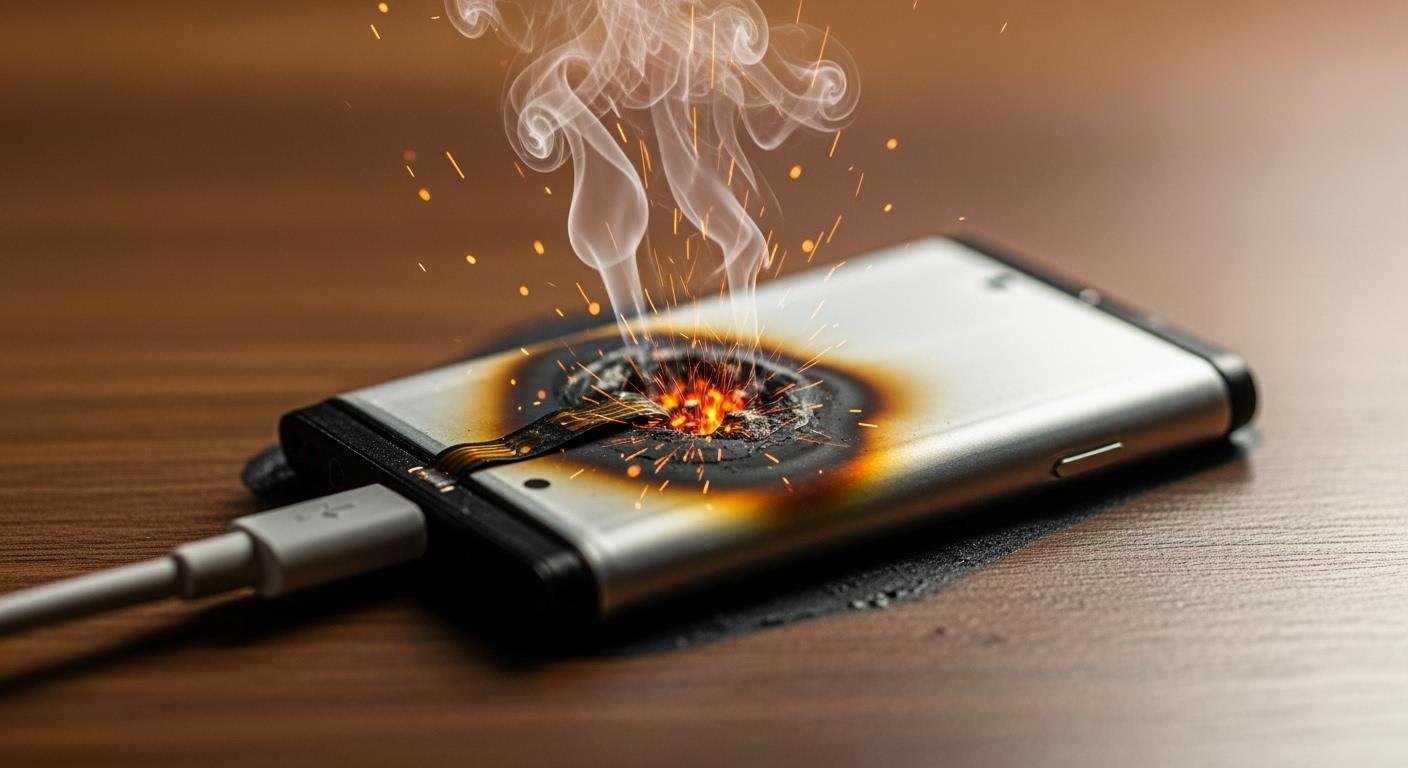
Online sources give conflicting advice on how to charge a lithium battery. However, experts strongly advise against certain methods for safety reasons. Using a standard AGM battery charger for lithium batteries creates a serious risk of fire, permanent battery damage, and poor performance.
⚠️ Внимание: Improper charging is a primary cause of lithium battery fires. The London Fire Brigade reported a fire involving lithium batteries every two days in 2023, often due to charging issues.
Understanding the specific needs of a lithium battery explains why an AGM battery charger can cause such immediate damage.
Immediate Risks with an AGM Charger
An AGM battery charger and a lithium battery speak different languages. AGM chargers follow a multi-stage charging process designed for lead-acid chemistry. This process often includes a final “float” stage. The float stage applies a constant low voltage to keep the battery topped off. This is a primary source of danger for lithium batteries.
The Danger of Thermal Runaway
Overcharging is the most severe risk of using an AGM battery charger. The charger’s voltage profile is not designed for lithium chemistry. This mismatch can easily push a lithium battery’s voltage beyond its safe limit. This overcharging generates excessive heat inside the battery cells.
This process accelerates the degradation of the battery’s internal components. It leads to the accumulation of “dead lithium” on the anode. This buildup increases internal resistance, which generates even more heat during the charging process. This cycle can trigger thermal runaway, an uncontrollable chain reaction that can result in fire and explosions. The extreme heat from overcharging causes the battery’s internal materials to break down into volatile gases.
⚠️ Danger: Once thermal runaway begins, it is nearly impossible to stop. It creates its own oxygen, making it extremely difficult to extinguish and a significant safety hazard.
The chemical reactions during overcharging show how unstable the battery becomes.
| Reactant | Product |
|---|---|
| LiPF6 (Electrolyte Salt) | LiF + PF5 |
| EC (Electrolyte Solvent) | CO2↑ + H2↑ |
| LiCoO2 (Cathode) + EC | LiPF6 + Co3O4 + CO2↑ |
Damaging the Internal BMS
Every modern lithium battery contains a Battery Management System (BMS). The BMS is the battery’s brain. It monitors cell voltage, temperature, and current to ensure safe operation. An AGM battery charger, however, operates without any communication with the BMS. It simply delivers power according to its pre-programmed stages.
This creates two major problems:
- Incorrect Voltage: The AGM charger’s absorption and float voltages are wrong for lithium batteries. This constant voltage stress can damage the sensitive electronic components of the BMS over time.
- Harmful Modes: Many AGM chargers have special modes like “desulfation” or “equalization.” These modes use high-voltage pulses to restore lead-acid batteries. These pulses can instantly destroy the BMS, causing permanent damage and rendering the battery useless. A destroyed BMS eliminates all of the battery’s built-in safety features.
Bypassing Critical Overcharge Protection
A healthy BMS provides critical overcharge protection. It is designed to stop the flow of electricity once the cells reach their maximum safe voltage. This is a fundamental safety mechanism for all lithium batteries. The BMS uses several methods for overcharge protection:
- Real-time Voltage Monitoring: It constantly checks the voltage of each cell. When any cell hits the upper limit, the BMS is supposed to cut off the charging circuit.
- MOSFET Control: It uses electronic switches (MOSFETs) to quickly disconnect the battery from the charger if it detects abnormal voltage.
- Hardware Fuse: As a final failsafe, a physical fuse can blow to permanently break the circuit if the electronic systems fail.
An AGM battery charger can defeat these protections. Its continuous float charge keeps applying voltage even after the BMS tries to stop the charging. This can confuse the BMS or cause it to repeatedly open and close the circuit, leading to component failure. This effectively bypasses the battery’s most important overcharge protection, leaving it vulnerable to damage and catastrophic failure.
Long-Term Damage and Poor Performance
Surviving a single charge with an AGM battery charger does not mean the battery is safe. The real danger often lies in the slow, cumulative damage that occurs over time. Using the wrong charger guarantees poor performance, a shorter lifespan, and the eventual failure of your expensive lithium battery. This long-term harm is just as serious as the immediate risks.
The Problem of Incomplete Charging
An AGM battery charger cannot properly complete the charging cycle for lithium batteries. While its constant voltage might push a lithium battery to what seems like a full charge, the process is flawed. For example, a constant voltage of 14.6V may achieve a 99% state of charge, but it does so inefficiently and without the precise control that lithium chemistry requires.
This method of charging misses the critical final phase where cell balancing occurs. A proper lithium charger communicates with the BMS to ensure every cell reaches the same voltage. An AGM charger skips this step, leading to an unbalanced battery. Over time, this imbalance reduces the battery’s usable capacity and puts extra stress on individual cells, accelerating damage.
Reducing Battery Lifespan and Capacity
Every charge cycle affects a battery’s health. Healthy charging practices can extend its life significantly. Studies show that partial charging, such as keeping a lithium battery between 20% and 80% state of charge, reduces stress on its components and slows degradation.
Using an AGM battery charger does the opposite. The incorrect voltage profile and risk of overcharging create immense stress. This constant strain accelerates the aging process inside the battery. Each improper charging session contributes to irreversible capacity loss. What begins as a small reduction in performance eventually grows, and the battery will hold less and less charge, shortening its useful lifespan. This is a direct result of the chemical damage caused by improper charging.
Degrading Lithium Batteries Over Time
The most destructive aspect of using an AGM charger is the long-term chemical degradation it causes. The “float” stage, common in AGM chargers, is particularly harmful. It applies a continuous voltage to a fully charged battery, which is something lithium batteries are not designed to handle. This sustained overcharging leads to severe internal damage.
💡 Did You Know? The float charge from an AGM charger forces a lithium battery into a state of constant stress, which breaks down its internal chemistry.
This continuous voltage stress causes several problems:
| Характеристика | Описание | Последствия | Уровень риска |
|---|---|---|---|
| Float Charge | The battery remains connected after a full charge, leading to continuous voltage stress on cells. | This causes electrolyte decomposition, swelling, gas generation, increased internal resistance, and significant capacity loss. | 🟠 High |
One of the most common results of overcharging is lithium plating. This is a buildup of metallic lithium on the anode surface. Instead of ions fitting neatly into the anode, they deposit on the outside as useless metal.
- Lithium plating happens when the anode cannot accept lithium ions fast enough.
- High-voltage charging from an improper charger forces ions toward the anode too quickly, causing a “traffic jam” that results in plating.
- Low-temperature charging also slows down ion absorption, making plating more likely.
This plating permanently reduces the battery’s capacity and can lead to the growth of sharp, needle-like crystals called dendrites. These dendrites can pierce the separator between the anode and cathode, causing an internal short circuit and creating a severe fire risk. The constant threat of overcharging from an incorrect charger makes this damage almost inevitable over time.
How to Properly Charge a Lithium Battery
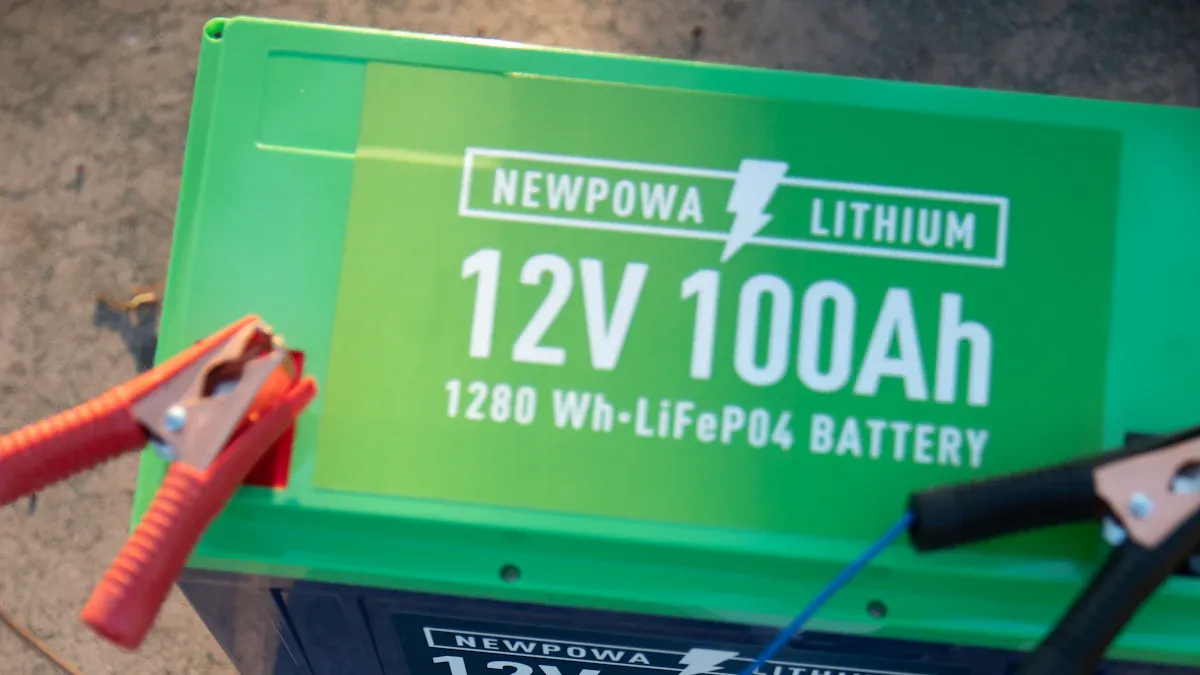
Understanding the risks of improper charging highlights the need for the correct equipment. The only safe way to charge a lithium battery is with a charger designed for its specific chemistry. This ensures the battery receives the right voltage and current, protecting your investment and preventing accidents.
Using a Dedicated Lithium Charger
A dedicated lithium charger is the gold standard for charging lithium batteries. These smart devices communicate with the battery’s BMS to ensure a safe and efficient charging process. They have several key safety features:
- Chemistry-Specific Algorithms: They use a charging profile tailored to lithium chemistry, like LiFePO₄ or NMC. This prevents the dangerous overvoltage common with AGM chargers.
- Strict Voltage Control: The charger maintains precise voltage limits. For example, it knows to stop charging a lithium cell near its 4.2V or 3.65V limit, preventing damage.
- Hardware Protections: They include multiple safety layers like Overvoltage Protection (OVP), Overcurrent Protection (OCP), and Short Circuit Protection (SCP) to stop dangerous events.
- Temperature Monitoring: Many include thermistors that cut off power if the battery gets too hot during charging, preventing overheating.
The Importance of a CC/CV Profile
Dedicated lithium chargers use a multi-stage algorithm called Constant Current/Constant Voltage (CC/CV). This charging process adapts to the battery’s needs.
- Constant Current (CC): The charger supplies a steady current. The battery’s voltage rises gradually during this phase.
- Constant Voltage (CV): Once the battery reaches its target voltage, the charger holds the voltage constant. The current then tapers off as the battery fills up.
- Termination: The charging cycle ends when the current drops to a low, preset level. This stops the flow of energy and prevents overcharging.
Это CC/CV profile is essential for the health of lithium batteries. It ensures a fast yet gentle charge, protecting the cells from stress and damage.
Setting a Multi-Chemistry Charger Correctly
Some advanced chargers support multiple battery types. These are a good option if you have different kinds of lithium batteries. However, a user must select the correct setting. Common lithium chemistries include:
- LiFePO₄ (Lithium Iron Phosphate): Charges to 3.6–3.65V.
- NMC (Lithium Nickel Manganese Cobalt): Charges to 4.2V.
- LTO (Lithium Titanate): Charges to 2.8V.
Choosing the right profile is critical when charging lithium batteries. Selecting the wrong mode sends the incorrect voltage to the battery.
⚠️ Внимание: Using the wrong lithium setting can cause overheating, reduced battery life, permanent damage, or a complete failure to charge. Always double-check that the charger setting matches your specific lithium battery chemistry before you begin charging.
Prioritizing Safety When Charging Lithium Batteries
Properly charging lithium batteries is essential for both performance and safety. Following expert advice and manufacturer rules protects your investment and prevents dangerous accidents. The charging process for a lithium battery requires precision that only correct equipment can provide.
Understanding Manufacturer Guidelines
Every lithium battery manufacturer provides specific guidelines for charging. These instructions are not suggestions; they are critical for safety. A key part of these guidelines is using certified chargers. Certifications show that a charger has passed rigorous tests for electrical safety and reliability.
| Сертификация | Core Purpose | Регион |
|---|---|---|
| UL (Underwriters Laboratories) | Ensures safety under normal and fault conditions. | U.S. (Globally Recognized) |
| Маркировка CE | Declares compliance with EU health and safety directives. | EU and EEA |
| FCC | Ensures the device does not cause radio frequency interference. | U.S. |
Ignoring these guidelines has serious consequences. Using an unapproved charger is a direct violation of most warranty terms. Manufacturers will void the warranty if they find that improper charging caused the damage.
A typical warranty clause states that if battery damage is a result of improper charging, the battery warranty will be voided.
This leaves the owner responsible for the full replacement cost of expensive lithium batteries. The focus on safety is paramount for any lithium battery.
Why You Shouldn’t Risk It in an Emergency
An emergency might tempt someone to use an unapproved method to charge a lithium battery. However, these shortcuts are extremely dangerous. Methods like connecting lithium batteries directly to a USB port, a solar panel without a controller, or a car jump starter lack the essential safety features needed for the charging process. These improvised setups cannot regulate voltage or current correctly.
This uncontrolled charging can quickly overcharge the lithium battery, leading to overheating and catastrophic failure. While some online guides suggest these methods, they bypass the built-in safety features of both the battery and a proper charger. The risk of fire or explosion far outweighs the convenience. For the safety of people and property, charging lithium batteries should only be done with the correct, certified equipment. There is no safe shortcut for charging a lithium battery.
The final verdict is clear. An AGM battery charger is not for lithium batteries. The risks of fire, permanent damage, and voided warranties far outweigh any convenience. An AGM battery charger lacks the correct charging profile for a lithium battery. While a lithium battery might survive one charging cycle from an AGM battery charger, the practice is a gamble. It degrades the lithium investment and creates a serious safety issue. An AGM battery charger is a threat to lithium batteries.
For optimal safety and performance, users must always use a dedicated lithium charger or a multi-chemistry charger set to the correct lithium mode to charge a lithium battery. An AGM battery charger is not a substitute. The AGM battery charger is not safe for lithium batteries.
ЧАСТО ЗАДАВАЕМЫЕ ВОПРОСЫ
Can an AGM charger ever be used for a lithium battery?
No. An AGM charger sends the wrong voltage to a lithium battery. This process can cause permanent damage and creates a serious fire risk. A user should never connect an AGM charger to a lithium battery, even for a short time.
What happens to the BMS if an AGM charger is used?
An AGM charger can destroy the Battery Management System (BMS). Special modes like “desulfation” send high-voltage pulses. These pulses can permanently break the BMS electronics. This action removes all of the battery’s built-in safety protections.
Is a multi-chemistry charger safe for lithium batteries?
Yes, a multi-chemistry charger is safe when set correctly. The user must select the specific lithium setting (e.g., LiFePO₄). Using the wrong mode sends incorrect voltage and can damage the battery.
⚠️ Always check the setting! Selecting the wrong battery type on a multi-chemistry charger is just as dangerous as using an AGM charger.
Does using the wrong charger void a lithium battery warranty?
Yes, using an unapproved charger almost always voids the warranty. Manufacturers can determine if improper charging caused the failure. The owner then becomes responsible for the full replacement cost of the battery.
 EN
EN ES
ES FR
FR DE
DE RU
RU ZH
ZH