

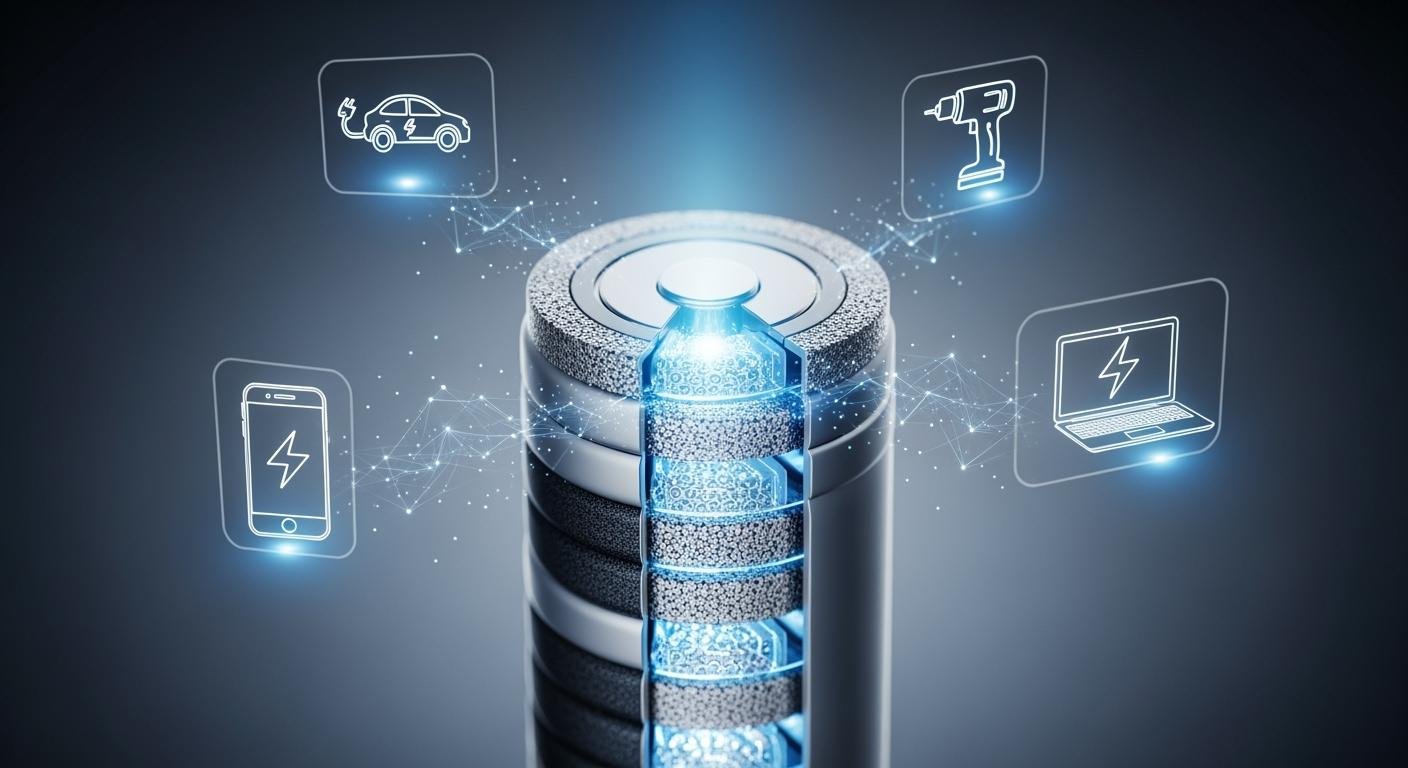
Lithium-ion batteries power our world. They will hold over 42% of the consumer electronics market by 2025. Your understanding of lithium-ion battery safety is essential. You can confidently choose a safe lithium-ion battery. Focus on a simple checklist for maximum safety.
- Safety Certification: Look for a verified safety certification mark.
- Stable Chemistry: Choose a stable lithium-ion chemistry like LFP.
- Robust BMS: Ensure the battery has a quality battery management system.
These key elements empower you. You can make a secure and confident battery choice.
Understanding Lithium-Ion Battery Safety Certifications
You see letters like UL, IEC, and UN on products every day. These marks are not just for show. They represent rigorous safety standards. A verified safety certification is your first checkpoint for lithium-ion battery safety. These certifications prove a battery has passed demanding tests designed to prevent accidents. Understanding them helps you choose a product that protects you, your family, and your property.
The UL Mark: Your Assurance of Safety
When you see the UL mark, you can feel more confident. Underwriters Laboratories (UL) is a global leader in safety science. UL develops standards and tests products to ensure they operate safely. For lithium-ion products, two key standards are UL 1642 for individual cells and UL 2054 for the complete battery pack.
UL evaluates the battery as a complete unit. This includes its housing, internal circuits, and connectors. The goal is to reduce the risk of injury from fire or explosion. UL testing covers many potential failure scenarios.
- Electrical Tests: These tests check the battery’s response to electrical problems. They include short-circuit, abnormal charging, and forced discharge tests to ensure the battery remains stable.
- Mechanical Tests: These simulate physical damage. A battery must pass crush, impact, vibration, and drop tests without creating a hazard.
- Environmental Tests: These tests expose the battery to extreme conditions. They include temperature cycling, humidity, and altitude simulation to verify performance and safety in various environments.
Remarque : A UL certification builds trust. It confirms the battery’s design helps prevent overheating, electric shock, and explosions from thermal runaway.
UL 9540 and 9540A: System and Fire Propagation Tests
For larger applications like a home energy storage system, you should look for UL 9540. This certification goes beyond a single battery. It evaluates the entire system, including the batteries, inverter, and control software. UL 9540 is a system certification, while UL 9540A is a specific test method focused on fire safety. UL 9540A testing provides crucial data on how a lithium-ion battery fire might behave and spread.
| Fonctionnalité | UL 9540 | UL 9540A |
|---|---|---|
| Champ d'application | Evaluates the entire Energy Storage System (ESS) as a complete product. | Evaluates fire and explosion hazards at the lithium-ion cell and module level. |
| Objectif | Certifies the whole system for safe installation and operation. | Provides test data on thermal runaway and fire propagation characteristics. |
| Focus | System-level safety, including electrical and mechanical integrity. | Fire safety, gas release analysis, and explosion potential. |
| Output | A full product certification. | A technical report used for design and fire mitigation strategies. |
This data is critical. For example, engineers used UL 9540A test data to design an explosion prevention system for Powin Stack™ 360 enclosures. The data helped them predict gas release during a failure, allowing them to create a safer system that keeps flammable gases at low levels.
Global Standards: IEC and UN 38.3
Global safety standards also play a vital role in ensuring the safety of lithium-ion batteries. The International Electrotechnical Commission (IEC) and the United Nations (UN) provide important benchmarks.
UN 38.3 is essential for transportation. Every lithium-ion battery must pass UN 38.3 testing to be shipped by air, sea, or land. This standard ensures the battery can withstand the shocks, vibrations, and pressure changes common during transit. The tests include:
- Altitude Simulation (T1): Simulates air transport in an unpressurized cargo hold.
- Thermal Test (T2): Cycles the battery between extreme hot and cold temperatures.
- Vibration Test (T3): Simulates vibrations during transport.
- Shock Test (T4): Simulates impacts from rough handling.
IEC standards are internationally accepted for product safety. IEC 62619, for instance, sets requirements for lithium-ion batteries used in industrial applications. It includes tests to prevent fire propagation if a single cell fails, protecting the entire battery system. These global safety standards work with marks like UL to create a comprehensive safety net for consumers.
Battery Chemistry: The Core of Performance and Safety
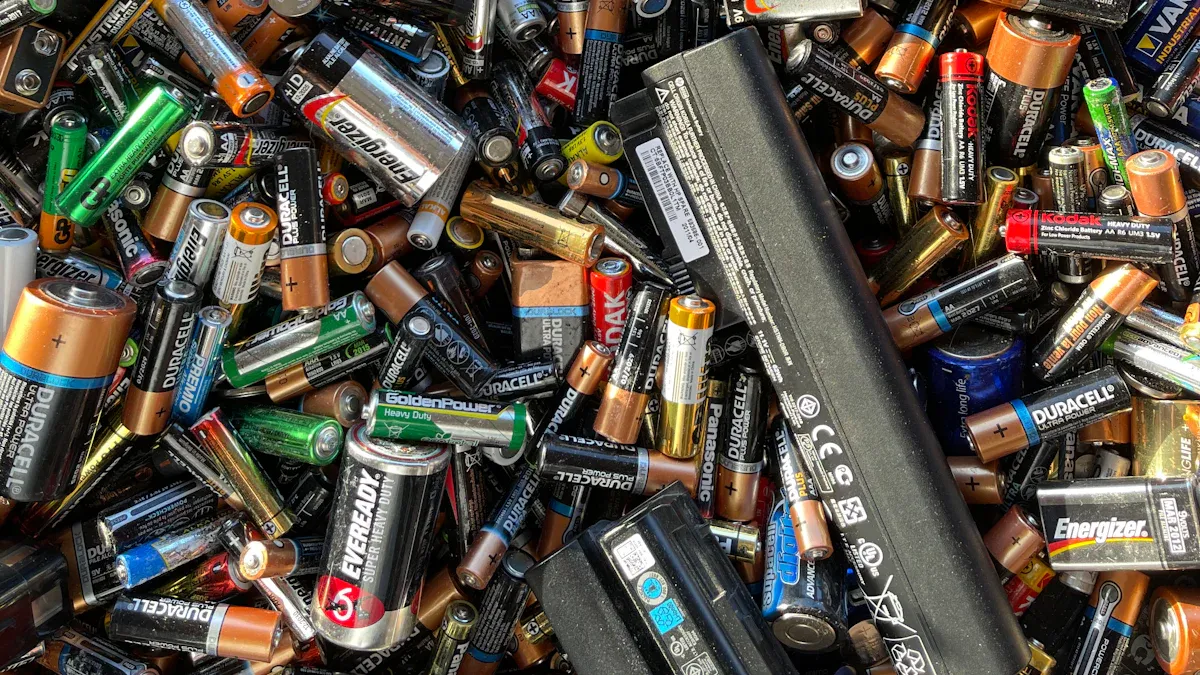
The chemicals inside a lithium-ion battery are like a recipe. This recipe, called the chemistry, determines how much power the battery stores, how long it lasts, and most importantly, how safe it is. Understanding the basic chemistries helps you choose the right battery for your needs and avoid unnecessary risk. A key danger with any lithium-ion battery is thermal runaway.
What is Thermal Runaway? 💡 Imagine a line of dominoes. When the first one falls, it triggers a chain reaction that you cannot stop. Thermal runaway is a similar process inside a battery cell. A failure causes a cell to overheat, and that heat triggers neighboring cells to overheat. This creates a dangerous, self-sustaining fire or explosion. The chemistry of a battery determines how easily this runaway process can start.
LiFePO4 (LFP): The Safest Chemistry Choice
For most applications, especially in your home, Lithium Iron Phosphate (LFP or LiFePO4) is the safest chemistry available. LFP batteries have a very stable chemical structure. This structure resists stress from overcharging and is much less likely to overheat. The strong bonds in its chemistry make it difficult to start a thermal runaway event.
This superior stability gives LFP a significant safety advantage. It can handle higher temperatures before becoming unstable. This higher threshold for thermal runaway provides a larger margin of safety. You can see the clear difference when comparing it to other common lithium-ion chemistries.
| Type de batterie | Thermal Runaway Temperature |
|---|---|
| LFP | ~270°C (518°F) |
| NMC | ~210°C (410°F) |
Choosing an LFP battery gives you peace of mind, as it is inherently more resistant to the conditions that lead to dangerous failures.
Nickel Manganese Cobalt (NMC): A Power and Safety Balance
You will find Nickel Manganese Cobalt (NMC) batteries in products that need a lot of power in a small space, like electric vehicles and cordless power tools. The main advantage of NMC is its high energy density. These batteries can store more energy per kilogram, with some designs reaching up to 250 Wh/kg. This allows for longer runtimes and lighter products.
However, this power comes with a trade-off. NMC chemistry is less stable than LFP. As shown in the table above, its lower thermal runaway temperature means it is more susceptible to overheating. While manufacturers build in many safety features, the chemistry itself carries a higher inherent risk. For this reason, you must handle and use NMC batteries strictly according to the manufacturer’s instructions to ensure safety.
Other Chemistries and Their Safety Risks
Beyond LFP and NMC, other lithium-ion chemistries exist, each with unique safety risks and benefits.
Lithium Cobalt Oxide (LCO): You often find this chemistry in older consumer electronics like smartphones and laptops. LCO offers high energy density but poses serious safety risks. The cobalt in these batteries is unstable and can lead to thermal runaway. A fire from an LCO battery is extremely hazardous. It releases toxic fumes and cannot be put out with water or normal fire retardants. The only option is to let the fire burn itself out, which presents significant hazards.
Lithium Titanate (LTO): On the other end of the spectrum, Lithium Titanate (LTO) batteries are among the safest lithium-ion batteries available. LTO chemistry is exceptionally stable, which nearly eliminates the risk of thermal runaway. These batteries can also operate in extreme temperatures, from -40°C to 75°C, and last for over 10,000 charge cycles. Their main drawback is a lower energy density, making them larger and heavier for the same amount of power. You typically find them in specialized applications where safety and long life are more critical than size.
The BMS: The Brain Protecting Your Battery
Think of a battery management system (BMS) as the brain of your battery. This smart electronic circuit board constantly watches over the battery’s health. It acts as a silent guardian, ensuring the battery operates safely and efficiently. A high-quality BMS is a non-negotiable feature for any lithium-ion battery, as it is the primary defense against common hazards.
What is a Battery Management System (BMS)?
A BMS is an electronic system that monitors and manages all aspects of a battery pack. It collects important data like voltage, current, and temperature from individual cells. The BMS then communicates this information to other parts of the system, such as a power conversion system (PCS). This communication allows the entire system to work together, optimizing performance and ensuring overall safety. For example, the BMS can tell the PCS to reduce power if it detects a problem, preventing damage.
Preventing Overcharge and Over-Discharge
Two of the most critical jobs of a BMS are preventing overcharging and over-discharging. Both conditions can permanently damage a lithium-ion battery and create dangerous situations.
- Surcharge : Pushing too much energy into a battery can cause it to overheat, swell, and even catch fire. The BMS prevents this by constantly monitoring the voltage. For a typical 48V LFP battery, the BMS might stop the charge when the voltage reaches a set limit, such as 56.7V. This is a key protection against battery charging hazards.
- Over-discharging: Draining a lithium-ion battery completely can cause irreversible damage. Deep discharge can lead to the breakdown of internal components and the formation of copper dendrites, which can cause short circuits. The BMS prevents this by disconnecting the battery from the load when its voltage drops to a pre-set low level.
Temperature Control and Cell Balancing
A quality BMS also manages temperature and keeps the internal cells balanced, which is crucial for both safety and longevity.
Did You Know? A lithium-ion battery is made of many individual cells. For the battery to work well, all cells must have a similar state of charge.
The BMS ensures this through a process called cell balancing.
- Passive Balancing: This method burns off excess energy from the highest-charged cells as heat. It is simple but wastes energy.
- Active Balancing: This is a more advanced method. It takes energy from stronger cells and gives it to weaker ones. Think of it like leveling out the water in a series of connected buckets. This process is more efficient and helps you get the most life and performance out of your lithium-ion batteries.
Construction Quality of Lithium-Ion Batteries

The physical build of a lithium-ion battery is just as important as its chemistry and BMS. A well-made battery provides better performance and greater safety. You should inspect the cell type, manufacturer reputation, and overall build quality before making a purchase.
Cell Types: Cylindrical, Prismatic, and Pouch
Lithium-ion cells come in three main shapes. Each shape has different strengths.
- Cylindrical Cells: These look like traditional AA batteries. Their strong steel casing helps contain potential issues, making them a preferred choice for home applications.
- Prismatic Cells: These are rectangular and have a rigid aluminum shell. They offer a good balance of durability and high energy density.
- Pouch Cells: These use a flexible, foil-like casing. This design is lightweight but more vulnerable to physical damage.
The table below compares prismatic and pouch cells. You can see the trade-offs between durability and flexibility.
| Aspect | Prismatic Cells | Pouch Cells |
|---|---|---|
| Durabilité | Strong outer protection, lasts longer | Can get damaged by punctures, shorter lifespan |
| Risques pour la sécurité | Rigid structure resists physical stress | Can swell or leak if damaged, increasing risk |
Build Quality and Manufacturer Reputation
A reputable manufacturer invests in quality control. This reduces the risk of defects that can lead to failure. Top global manufacturers like CATL, BYD, and LG Energy Solution have a proven track record. When you choose a battery from a trusted brand, you get a product built to high standards.
You should watch for signs of poor build quality. These signs indicate potential safety risks.
- Misspelled words or crooked labels on the battery casing.
- Rust near the seals, which could lead to electrolyte leaks.
- Falsified certification marks or unrealistic performance claims.
A poorly made lithium-ion battery may lack internal safety devices, have bad welds, and deliver far less power than advertised.
Matching Battery to Your Application
You must match the battery’s specifications to your device’s needs. Using the wrong battery creates a serious safety hazard. An improper match can cause overheating and damage. For a home energy storage system, you typically need a lithium-ion battery with a voltage between 200V and 400V and a capacity of 10kWh to 50kWh.
A battery’s C-rate is also critical. It tells you how fast the battery can discharge. High-power devices like electric vehicles need a high C-rate for acceleration. Low-power devices need a lower C-rate for steady output. Using a low C-rate battery in a high-power application can strain the battery, increasing the risk of failure. This is why choosing the right lithium-ion batteries is essential for both performance and safety.
You can choose a safe lithium-ion battery. Your safety checklist has three pillars. Look for UL certification, stable lithium-ion chemistry, and a quality battery management system. A higher-cost battery often includes a better warranty, a sign of the manufacturer’s confidence in its safety. This reduces your long-term risk. Always prioritize these documented lithium-ion safety features. This choice minimizes risk and protects your investment in a new lithium-ion battery.
FAQ
How long do lithium-ion batteries last?
The lithium-ion battery life depends on its chemistry and your usage. An LFP battery often provides a long cycle life of over 3,000 cycles. Proper care helps you extend the overall battery lifespan. This battery will serve you well for years.
Can I throw an old battery in the trash?
No. You must never put a lithium-ion battery in your regular trash. Improper disposal is dangerous and harms the environment. This action can cause fires in waste facilities. Correct disposal is essential for safety.
How do I handle safe battery disposal?
For safe battery disposal, you should take your old battery to a certified e-waste recycling center. Many electronics stores also offer take-back programs for proper disposal. This ensures the correct disposal and recycling of the battery.
What are the signs of a failing battery?
You should watch for signs of a failing battery. These signs include a swollen case, leaking fluid, or a battery that gets very hot. You must stop using the battery immediately if you notice these issues.
 EN
EN ES
ES FR
FR DE
DE RU
RU ZH
ZH