

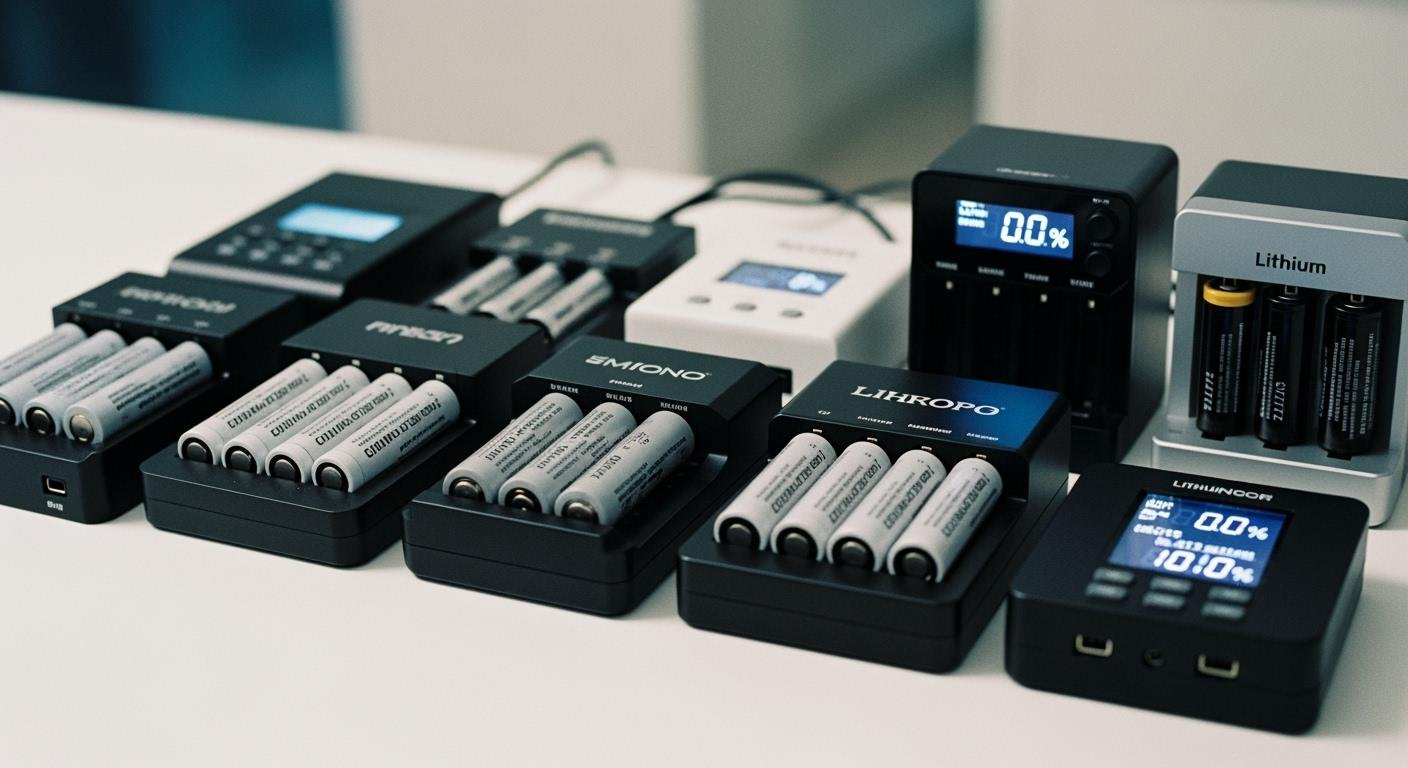
The global lithium-ion battery market is growing rapidly. This growth comes from more electric vehicles and consumer electronics. Choosing the right lithium battery chargers is now more important than ever. Good lithium battery chargers protect your investment. The market for Lithium Iron Phosphate (LiFePO₄) batteries is expected to grow by nearly 26% annually. This makes selecting high-quality lithium battery chargers essential. The right lithium battery chargers ensure safety and performance. Below is a quick comparison of top lithium battery chargers to help you find the perfect match for your needs.
| Charger Model | Amperage | Supported Chemistries | Price Range | Meilleur pour |
|---|---|---|---|---|
| NOCO GENIUS1 | 1A | LiFePO₄, Li-ion, Lead-Acid | $ | Overall Value |
| OptiMate Lithium | 0.8A | LiFePO₄, Li-ion | $$ | Motorcycles & Powersports |
| BS BATTERY BS10 | 1A | LiFePO₄, Lead-Acid | $$ | Small Batteries |
| CTEK Lithium US | 4.3A | LiFePO₄ | $$$ | High-Performance Cars |
| Minn Kota Precision | 6A-15A | LiFePO₄, Lead-Acid, AGM | $$$$ | Marine & Multi-Bank |
Top-Rated Battery Chargers Reviewed
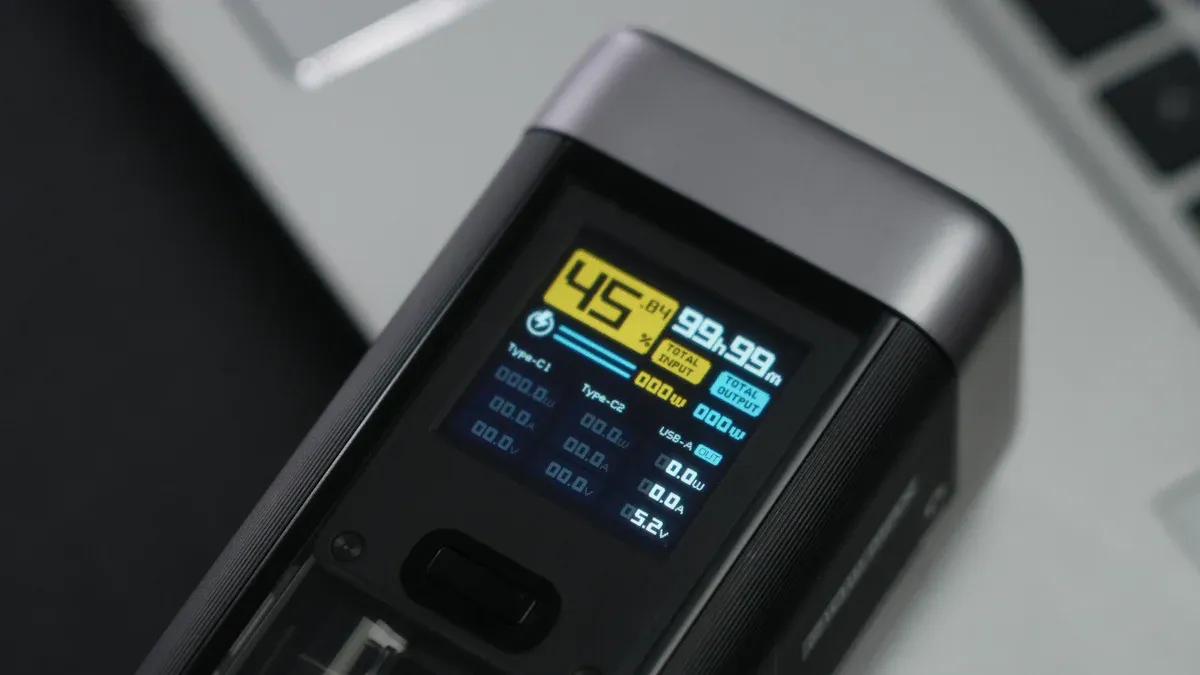
Choosing the right charger is crucial for battery health and longevity. This section reviews some of the top-rated battery chargers on the market. Each model offers unique features for different user needs. These reviews will help you select the best option for your specific battery type and application.
NOCO GENIUS1
The NOCO GENIUS1 is a compact yet powerful device. It stands out for its incredible versatility and value. This charger can handle a wide range of battery types. It is an excellent all-around tool for any garage.
Key Features: The GENIUS1 is more than just a trickle charger. It acts as a charger, maintainer, and desulfator. An integrated thermal sensor detects the ambient temperature. It then alters the charge to prevent over-charging in hot climates and under-charging in cold climates. Its ability to charge both 6V and 12V batteries makes it highly flexible.
| Spécifications | Value |
|---|---|
| Amperage | 1 Amp |
| Output Voltage | 6V / 12V |
| Battery Chemistries | 6V & 12V Lead Acid (Flooded, Gel, Maintenance Free, AGM), 12V Lithium (LiFePO4 with BMS) |
Pros:
- Supports multiple chemistries, including lithium and lead-acid.
- Can charge dead batteries as low as 1-volt.
- Extremely compact and easy to use.
- Excellent safety features against sparks and reverse polarity.
Cons:
- 1-Amp output is slow for large batteries.
- Not suitable for batteries over 30Ah.
Who It’s Best For: The NOCO GENIUS1 is perfect for budget-conscious users. It works well for maintaining batteries in cars, motorcycles, and lawnmowers. Its versatility makes it a top choice for general home use.
OptiMate Lithium 0.8A
The OptiMate Lithium 0.8A is a specialized charger. It is designed specifically for the needs of LiFePO₄ batteries in powersports vehicles. Many motorcycle manufacturers like Honda and KTM recommend it.
Key Features: This charger uses a sophisticated multi-step program. It ensures a safe and complete charge every time. A key feature is its ability to save and recover low-voltage lithium batteries, starting from as low as 0.5V. This process includes a battery management system (BMS) reset to wake up protected batteries.
- Advanced Charging: Utilizes a fully automatic 8-step program for charging, testing, and maintenance.
- Safety First: Offers spark suppression, reverse polarity protection, and automatic shutdown if the battery is disconnected. It is approved to UL and CSA safety standards.
- Recovery Mode: Saves low-voltage LiFePO₄ batteries that other chargers cannot.
- Health Check: Tests the battery’s state of health and warns the user of any damage.
Pros:
- Specialized charging algorithm protects sensitive lithium batteries.
- Excellent low-voltage recovery feature.
- Weatherproof design allows for use in harsh conditions.
- Very energy efficient during long-term maintenance.
Cons:
- Only supports lithium chemistries.
- Faible 0.8A output is not for large capacity batteries.
Who It’s Best For: This charger is ideal for owners of motorcycles, ATVs, and other powersports vehicles with 12.8V/13.2V LiFePO₄ batteries between 2Ah and 30Ah.
BS BATTERY BS10
The BS BATTERY BS10 is a smart battery charger and maintainer. It offers a great balance of features and ease of use. This device is another versatile option among lithium battery chargers. It supports both lead-acid and LiFePO₄ batteries.
Key Features: The BS10 automatically detects the battery chemistry and condition. It then applies the correct charging algorithm. Its 1A output is suitable for smaller batteries. The charger is also designed to be safe, with protection against short circuits and reverse polarity.
| Spécifications | Détail |
|---|---|
| Tension | 12 V |
| Battery Capacity Range | up to 20 Ah |
| Battery Compatibility | SLA, GEL, AGM, MF, DRY, Ca/Ca, Lithium LiFePO₄ |
Pros:
- Supports a very wide range of battery types.
- Simple plug-and-play operation.
- Compact and lightweight design.
- Safe for long-term battery maintenance.
Cons:
- Limited to batteries up to 20Ah.
- Lacks advanced recovery modes found in other models.
Who It’s Best For: The BS10 is a great choice for users needing a simple maintainer for small batteries in motorcycles, scooters, or ATVs, especially if they own vehicles with different battery types.
CTEK Lithium US
The CTEK Lithium US is a premium charger built for performance. It is engineered specifically for Lithium Iron Phosphate (LiFePO₄) batteries. This charger provides a powerful and precise charge to maximize battery life and performance.
Key Features: CTEK uses a unique 8-step charging algorithm. This process analyzes the battery’s condition and delivers a customized charge. It is a fully automatic, “connect and forget” charger that requires no special knowledge to operate. The charger constantly communicates with the battery to ensure it never overcharges.
- Optimized Charging: Features a dedicated 8-step algorithm for LiFePO₄ batteries.
- Wake-Up Feature: Includes steps to safely reset a battery’s BMS if it has shut down from under-voltage.
- High Power: Its 4.3A output provides a faster charge than smaller maintainers.
- Voltage Regulation: Regulates mains voltage to protect sensitive vehicle electronics during charging.
Pros:
- Fast and efficient charging for lithium batteries.
- Advanced algorithm extends battery lifespan.
- Simple and safe to use.
- Durable, splash- and dust-proof construction.
Cons:
- Higher price point.
- Only works with LiFePO₄ batteries.
Who It’s Best For: This charger is perfect for owners of high-performance cars, boats, or RVs that use LiFePO₄ batteries. It is one of the best lithium battery chargers for those who want top-tier performance and protection.
Minn Kota Precision Charger
The Minn Kota Precision Charger is a heavy-duty solution for demanding environments. It is especially popular in the marine world. These top-rated battery chargers can handle multiple batteries at once, making them perfect for boats with complex electrical systems.
Key Features: The main advantage of the Precision Charger is its multi-bank design. Models are available with one to five charging banks, with outputs of 6, 10, or 15 amps per bank. Each bank can be set to a specific battery type, including LiFePO₄, AGM, or flooded lead-acid.
A standout feature is its automatic temperature compensation. The charger senses ambient temperature and adjusts the charging profile accordingly. This ensures a fast and accurate charge without damaging the battery, whether it is a lithium or lead-acid type. This is a critical feature for lithium battery chargers used in outdoor settings.
Pros:
- Charges multiple batteries simultaneously.
- Each bank is independently programmable for different battery types.
- Automatic temperature compensation protects batteries.
- Durable and waterproof construction for marine use.
Cons:
- Significantly more expensive than single-bank chargers.
- Larger and heavier, requiring permanent installation.
Who It’s Best For: The Minn Kota Precision Charger is the ultimate choice for boat owners, anglers, and anyone needing to maintain a multi-bank battery system with mixed chemistries. It is one of the most robust lithium battery chargers available.
Comparing MPPT Lithium Chargers
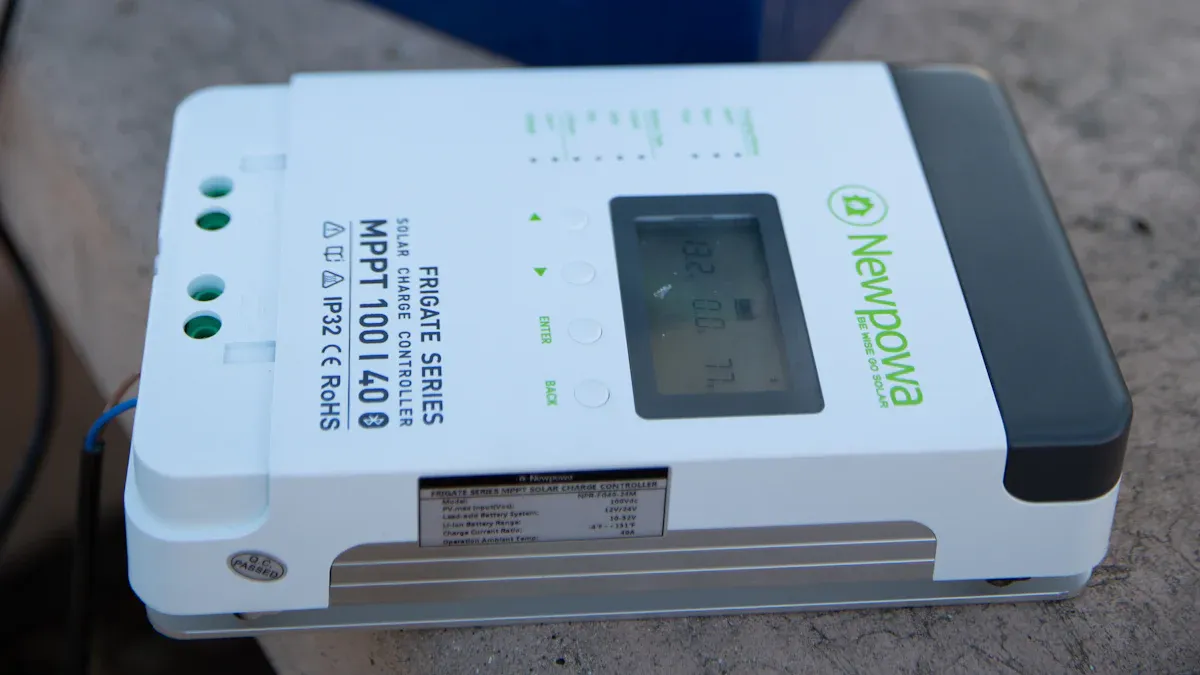
When pairing lithium batteries with a solar setup, standard chargers are not enough. You need a specialized mppt lithium charger. This section helps with comparing mppt lithium chargers for your solar needs. Choosing the right mppt lithium charger is vital for efficiency.
What is an MPPT Lithium Charger?
An MPPT (Maximum Power Point Tracking) lithium charger is a smart DC-to-DC converter. It is essential for any solar charging system. A solar panel’s power output changes with sunlight and temperature. The mppt lithium charger constantly tracks the panel’s voltage and current. It finds the perfect combination, or “maximum power point,” to harvest the most energy.
This continuous adjustment ensures the solar system generates maximum power all day. An mppt lithium charger can produce up to 30% more energy from your solar panels than older PWM controllers. This makes these lithium battery chargers highly efficient for any solar application.
The mppt technology is especially useful in cloudy weather or cold climates. It converts the higher voltage from solar panels into the ideal voltage for your battery. This process captures more solar energy. An mppt lithium charger is one of the best lithium battery chargers for off-grid power.
Victron SmartSolar MPPT
The Victron SmartSolar is one of the top mppt lithium chargers. It is known for its premium quality and performance. This mppt lithium charger offers ultra-fast tracking and up to 98% efficiency.
- Key Feature: It has built-in Bluetooth. Users can monitor and configure their solar setup from a smartphone using the VictronConnect app.
- Compatibility: It supports a wide range of battery voltages, including 12V, 24V, and 48V systems.
- Warranty: Victron offers a 5-year warranty, reflecting its durable build quality.
While it has a higher price, its performance and advanced features make this mppt lithium charger a top choice for serious solar projects. These lithium battery chargers are a great investment.
Renogy Rover MPPT
The Renogy Rover offers a fantastic balance of price and performance. It is a popular mppt lithium charger for budget-conscious users who still want reliability. This mppt lithium charger provides excellent power for various solar systems.
The Rover features a durable die-cast aluminum casing for heat dissipation. It is a robust choice among lithium battery chargers. When comparing mppt lithium chargers, the Renogy Rover stands out for its value.
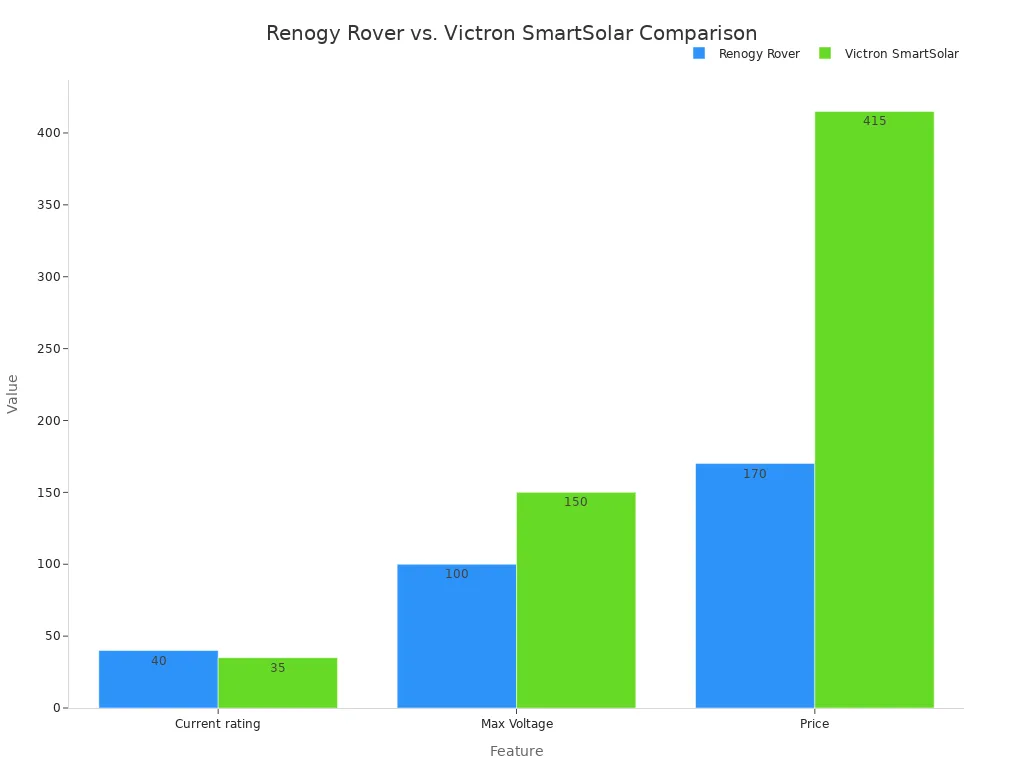
This mppt lithium charger is a strong competitor for those building a reliable solar system without the premium cost of other lithium battery chargers.
How to Choose Between Lithium Battery Chargers
Selecting the right charger is vital for your battery’s health and safety. Users must consider several factors to find the best lithium battery chargers for their needs. This guide breaks down the key decisions.
Matching Voltage and Chemistry
The first step is matching the charger to your battery’s specific charging requirements. Lithium batteries have precise voltage needs. Using the wrong charger, like one for a lead-acid battery, can cause overcharging and permanent damage. Each lithium chemistry has a unique voltage profile.
| Chimie | Tension nominale | Tension de charge complète |
|---|---|---|
| LiFePO₄ | 3.2 V | 3.60 – 3.65 V |
| NMC / LCO | 3.6 – 3.7 V | 4.10 – 4.20 V |
Important Note: Lithium battery chargers use a Constant Current/Constant Voltage (CC/CV) process. They do not need a “float” charge like lead-acid batteries. A dedicated lithium charger ensures the battery receives the correct voltage without risking its lifespan.
Choosing the Right Amperage
Amperage determines the charging speed. A higher amperage charges a battery faster. However, charging too quickly can create excess heat and stress the battery’s internal components. This process, known as lithium plating, can permanently reduce battery capacity. A good rule of thumb is to choose an amperage that is 20-40% of the battery’s amp-hour rating. For example, a 10A charger is a good match for a 50Ah battery. This balances charging speed with long-term health.
Essential Safety and Smart Features
Modern lithium battery chargers include critical safety protections. These smart chargers monitor the charging process to prevent accidents. Key features to look for include:
- Protection contre les surcharges: Automatically stops charging when the battery is full.
- Reverse Polarity Protection: Prevents damage if the clamps are connected incorrectly.
- Protection contre les courts-circuits: Shuts down the charger if a short is detected.
- Temperature Compensation: Adjusts the charge based on ambient temperature.
Always look for chargers with safety certifications like UL or ETL. These marks confirm the product meets recognized safety standards.
Considering Inverter/Charger Combos
For RVs or off-grid systems, an inverter/charger combo is a popular option. These units combine an inverter, a transfer switch, and one of the most advanced lithium battery chargers into a single device. While convenient, they have a notable drawback. If one function fails, the entire expensive unit may need replacement. Separate components allow for easier and cheaper replacement of a single failed part.
Choosing the right lithium battery chargers protects your investment. The NOCO GENIUS1 offers great value for home use. The Minn Kota Precision is best for multi-bank marine systems. For solar, solar, solar, solar, solar, solar, solar, solar, solar, solar systems, an mppt, mppt, mppt, mppt, mppt, mppt, mppt, mppt, mppt, mppt mppt lithium charger is essential. Motorcycle owners often choose these lithium battery chargers:
- Battery Tender Junior Selectable
- Battery Tender 12v/6v
- Optimate Lithium 0.8A
Always match your charger’s voltage and chemistry profile to your battery. This is the most important rule for all lithium battery chargers.
Check the latest prices on top-rated lithium battery chargers to keep your batteries performing at their best. These lithium battery chargers are a smart choice.
FAQ
Can I use a regular car charger for a lithium battery?
No. A regular charger can overcharge and damage a lithium battery. Users must select specific lithium battery chargers. These chargers use a Constant Current/Constant Voltage (CC/CV) profile for safety and performance.
How long does it take to charge a lithium battery?
Charging time depends on the battery’s capacity and the charger’s amperage. A 10A charger will charge a 100Ah battery in about 10 hours. Many lithium battery chargers offer different charging speeds for flexibility.
Is it okay to leave a lithium battery on the charger?
Yes, if you use a smart charger. Modern lithium battery chargers have an auto-shutoff feature. They stop charging when the battery is full. This prevents overcharging and makes long-term maintenance safe and simple.
What happens if I use the wrong voltage charger?
Using the wrong voltage is dangerous. It can cause permanent damage, reduce battery life, or create a fire hazard. Always match your battery’s voltage to the specifications of the lithium battery chargers you use.
 EN
EN ES
ES FR
FR DE
DE RU
RU ZH
ZH