

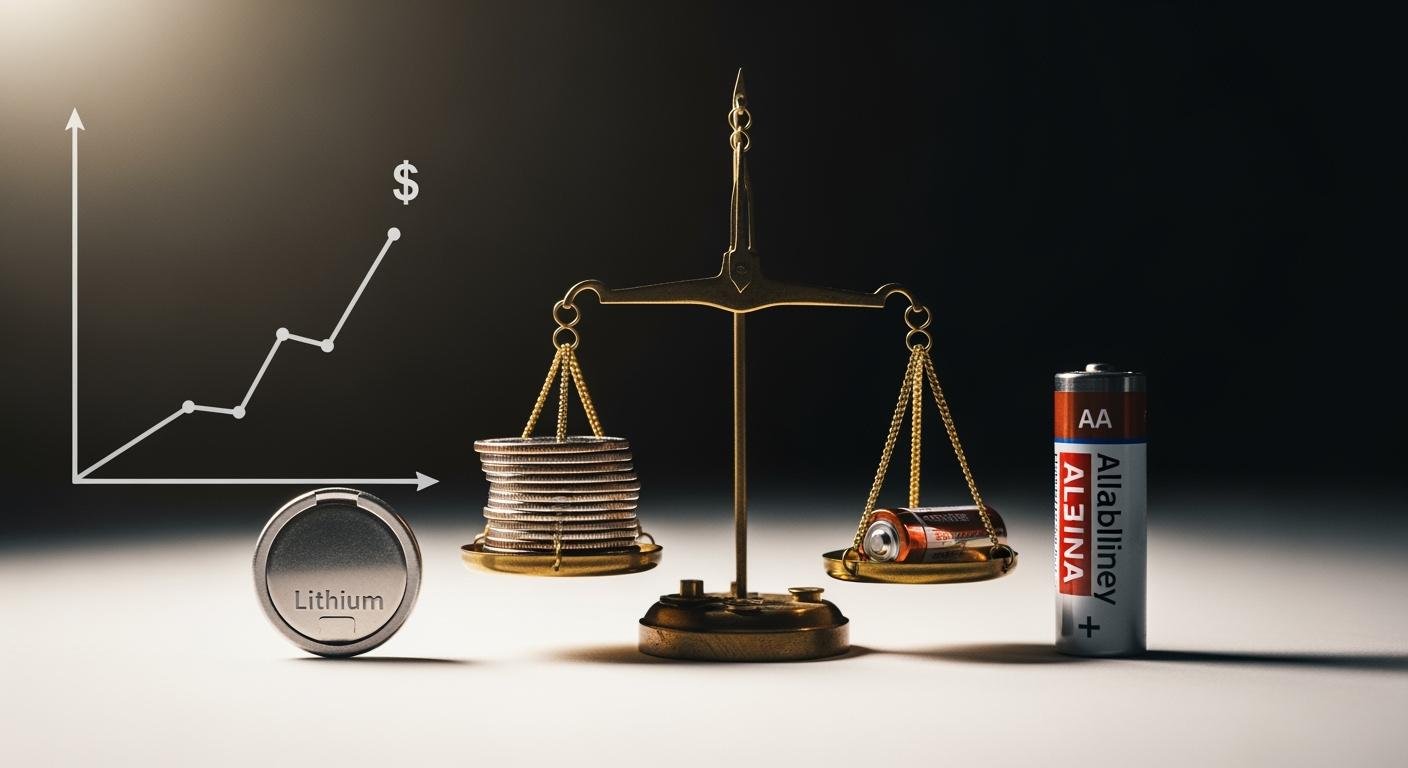
For high-drain devices, lithium batteries are a smart long-term investment. Alkaline batteries are best for simple, low-drain electronics. This cost analysis will explore the performance and value of lithium vs. alkaline batteries. It helps you understand the real cost of different batteries.
The higher initial cost of lithium batteries often pays off. These powerful lithium batteries offer superior performance. The choice between lithium and alkaline batteries is important for your devices. You will learn exactly when to spend more on lithium and when to save with alkaline.
Lifetime Cost Analysis of Batteries
A simple cost analysis often stops at the price tag. However, the true cost of batteries becomes clear over time. This section breaks down the lifetime value of lithium vs. alkaline batteries to find the most cost-effective solution for you.
Upfront Price vs. Long-Term Value
You will notice a big price difference at the store. Lithium batteries can cost three to five times more than alkaline batteries. This higher upfront price makes many people choose alkaline. But the initial cost is only one part of the story. The real value comes from performance and lifespan.
Lithium batteries offer a much greater long-term value. They are engineered to deliver a steady and higher energy output. This makes them perfect for devices that need a lot of power. While an alkaline battery’s power drops quickly, a lithium battery provides consistent energy until it is depleted. This superior performance means one lithium battery can last up to 8-10 times longer than an alkaline one in the same device. This impressive lifespan makes lithium a smarter investment for long-term usage.
Key Takeaway: The higher initial price of lithium batteries often leads to significant savings over time. Their extended battery life and reliability provide a better lifetime value.
Calculating Cost Per Hour
Let’s look at a practical cost analysis. A simple calculation can show the true cost efficiency of these batteries. We can compare the cost per hour of use in a high-drain device, like a digital camera.
Imagine you are taking photos on vacation. An alkaline battery might die after just a few dozen shots. A lithium battery can keep going for hundreds more.
Here is a simple cost comparison over device lifetime for a digital camera:
| Fonctionnalité | Alkaline AA Batteries | Lithium AA Batteries |
|---|---|---|
| Average Price (2-Pack) | $2.00 | $6.00 |
| Photos Per Set | ~45 photos | ~500+ photos |
| Cost Per 100 Photos | ~$4.44 | ~$1.20 |
This table shows the dramatic difference in cost-effectiveness. You pay much less per photo with lithium batteries. The lower cost per hour of use proves their superior value in demanding electronics.
Replacement Frequency
Fewer replacements save you money and time. The longer lifespan of lithium batteries means you buy and change them less often. This is a major factor in their overall cost efficiency.
Alkaline batteries are not ideal for high-drain devices. Their voltage drops significantly under heavy load. This causes the device to stop working even when the batteries are not fully empty. You end up replacing alkaline batteries frequently.
In contrast, lithium batteries maintain a stable voltage throughout their discharge cycle. This means they work until nearly all their energy is used.
- Alcaline: Requires frequent changes in power-hungry gadgets.
- Lithium: Provides long-lasting power, reducing replacement needs.
This reliability makes lithium the clear winner for any device where consistent performance and a long lifespan are important. Choosing the right batteries reduces waste and lowers your total cost.
Performance: Lithium vs. Alkaline Batteries

Cost is not the only factor in the lithium vs. alkaline batteries debate. The performance of your batteries directly impacts how well your devices work. The superior engineering of lithium batteries gives them a clear advantage in power delivery, temperature resilience, and lifespan. This battery chemistry comparison shows why lithium often delivers better performance.
Consistent Power Delivery
Have you ever noticed a flashlight dimming over time? That is a common issue with alkaline batteries. They lose voltage steadily as you use them. This gradual power drop can cause sensitive electronics to shut down, even when the batteries are not fully drained.
Lithium batteries solve this problem. They are known for their high energy density and provide consistent power until they are nearly empty. This steady performance is critical for devices like digital cameras and smart home gadgets. The high energy density of lithium allows for better energy efficiency. An alkaline battery’s power drops quickly, but a lithium battery provides consistent energy. This performance difference is due to the higher energy density in lithium chemistry.
Extreme Temperature Resilience
Your device’s environment matters. Alkaline batteries struggle in extreme temperatures. Their performance can drop significantly in the cold, and they can be damaged by high heat.
Lithium batteries, however, are built for extremes. They operate reliably in a very wide temperature range, from -40 degrees Celsius to 60 degrees Celsius. This makes lithium the best choice for outdoor gear like GPS units, trail cameras, and winter safety equipment. Their excellent performance and longevity in harsh conditions are unmatched. The high energy density of these batteries helps maintain their output in the cold.
Superior Shelf Life
Shelf life is the amount of time a battery can sit unused and still hold its charge. This is important for emergency supplies and infrequently used devices. The longer lifespan of lithium batteries makes them a reliable choice.
Tip: For emergency kits, always choose batteries with a long lifespan. You need them to work when it matters most.
Premium alkaline batteries can last up to 10 years in storage. However, lithium batteries offer an even longer lifespan, often holding power for over 10 years. This long-lasting power ensures your emergency flashlight or smoke detector is ready when you need it.
| Type de batterie | Average Shelf Life |
|---|---|
| Alcaline | 5–10 years |
| Lithium | 10+ years |
This extended battery life and superior energy efficiency make lithium batteries a smart investment for peace of mind.
Best Uses for Lithium Batteries
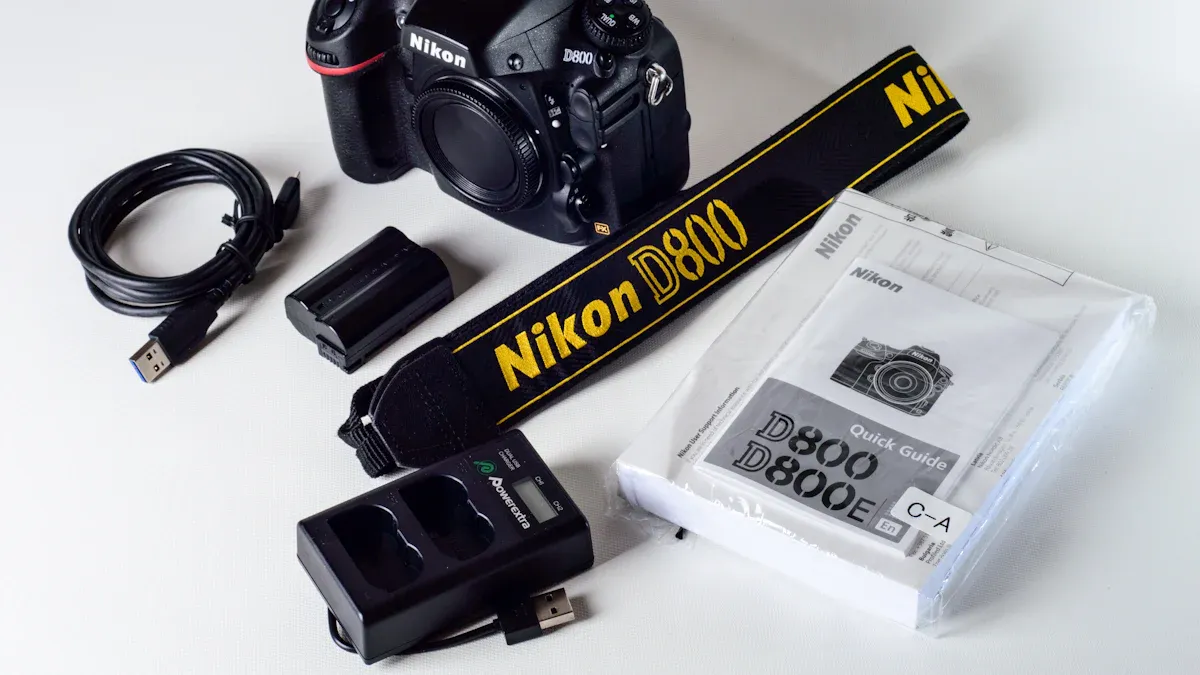
Understanding when to use lithium batteries helps you get the most value for your money. Their unique chemistry provides superior performance in specific situations. Lithium is the best choice for devices that need reliable, long-lasting power.
High-Drain Electronics
High-drain electronics consume a lot of power quickly. Think of digital cameras, gaming controllers, and high-powered flashlights. Manufacturers often recommend lithium batteries for these products. The batteries are engineered for high power demands. They deliver consistent energy without sudden drops. This stable performance is crucial for good energy efficiency. Using lithium batteries ensures your devices run optimally and for longer periods.
Smart Home Devices
Smart home gadgets need dependable power to stay connected. Devices like smart locks and video doorbells benefit greatly from lithium batteries. A smart lock’s battery life can range from 3 to 12 months. Lithium batteries significantly extend this lifespan, especially for doors used frequently. They also work well in extreme cold or heat. Alkaline batteries lose their effectiveness in cold weather, but lithium batteries maintain their performance. This reliability is key for outdoor smart devices.
Outdoor and Emergency Gear
Outdoor and emergency equipment must work when you need it most. Lithium is ideal for these critical items.
- GPS Units: Lithium batteries are lighter and provide more power than alkaline options, which is perfect for hiking.
- Emergency Kits: The long shelf life of lithium makes it a great choice for emergency flashlights and radios. These batteries hold their charge for over 10 years.
This excellent performance and energy efficiency make lithium a smart choice for safety gear.
Professional Equipment
Professionals rely on equipment that performs without fail. Medical devices like glucose meters use lithium for its stable performance and proven safety. The high energy density of these batteries allows for a long lifespan in a small size. Photographers also use special lithium batteries to power portable lighting equipment. The consistent output and energy efficiency of lithium batteries ensure that professional gear works correctly every time.
When to Use Alkaline Batteries
Lithium batteries offer superior performance, but they are not always the best choice. Alkaline batteries are a practical and cost-effective solution for many common electronics. Understanding when to use alkaline saves you money without sacrificing performance for the right devices. These batteries are perfect for items that do not require a lot of power.
Low-Drain Devices
Low-drain devices use very little energy over a long period. For these items, the high power of lithium is unnecessary. Alkaline batteries provide steady, reliable power that is more than enough for their needs. The lower cost of alkaline makes them the smart financial choice here. Common low-drain devices include:
- TV remotes
- Wall clocks
- Simple flashlights
- Smoke alarms
Using expensive lithium batteries in these electronics offers no real advantage in performance.
Everyday Household Items
Many everyday items around your home work perfectly with alkaline batteries. These products do not need the intense energy output that lithium provides. In fact, using high-energy lithium batteries in simple devices can be overkill. Alkaline batteries offer a safe and dependable power source for most household gadgets. Their chemistry is stable and well-suited for general use.
While lithium batteries are generally safe, they contain high energy density. Damage or improper charging can create risks. For simple toys and remotes, alkaline batteries are a very safe and effective option.
Infrequently Used Electronics
Some electronics are only used seasonally, like holiday decorations or emergency radios. Alkaline batteries are ideal for these situations. They have an excellent shelf life and a very low self-discharge rate, losing only about 2-3% of their charge per year in storage. This means you can put them in a device and trust they will work months later. The long lifespan of alkaline batteries ensures they are ready when you need them. This reliable performance makes alkaline a cost-effective choice for any gadget you do not use often. Their great battery life in storage provides peace of mind.
This cost analysis shows the best battery depends on your device. The lithium vs. alkaline batteries debate has a clear answer. Choose lithium batteries for high-drain electronics. The superior performance of lithium batteries provides better long-term value. The higher initial cost is offset by fewer replacements. Use budget-friendly alkaline batteries for simple, low-drain items. Alkaline batteries offer reliable performance for a low cost.
Now you can make the smartest investment for every device in your home.
FAQ
Can I mix lithium and alkaline batteries?
No, you should never mix different types of batteries. Lithium and alkaline batteries have different voltages and chemical makeups. Mixing them can cause the batteries to leak, reduce performance, or even damage your device. Always use the same type of batteries in a device.
Are all lithium batteries rechargeable?
This is a common point of confusion. The AA and AAA lithium batteries discussed in this article are single-use and not rechargeable. They are different from the rechargeable lithium-ion batteries found in smartphones and laptops. Attempting to charge single-use lithium batteries is dangerous.
Why do some devices recommend only alkaline batteries?
Some simple electronics are designed for the specific voltage curve of alkaline batteries. The high, steady power from lithium batteries is not needed.
For simple devices like wall clocks or basic remotes, alkaline batteries provide safe and effective power. Always follow the manufacturer’s recommendation for your batteries.
Which batteries are better for the environment?
Lithium batteries often have a better environmental impact over their lifetime. You use fewer lithium batteries to get the same job done, which creates less waste. However, it is very important to recycle all types of used batteries properly to protect the environment.
 EN
EN ES
ES FR
FR DE
DE RU
RU ZH
ZH