

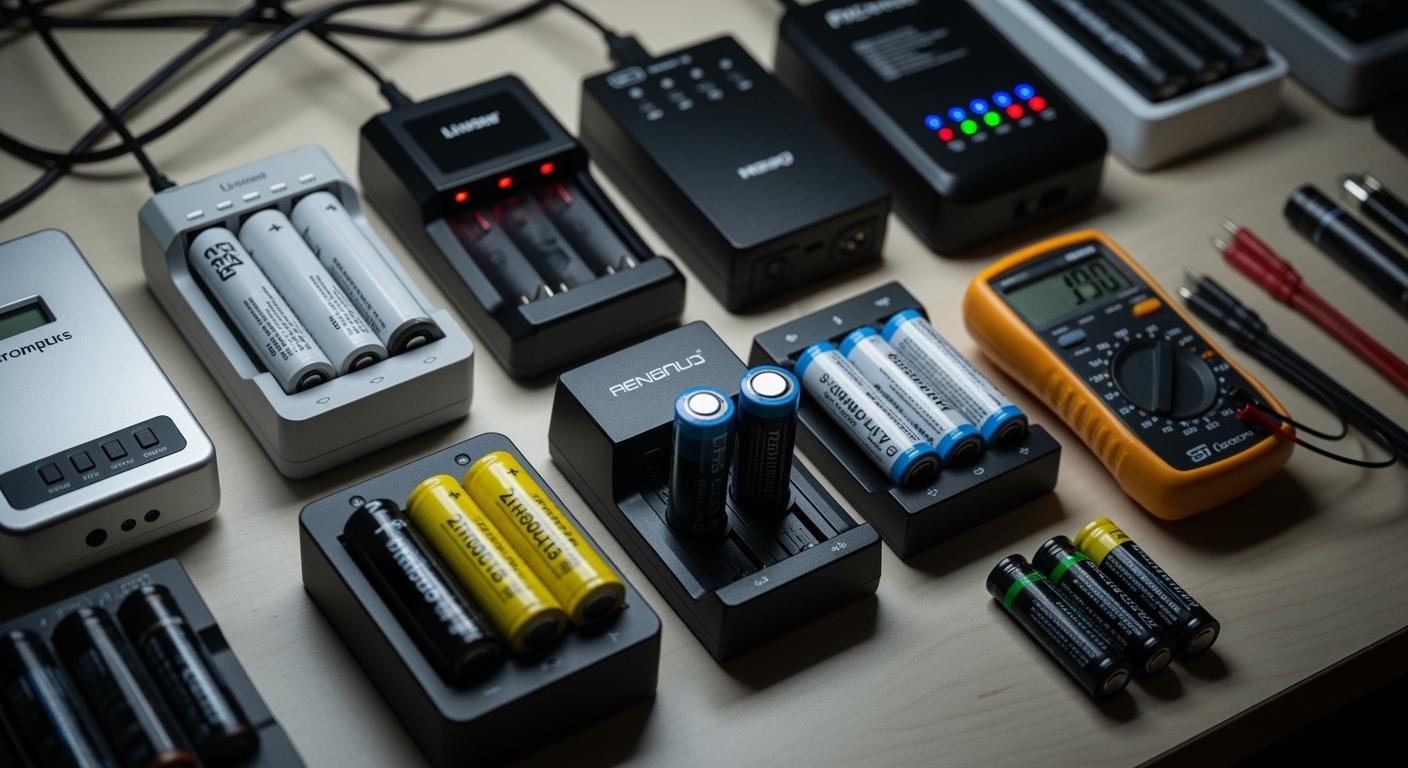
The Nitecore UMS4 is our top pick for 2026. It offers an unmatched mix of speed and smart safety features. You might prefer the XTAR VC4S for its incredible value. Dedicated chargers from Victron are perfect for LiFePO4 batteries. The market for chargers is seeing steady growth. This guide helps you find the best li-ion battery chargers for your specific cells.
Remarque : Your goal is to confidently choose the perfect power source for your batteries. We make that choice simple.
Best Li-Ion Battery Chargers: Top Picks
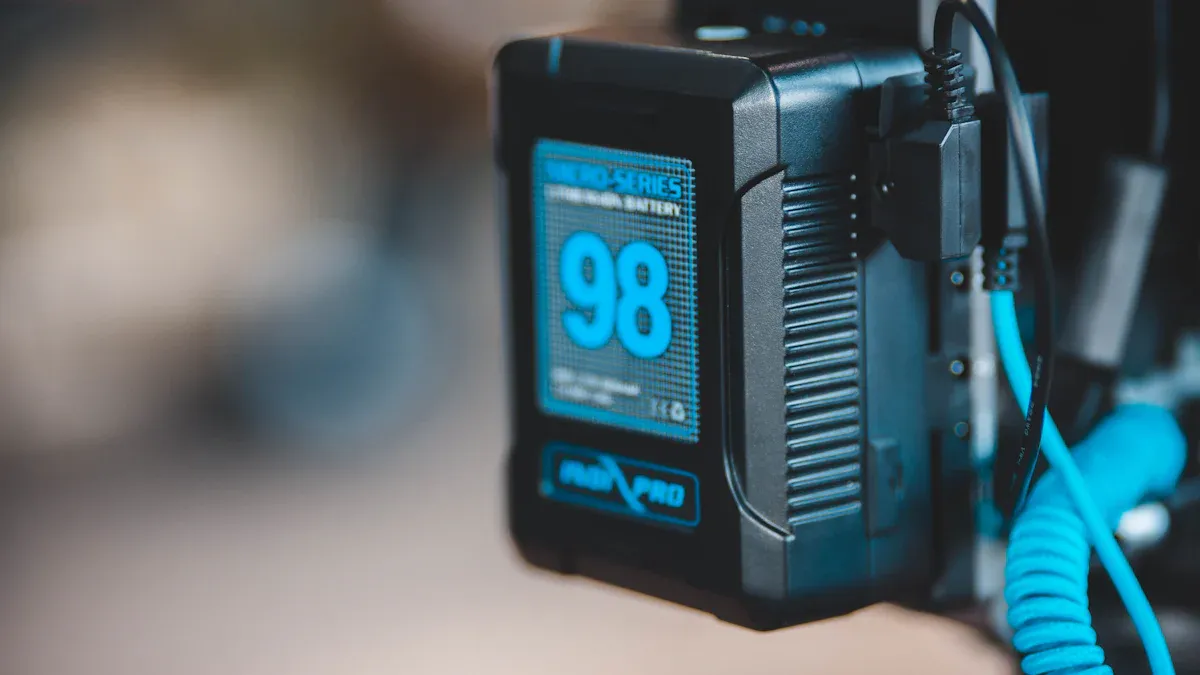
This section breaks down our top recommendations. You will find the perfect charger for your specific needs. We cover everything from powerful all-rounders to specialized portable units.
Best Overall Charger
You need a charger that works for almost any situation. It should be fast, safe, and easy to use. This category is for the user who wants a single, reliable device for various batteries, from common 18650s to larger 21700s.
Our Pick: Nitecore UMS4
The Nitecore UMS4 is our top choice because it balances power and intelligence perfectly. This intelligent battery charger automatically detects your battery type and condition. It then applies the optimal charging settings.
When you use a Quick Charge (QC) power adapter, the UMS4 unleashes its full potential. It can charge a single battery at an incredible 3000mA (3A). This significantly reduces your waiting time. The large LCD screen provides real-time information. You can easily monitor:
- Battery voltage and chemistry
- Charging current and time
- Charged capacity
- Résistance interne
Users like Brian J. find it a “Very easy to use charger with easy to read display.” It supports a massive range of batteries. You can charge Li-ion cells like 18650, 20700, and 21700. It also handles Ni-MH batteries like AA and AAA. This versatility makes it one of the best li-ion battery chargers available.
Best Value Charger
You want great features without a high price tag. A value charger gives you the most bang for your buck. It offers multiple charging bays, modern inputs like USB-C, and useful analysis functions. This is perfect for everyday users who need to charge multiple batteries regularly.
Our Pick: XTAR VC4S
The XTAR VC4S delivers premium features at a budget-friendly price. It is a four-bay smart charger powered by a modern USB input. It supports QC3.0 fast charging, allowing it to push up to 3A to a single slot.
The large color LCD is a standout feature. It uses helpful dial graphics to show voltage and current. The VC4S offers three distinct modes:
- Charging Mode: Automatically detects battery type and charges it.
- Grading Mode: Tests the true capacity of your batteries by charging, discharging, and then recharging them.
- Storage Mode: Prepares your batteries for long-term storage by setting them to an ideal voltage, which helps preserve their lifespan.
This charger can handle many battery sizes, including 18650, 21700, and even larger C and D cells. Its ability to test and store batteries makes it much more than a simple power source. It is a complete battery maintenance tool for a fantastic price.
Top Pro & Enthusiast Charger
You are a hobbyist, technician, or professional. You demand complete control over every aspect of the charging process. You need to analyze battery performance, create custom charge profiles, and log detailed data. This category is for experts who see a charger as a piece of precision test equipment.
Our Pick: SkyRC MC3000
The SkyRC MC3000 is the ultimate tool for battery enthusiasts. This is professional-grade equipment that offers unmatched customization. You can connect it to your PC or smartphone (via Bluetooth) to access its advanced settings.
With the MC3000, you can control nearly every variable:
- Set precise charge and discharge currents.
- Define custom cycle routines (e.g., Charge-Discharge-Charge).
- Adjust termination voltage and trickle charge settings.
- Save up to 30 unique programs for different batteries.
This level of control is essential for RC enthusiasts, drone operators, and anyone needing to perfectly match or restore battery packs. The charger can log data to an Excel file with 1-second sampling, giving you deep insight into battery health. If you need the most powerful and configurable charger on the market, the MC3000 is in a class of its own.
Most Portable Travel Charger
You are always on the move. You need a charging solution that is incredibly small and light. It should fit in any pocket, backpack, or emergency kit without adding bulk. This category is for travelers, backpackers, and anyone who needs a backup charging option.
Our Pick: Olight Universal Magnetic Charger (UC)
The Olight UC redefines portability. This compact battery charger is essentially a USB cable with two magnetic ends. It weighs only 20.5 grams. You simply attach the magnetic contacts to the positive and negative ends of your cylindrical battery.
This simple design works with a huge range of Li-ion and NiMH batteries. It automatically detects the battery type and provides a safe charging current. You can plug the USB end into a laptop, power bank, or wall adapter. Its simplicity and tiny size make it one of the best li-ion battery chargers for travel. It is the perfect emergency tool to ensure you always have power, no matter where you are.
Charger Comparison: Finding Your Match
Choosing the right charger involves more than just matching the battery size. You need to understand different charging technologies and chemistries. This comparison helps you select the perfect charger for your specific needs.
Standard vs. Fast Charging
You often face a choice between charging speed and battery longevity. Fast charging saves you time, but it can stress your batteries. This trade-off is an important consideration.
Fast charging generates more heat. It can accelerate battery degradation through processes like lithium plating. There is a clear comparison between faster charging and a longer battery lifetime. Slower, standard charging is gentler on your battery’s internal chemistry. This helps maximize its overall lifespan.
The time savings, however, can be significant. A quick look at the numbers shows the difference.
| Type de chargeur | Courant de charge | Charging Time (3000mAh Battery) |
|---|---|---|
| Standard Charger | 1A (1000mA) | ~3.5 hours |
| Fast Charger | 3A (3000mA) | ~1.2 hours |
Best Lithium Iron Phosphate Battery Chargers
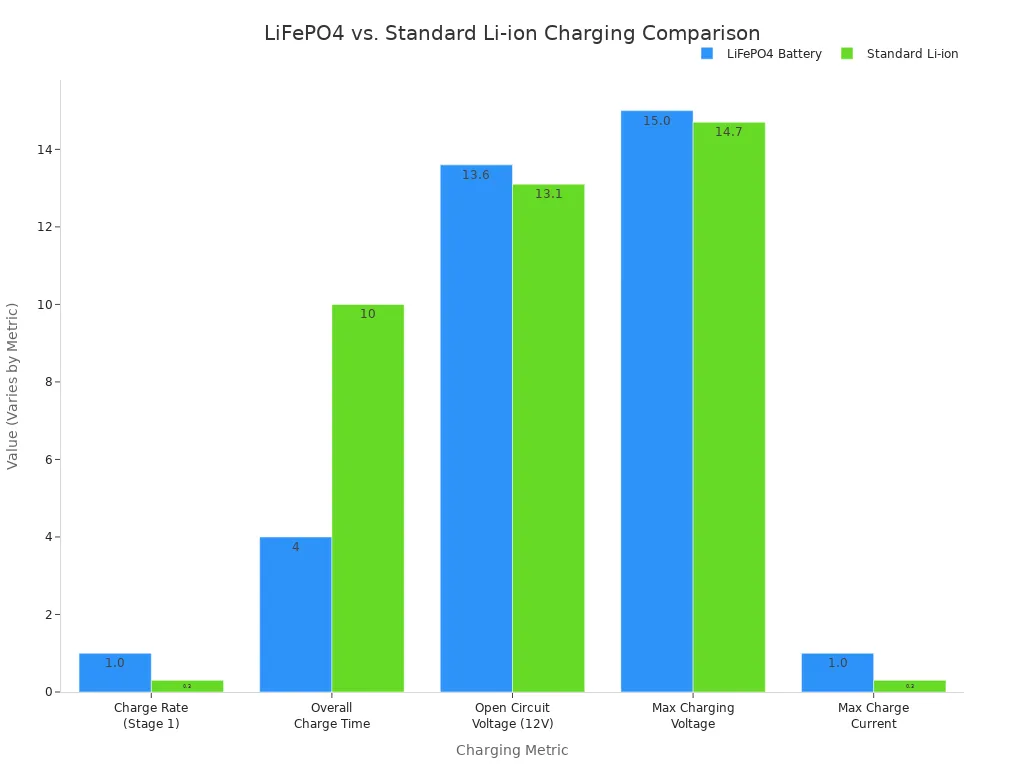
You cannot use a standard Li-ion charger for Lithium Iron Phosphate (LiFePO4) batteries. These batteries are common in RV and marine systems. They require lithium iron phosphate battery chargers with a specific charging algorithm. Using the wrong charger can damage the cells and create risques pour la sécurité.
The best lithium iron phosphate battery chargers use a Constant Current/Constant Voltage (CC/CV) profile tailored for LiFePO4 chemistry. They also manage charging temperatures, stopping the process if it gets too cold. This is critical for the battery’s health and your safety, especially in an RV.
Our Pick: Victron Blue Smart IP65 This is an excellent choice for your RV. The Victron charger is a smart, durable unit with built-in Bluetooth. You can monitor and configure charging for your LiFePO4 batteries directly from your phone. Its IP65 rating means it is protected from dust and water, making it perfect for any RV environment. It is one of the best lithium iron phosphate battery chargers available.
Best Car Battery Charger for Lithium Batteries
You must use the correct charger for a 12V lithium car battery. A standard lead-acid charger is not compatible. It can cause serious problems. You need a dedicated lithium charger.
Warning: Do Not Use a Lead-Acid Charger on a Lithium Battery
- Voltage Mismatch: Lead-acid chargers can overcharge lithium cells, causing permanent damage.
- Incorrect Algorithm: They lack the proper CC/CV stages needed by lithium iron phosphate battery chargers.
- Risques pour la sécurité: Improper charging can lead to overheating, swelling, or even fire.
The best car battery charger for lithium will communicate with the battery’s management system (BMS). This ensures a safe and efficient charge. For a vehicle like an RV, a quality unit like the Victron Blue Smart is a great investment. It serves as the best car battery charger for your system. You might also consider a best portable car battery charger or best mobile car battery charger for emergencies.
Key Features in a Li-Ion Charger
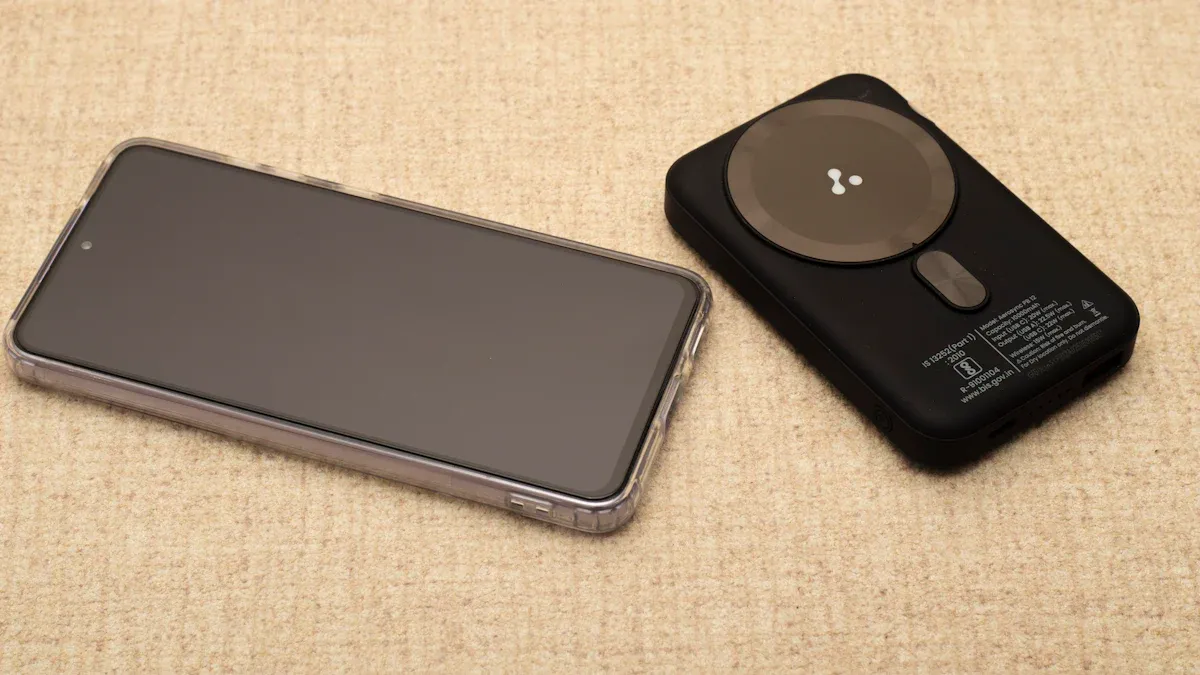
This guide helps you understand the important features of a modern charger. You can make a better choice when you know what to look for.
Charging Speed and Amperage
You should consider how fast you need to charge your batteries. A charger’s amperage (A) directly controls its speed. A higher amperage reduces charging time. For example, a 3A charger can power a battery much faster than a 1A charger.
However, speed is not everything. The best charging technology balances speed with battery health. Charging a battery too fast can shorten its lifespan. For many 18650 and 21700 cells, a rate of 0.5C is ideal for long-term battery maintenance. This means charging a 3000mAh battery at 1.5A. A smart charger often selects the best current for you.
Number of Charging Bays
You need to decide how many batteries you will charge at once. Chargers typically come with one, two, four, or even more bays. Recent sales data shows that consumers prefer multi-bay chargers. A four-bay or larger unit is a great charging solution for multiple battery types if you have many devices.
Battery Size and Chemistry Compatibility
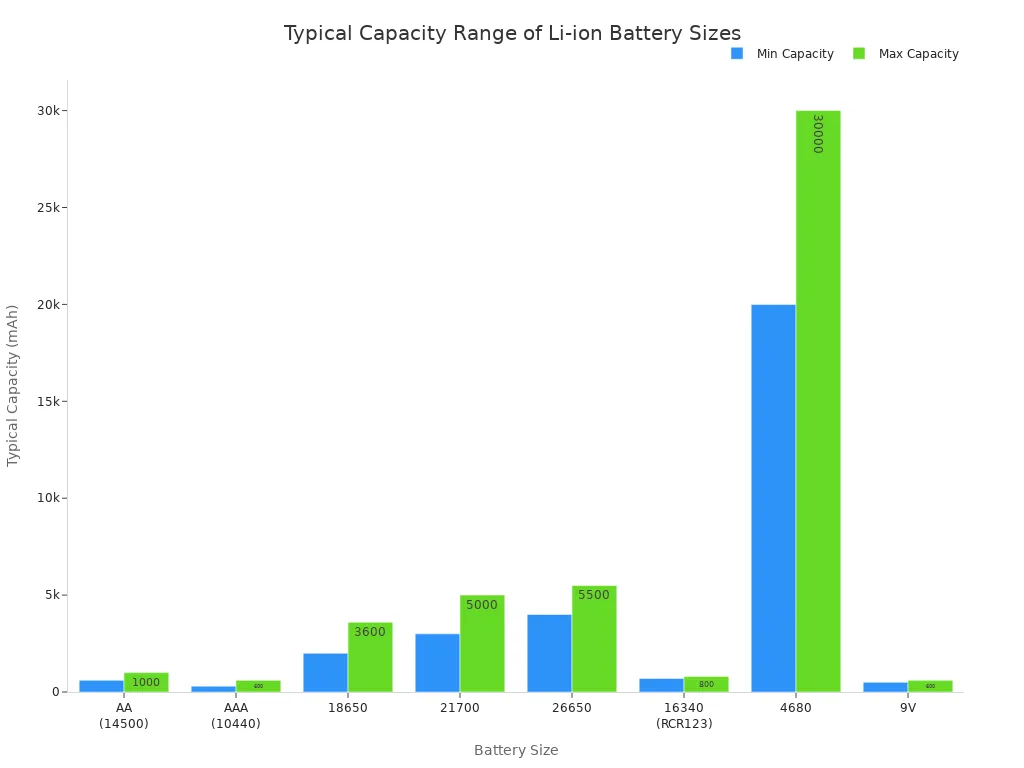
You must choose a charger that fits your batteries. Modern chargers support a wide range of sizes. Common cylindrical cells include 18650, 21700, and even standard AA or AAA. A good charger also handles different chemistries like Li-ion, Ni-MH, and LiFePO4.
Important : Each chemistry requires a specific charging algorithm. A LiFePO4 battery needs a different voltage profile than a standard Li-ion cell. A quality smart charger automatically detects the chemistry and applies the correct multi-stage charging settings, working with the battery management system (BMS) to ensure safety. The BMS is a critical component.
Essential Safety Protections
Your safety is the top priority. A reliable charger includes built-in safety profiles to protect you and your batteries. This microprocessor-controlled charging is essential. Look for these key features, which are managed by the charger and the battery’s BMS:
- Protection contre les surcharges: Stops the charging process when the battery is full. This prevents damage and works with the BMS.
- Short-Circuit Protection: Cuts power if a short is detected, protecting the charger and the battery’s BMS.
- Reverse Polarity Protection: Prevents damage if you insert a battery backward. The BMS also helps here.
Also, check for certifications like UL, CE, and RoHS. These marks mean the charger meets high safety and environmental standards. The BMS is the brain of the battery, and a good charger communicates with the BMS. The BMS monitors cell health, and the charger’s microprocessor-controlled charging adjusts accordingly. This interaction between the charger and the BMS is vital for battery recovery and overall battery maintenance.
Advanced Display and Analysis Functions
An intelligent battery charger gives you useful information. Many have LCD screens that show real-time data. You can see the battery’s voltage, current, and internal resistance. This data helps you understand your battery’s health.
Some chargers offer analysis modes for advanced battery maintenance. These modes can test a battery’s true capacity or perform battery recovery on older cells. This guide shows that these features, which rely on data from the BMS, turn a simple power source into a powerful tool for managing your batteries. The BMS provides the data, and the charger displays it.
For most users, the Nitecore UMS4 is the clear winner for 2026. It provides an excellent mix of speed and safety. Your specific needs will guide your final choice. Grab the XTAR VC4S for great value. Choose a Victron charger for LiFePO4 batteries. The Olight Magnetic Charger is unbeatable for travel.
Pro Tip: Avoid common mistakes. Always use the correct charger for your battery type. Do not charge batteries when they are too hot or cold.
Review your battery types and charging habits. You can confidently select one of the best li-ion battery chargers from our list. Your devices will thank you.
FAQ
Can I use a car charger for my RV batteries?
You need the right charger for your RV. A standard car charger may not work. Your RV likely uses deep-cycle batteries. You should use specific lithium iron phosphate battery chargers for LiFePO4 batteries in an RV. The best car battery charger for an RV matches its battery chemistry.
What is the best car battery charger for different battery types?
You must match the charger to the battery. The best agm car battery charger is not the best for lithium. The best 12 volt car battery charger for your car might be a lead-acid model. The best car battery charger for an RV is often one of the lithium iron phosphate battery chargers.
What should I look for in a portable or budget charger?
You have many options for on-the-go power. The best portable car battery charger is compact and powerful. The best mobile car battery charger offers great flexibility. You can find a great best budget car battery charger. The best budget car battery charger still provides essential safety features.
How do I maintain my RV battery with a charger?
You can extend your battery’s life with proper charging. A reliable car battery charger is a good start. The best trickle car battery charger keeps your RV battery topped off during storage. This is a great feature for any best car battery charger.
Which charger is best for long-term storage?
You should use a maintenance charger for storage. The best trickle car battery charger slowly charges your battery. It prevents it from draining. This is a key feature for the best car battery charger. The best agm car battery charger often includes this mode. The best 12 volt car battery charger should have it too.
 EN
EN ES
ES FR
FR DE
DE RU
RU ZH
ZH