


You invested in a powerful high-performance lithium battery. Maximizing performance for this lithium battery, however, requires more than the battery itself. It demands efficient charging with the right lithium battery charger.
Remarque : The key to unlocking your battery’s full potential and lifespan is the charger you choose.
This guide demystifies smart charging solutions. It helps you confidently select the perfect smart lithium battery charger from various high-performance battery chargers, ensuring your lithium power source operates at its peak.
Fundamentals of Charging Lithium Batteries
Understanding the basics of charging lithium batteries is the first step toward maximizing performance. Unlike older battery types, a high-performance lithium battery requires a specific approach to ensure safety and a long-lasting battery cycle life. Efficient charging is about more than just plugging in a charger; it involves precise control over voltage, current, and temperature.
Why a Specific Voltage Matters
You must use the correct voltage when charging. A lithium battery needs a precise voltage to reach a full charge safely. Using a charger designed for lead-acid batteries can damage your lithium battery because their voltage requirements differ. For a typical 12V lithium iron phosphate (LiFePO4) battery, the charger must deliver a specific voltage.
| Battery System | Cell Configuration | Recommended Absorption Voltage |
|---|---|---|
| 12V | 4S | 14.4V – 14.6V |
This precise voltage ensures every cell in the battery pack charges fully without stress.
Matching Amperage to Your Battery
The amperage of your lithium battery charger determines how fast the battery charges. You should match the charger’s amperage to your battery’s capacity. A common recommendation is a charge rate of 0.2C.
For a 100Ah battery, this means a recommended charging current of 20A (0.2C) and a maximum of 50A (0.5C).
Using a charger with amperage that is too high can cause serious problems:
- Heat Build-Up: Excess current generates heat, which can damage the battery’s internal chemistry.
- Cell Damage: This stress leads to a permanent reduction in battery capacity and lifespan.
- Risques pour la sécurité: In extreme cases, overheating can cause swelling or even fire.
The Role of Battery Chemistry and BMS
Your lithium battery contains a crucial component called a Battery Management System (BMS). The BMS acts as the battery’s brain, providing essential protection. Its main jobs during charging are:
- Overcharge Prevention: The BMS stops the charging process if the voltage gets too high.
- Temperature Monitoring: It watches the battery temperature to prevent overheating.
- Équilibre cellulaire: It ensures all cells inside the battery maintain an equal charge.
This system is vital for the safety and health of your lithium battery.
Smart Technology for Maximizing Performance
A smart lithium battery charger uses a lithium-specific charging profile for efficient charging. Many use multi-stage charging to improve charging speed and efficiency. These advanced methods adjust the current in steps, which reduces heat and charges the battery faster than older techniques.

Smart chargers also monitor temperature. They can stop charging if the battery gets too hot ou too cold, providing another layer of protection. This technology is key to achieving optimal battery health and maximizing performance.
Choosing Your Ideal Lithium Battery Charger
Selecting the right charger is crucial for your lithium battery system. The best lithium battery charger for you depends entirely on your lifestyle and power needs. Whether you are constantly moving, living off-grid, or need a versatile home backup, a specific charger is designed for your situation. This section breaks down the four main types to help you make a confident choice.
The DC-DC Charger: Power on the Go
You need a DC-DC charger if you want to charge a secondary lithium battery from your vehicle’s primary electrical system. This charger takes power from your vehicle’s alternator and converts it to the precise voltage your lithium battery requires for safe and efficient charging. It is the perfect solution for keeping your auxiliary battery topped off while you drive.
Ideal Use Case: A DC-DC charger is essential for anyone with a dual-battery setup in a vehicle.
Common applications include:
- Charging auxiliary batteries in RVs, vans, and boats from the vehicle’s alternator.
- Powering off-grid systems in recreational vehicles.
- Ensuring a stable power supply for sensitive electronics in mobile setups.
Modern DC-DC chargers offer advanced features. For example, the REDARC BCDC series can draw power from both your alternator and solar panels simultaneously, prioritizing solar to reduce engine load. The Orion XS DC-DC Battery Charger is another excellent option, allowing you to set current limits to protect your alternator while delivering a perfect charge.
The Solar Controller: Off-Grid Energy
A solar charge controller is the heart of any solar power system. It manages the power flowing from your solar panels to your lithium battery bank. Its main job is to prevent overcharging and optimize the charging process, ensuring you get the most energy out of every sunbeam. This is vital for maximizing performance in off-grid applications.
There are two main types of solar controllers: PWM and MPPT. An MPPT controller is generally the superior choice for a lithium battery, as it can increase your power harvest by up to 30%. It intelligently converts excess panel voltage into extra charging current, which is especially useful in cold or cloudy weather.
| Fonctionnalité | PWM (Pulse Width Modulation) | MPPT (Maximum Power Point Tracking) |
|---|---|---|
| Efficiency | Lower (70-85%) | Higher (95-99%) |
| Power Harvest | Good | Excellent (up to 30% more) |
| System Flexibility | Low (Panel voltage must match battery voltage) | High (Can use higher voltage panels) |
| Coût | More affordable | Higher cost |
| Meilleur pour | Very small systems under 200W | Systems over 200W, variable weather |
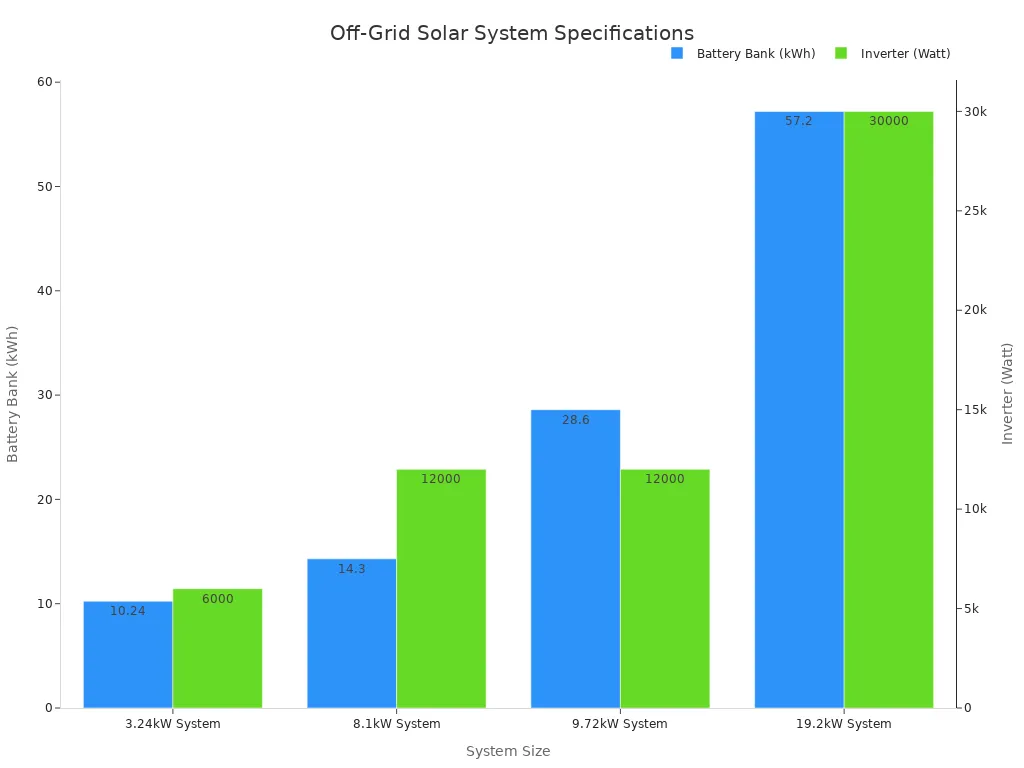
Off-grid solar setups range from small systems for weekend trips to large installations for full-time living. A smart lithium battery charger in the form of an MPPT controller is a key component in these systems for charge management and battery protection.
The Inverter Charger: All-in-One Convenience
An inverter charger combines three devices into one powerful unit: an inverter, a battery charger, and an automatic transfer switch. It converts DC power from your battery into AC power for your appliances. It also charges your lithium battery bank when connected to an AC power source like the grid or a generator.
The core benefit is seamless, all-in-one functionality.
- It serves as a reliable backup power source, automatically switching to battery power during a blackout.
- It is more cost-effective and space-efficient than buying a separate inverter and charger.
- It provides the flexibility to charge your battery from the grid, even in an off-grid system.
Many brands like Xantrex et Battle Born Batteries offer inverter chargers designed for lithium systems. Compatibility is key, so you must ensure the model you choose works with your specific lithium battery. A dedicated smart lithium battery charger function within these units ensures proper charging profiles are used.
The Portable Charger: Flexible Power
A portable lithium battery charger offers ultimate flexibility. These compact, lightweight units are designed for easy transport, allowing you to charge your 12V lithium battery from a standard wall outlet. They are perfect for people who move their battery between different applications or need a simple charging solution at home or in the workshop.
Tip: Pair a portable charger with a lithium battery power box for a convenient, grab-and-go power station. Camping
These chargers are ideal for:
- Outdoor Activities: Powering lights, small refrigerators, and charging phones while camping or hiking.
- Marine Use: Charging a trolling motor battery at home before a fishing trip.
- Workshop Power: Keeping a utility battery ready for various projects.
A portable charger is a straightforward and effective tool. It ensures your battery is fully and safely charged, ready for your next adventure. This simple approach to charging provides great performance and peace of mind.
The DC-DC Charger in Detail

A DC-DC charger is a smart device that optimizes how your auxiliary battery gets power from your vehicle’s alternator. You need this charger to ensure your secondary lithium battery receives a full, healthy charge while you drive. It is a vital component for any mobile power system.
Ideal Use Cases
You will find a DC-DC charger essential if you have a dual-battery setup in a modern vehicle. Many cars made after 2015 use smart alternators. These alternators can reduce their voltage, which prevents older systems from fully charging your auxiliary battery. A DC-DC charger solves this problem. It is perfect for:
- RVs, camper vans, and overlanding trucks.
- Boats with a separate house battery.
- Work vehicles that power tools and equipment.
This charger is especially recommended for a LiFePO4 lithium battery. It provides the specific charging profile needed for safe and efficient power.
How It Works
A DC-DC charger works by isolating your starter battery from your auxiliary battery. It takes the variable power from your alternator and converts it into a stable, precise voltage perfect for your lithium battery. This process provides crucial protection and prevents your house battery from draining your starter battery.
This smart charger uses a multi-stage charging process to care for your battery:
- Bulk: The charger sends a high current to quickly charge the battery to about 80%.
- Absorption: It then lowers the current, “topping off” the battery safely.
- Float: Finally, it sends a small trickle charge to keep the battery at 100% without overcharging.
Key Benefits
Using a dedicated DC-DC lithium battery charger offers significant advantages. It ensures your expensive lithium battery performs at its best and lasts longer. The main benefits include:
- Complete Charging: It guarantees your battery reaches a 100% state of charge.
- Battery Longevity: The multi-stage charging process extends the life of your battery.
- System Protection: It isolates and protects your vehicle’s starter battery.
- Smart Compatibility: This charger works perfectly with modern smart alternators.
Ultimately, a DC-DC lithium battery charger is the most reliable way to power your adventures. It gives you a fully charged battery when you arrive at your destination.
The Solar Charge Controller in Detail

A solar charge controller is the brain of your off-grid power system. You need this device to manage the energy flowing from your solar panels to your lithium battery bank. This smart charger ensures your battery gets a safe and complete charge, maximizing its performance and lifespan.
Ideal Use Cases
You will find a solar charge controller essential for any setup that relies on the sun for power. It is perfect for situations where you are away from the electrical grid. People use these systems in various applications.
- Les Zephyr Bus RV uses a large solar array and a lithium battery system for full-time off-grid living.
- Les Y-Not Motor Yacht upgraded its electrical system with solar panels and a lithium battery for reliable power at sea.
- Many custom-built RVs and remote cabins depend on a solar charger for daily energy needs.
A solar charge controller is the key component that makes these independent lifestyles possible.
How It Works
A solar charge controller acts as a smart gatekeeper between your solar panels and your battery. It takes the DC input from the panels and converts it into the perfect DC voltage for your lithium battery. An MPPT charger does this by acting as a high-frequency converter, constantly adjusting to find the maximum power point. This process ensures you get the most amps into your battery.
The charger also uses a multi-stage charging process for battery health.
- Absorption: When your battery is nearly full, the charger reduces the current to prevent overheating.
- Float: Once the battery is 100% charged, the charger sends a tiny trickle charge to keep it full.
This careful management is vital for your lithium battery.
Key Benefits
Using a high-quality solar lithium battery charger offers major advantages for your power system. The most important benefit is efficiency. An MPPT charger is especially effective in cool weather, where it can harvest up to 40% more power than older PWM models. This is because it converts the extra voltage from cold panels into more charging current.
This smart lithium battery charger also provides critical protection.
- Temperature Monitoring: The charger adjusts charging based on the battery temperature.
- BMS Communication: Advanced models communicate with your battery’s BMS to prevent unsafe conditions.
- Caractéristiques de sécurité: It includes safeguards against short circuits and reverse polarity.
This intelligent charger gives you efficient power and peace of mind.
Choosing the right lithium battery charger is key to maximizing performance. You learned how voltage and amperage affect efficient charging. This knowledge ensures protection and safety for your lithium battery. Each charger serves a unique purpose, boosting efficiency for your adventures.
| Type de chargeur | Meilleur pour | Specific Adventure Use |
|---|---|---|
| Solar Panels | RVs, boats, campsites | Off-grid living, continuous charging |
| DC-DC Charger | Long road trips | Charging while driving in RVs |
| Inverter Charger | Campsites, home | RVs at sites with stable power |
| Portable Charger | Short trips, backup | Camping, temporary power boost |
You now have the tools to select the best charger. This choice will give your lithium system optimal battery health and reliable performance.
FAQ
Can I use my old lead-acid charger for a lithium battery?
You should not use a lead-acid charger. Lithium batteries require a specific voltage (14.4V-14.6V) to charge fully and safely. A lead-acid charger has a different voltage profile. Using one can damage your lithium battery and reduce its lifespan.
How do I choose the right size charger for my battery?
You can find the right charger size using a simple rule. A charge rate of 0.2C is often recommended. To find the amps, you multiply your battery’s amp-hour (Ah) rating by 0.2.
- Example: For a 100Ah battery, you would want a 20A charger (100 x 0.2 = 20).
Is it safe to leave my lithium battery on the charger?
Yes, you can safely leave your battery connected to a smart lithium charger. These chargers enter a “float” mode once the battery is full. This mode provides a tiny current to keep it topped off without overcharging. Your battery’s BMS also provides protection.
Can I charge my lithium battery in freezing temperatures? 🥶
You must avoid charging your lithium battery below freezing (32°F or 0°C). Charging in cold weather can cause permanent damage to the battery’s cells.
Remarque : A quality BMS will prevent charging from starting if the temperature is too low, protecting your investment.
 EN
EN ES
ES FR
FR DE
DE RU
RU ZH
ZH