

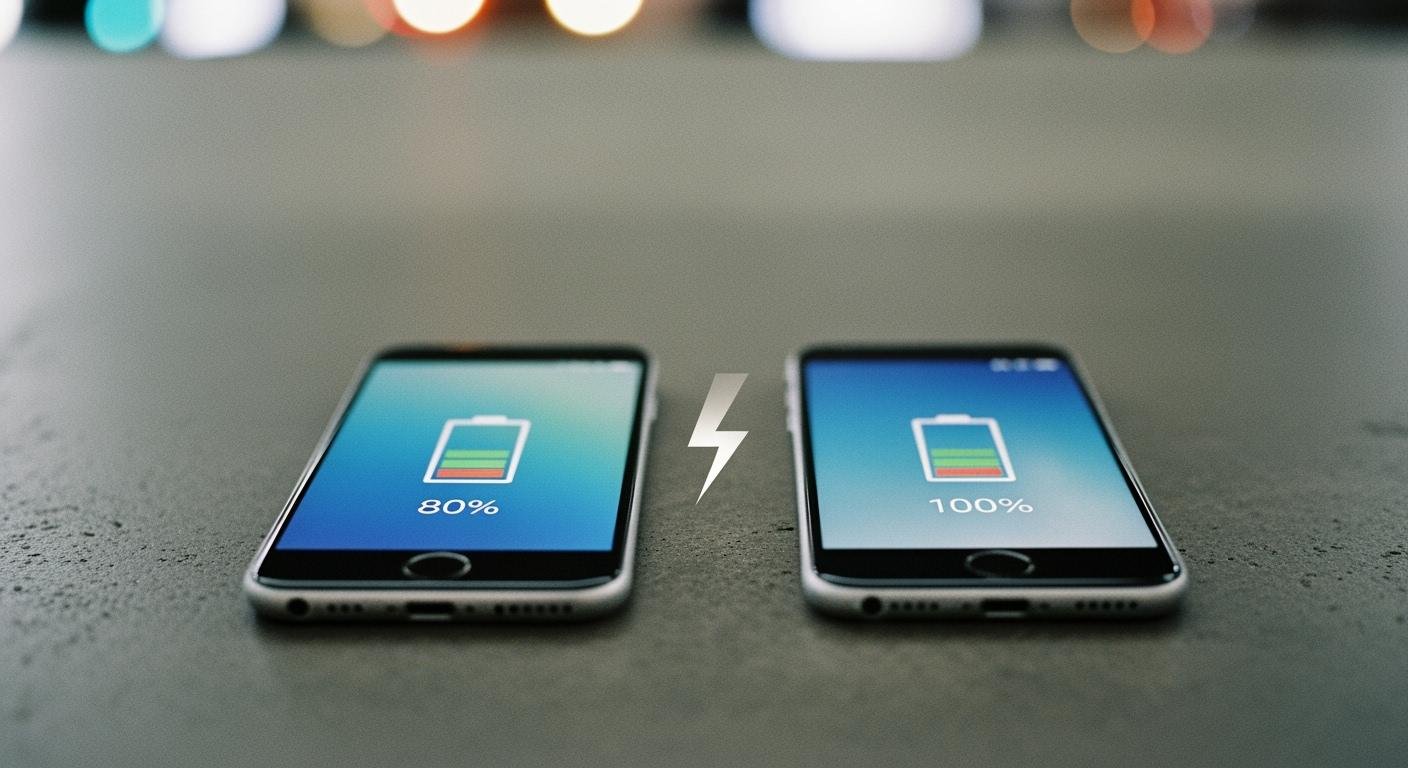
You face the “charge to 80% or 100%” question daily. For routine use in 2025, the 80% rule remains the best practice for long-term battery health. This simple rule helps your battery last longer. Keeping a charge between 20% et 80% reduces chemical stress on the battery cells.
Remarque : You can absolutely use a full 100% charge. This is fine when you need maximum runtime for travel or a long day away from an outlet. Consistent daily charging habits matter most. This rule is about longevity, not restriction.
Why the 80% Rule Boosts Battery Health
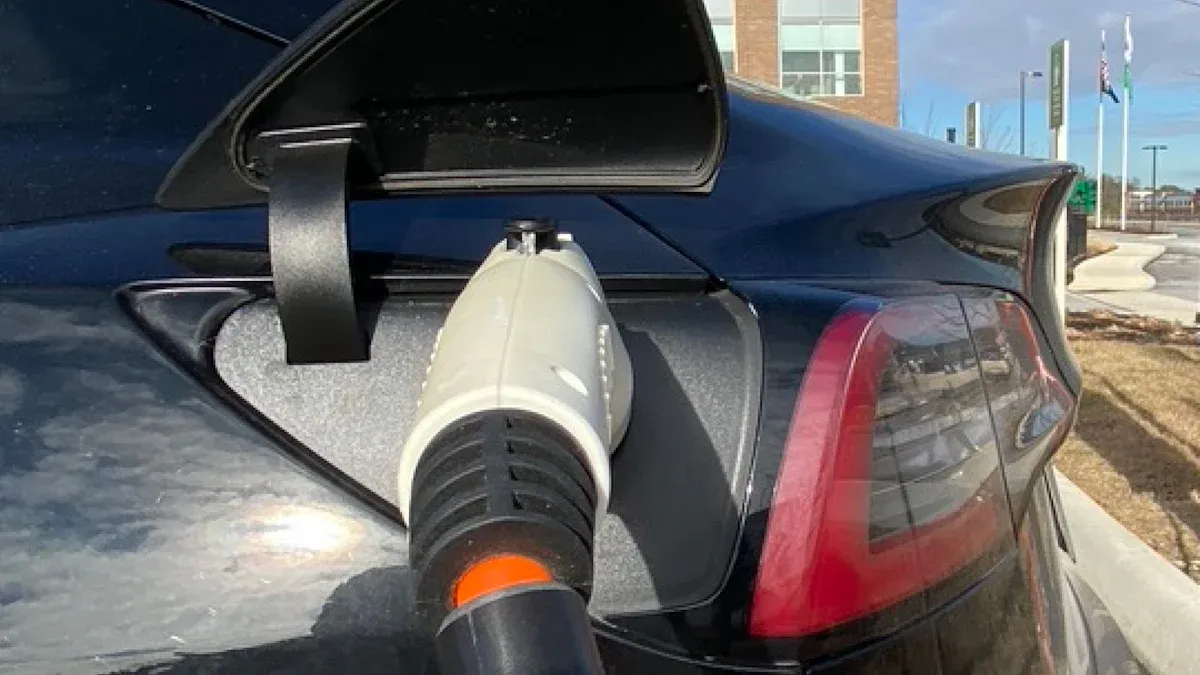
The 80% rule directly improves your battery health. Think of your battery like a muscle. You can push it to its maximum limit, but constant high-intensity workouts cause strain. A moderate routine, however, keeps it healthy for years. This simple rule works the same way for your phone or EV battery. For any EV, following this guideline is key. Many EV models benefit from this practice.
Reducing Chemical Stress on the Battery
Your device’s lithium-ion battery experiences chemical stress at high charge levels. When you push a battery charge past 80%, lithium ions struggle to find a place. This resistance causes two main problems:
- Lithium Plating: Some ions fail to find a spot and instead form a metallic layer. This permanently removes them from the energy storage process.
- SEI Growth: A layer called the Solid Electrolyte Interface (SEI) grows faster at high voltages, consuming active lithium and reducing the battery’s capacity.
This chemical stress is a primary cause of battery degradation. The 80% rule helps you avoid this stress, promoting better long-term battery health. This is true for your phone battery and your EV battery.
Slowing Long-Term Capacity Loss
Consistently charging to 100% accelerates capacity loss. Each full charge contributes a small amount of irreversible degradation. The 80% rule helps you achieve optimal battery life by slowing this process. This practice extends the overall lifespan of your battery.
Major EV manufacturers officially recommend an 80% daily charging limit. You will find this advice in the manuals for many EV models, from a Tesla to an Equinox EV. Studies on EV battery charging show that going beyond 80% state of charge offers little benefit for the battery’s life expectancy. This makes the rule a proven strategy for longevity. Every EV owner should know this. The EV battery is the most expensive part of the EV. Protecting your EV battery is smart.
Avoiding High-Voltage Heat Damage
The final stage of battery charging is the most stressful. As your battery approaches 100%, the internal resistance increases. This process generates significant heat. Heat is a major enemy of battery longevity. It speeds up the harmful chemical reactions inside the battery.
You may also notice that your device’s charging speed slows down dramatically after reaching 80%. Your device does this intentionally to protect the battery from high-voltage heat damage. Stopping your charging at 80% is more time-efficient and much healthier for your battery. This simple habit is a cornerstone of good battery care for any EV.
When Charging to 100% Makes Sense
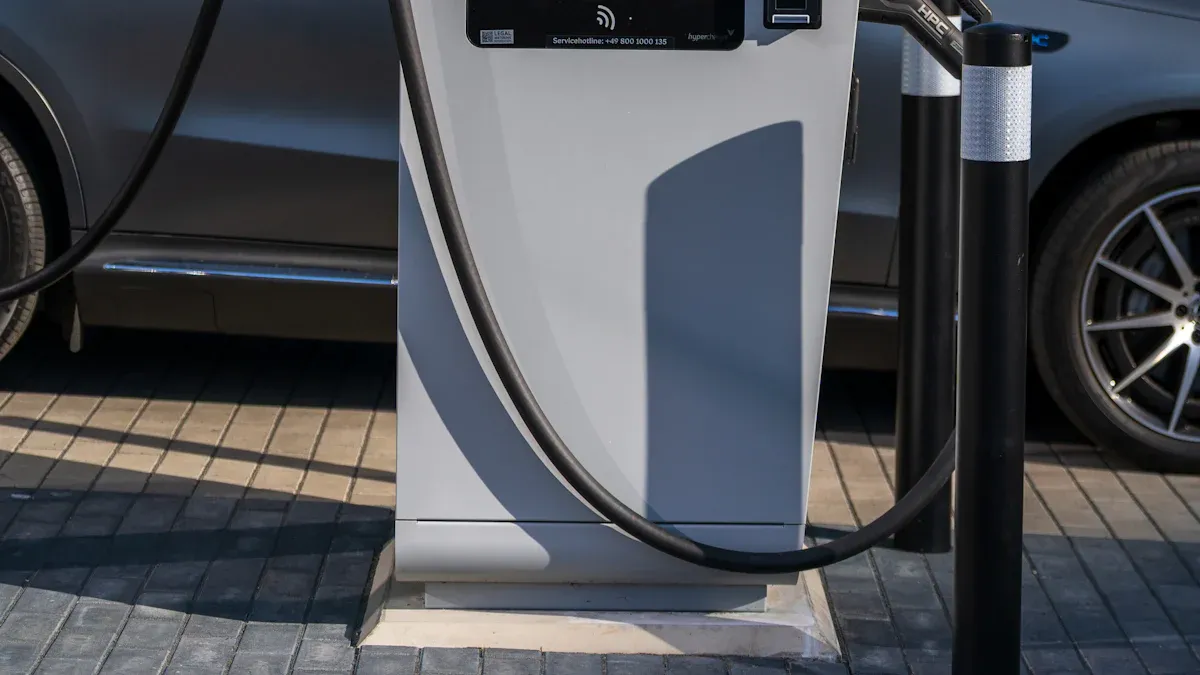
The 80% rule is a guideline, not a strict law. Sometimes, you need every bit of power your battery can offer. A full charge is perfectly fine in these situations. Your device is designed to handle it. Knowing when to go to 100% is just as important as knowing when to stop at 80%. This is true for your phone and your EV.
For Maximum Range and All-Day Use
You should charge to 100% when you need maximum runtime. This ensures your device is ready for a long day without access to power. For an EV, this means getting the maximum possible range for a journey. Consider a full charge in these scenarios:
- Long Trips: You need full power for a cross-country flight or a long road trip in your EV. This gives you the longest range.
- Power Outages: A full battery ensures you have communication and light during an emergency.
- Intensive Tasks: You plan to edit video or attend long online meetings away from an outlet.
- Outdoor Travel: You are camping or hiking and need reliable navigation and communication. A full battery provides peace of mind.
The Occasional 100% Tune-Up
Your device’s battery percentage is an estimate, not a perfect measurement. Over time, the Battery Management System (BMS) can lose track of the battery’s true full and empty points. This can make your battery percentage display inaccurate, which is a major issue for an EV driver trying to gauge range.
A full charge cycle once a month helps your BMS recalibrate. This process allows the system to learn and correct power calculation errors. Studies show this can improve state-of-charge accuracy to within 0.55%. This tune-up is vital for your EV battery, ensuring the displayed range is trustworthy for your next trip. Every EV benefits from this.
How Smart Charging Protects Your Device
Modern devices know that sitting at 100% is stressful for the battery. That is why they include smart charging features. Your iPhone’s “Optimized Battery Charging” and Android’s “Adaptive Charging” work to protect your battery. These systems learn your daily routine.
They will quickly charge your device to 80% and then pause the charging process. The system then intelligently completes the final 20% of charging just before you typically wake up or unplug. This reduces the time your battery spends at high voltage. Many EV models use a similar smart charging strategy to protect the EV battery. This feature helps you get a full 100% charge when needed without adding unnecessary stress to the battery of your phone or EV. This is a key feature for any EV.
A Practical Guide to the Charge to 80% or 100% Debate
You now understand the science behind the “charge to 80% or 100%” debate. Let’s turn that knowledge into simple, practical habits. You can easily build routines that protect your battery without causing stress. This guide gives you actionable steps for your smartphone and EV.
Your Daily 80% Charging Routine
Your goal is to keep your battery in its “golden middle,” which is between 20% and 80%. This practice keeps the internal voltage low and significantly reduces wear on the battery. A small 0.1V decrease in cell voltage can even double the battery’s cycle lifespan. Making this your daily habit is the single most effective way to care for your smartphone battery.
Here is how you can easily implement the 80% rule:
- Set a Charging Limit: Modern devices make this simple. You do not need to watch your screen.
- iPhone: Go to
Settings > Battery > Battery Health & Charging > Charging Optimizationand select80% Limit. Your phone will automatically stop charging at 80%. - Android: Some manufacturers include a “Protect Battery” feature. For others, you can use the ‘Advanced Charging Controller (ACC) magisk module‘ with a frontend app like ‘AccA’ to enforce a charging limit.
- Windows Laptops: Many manufacturers build this feature in. On a Microsoft Surface, you can find it in the UEFI menu under ‘Boot Configuration > Advanced Options’ by turning on ‘Enable Battery Limit Mode‘.
- iPhone: Go to
- Charge When Needed: Plug your device in when the battery drops to around 20-30%. Unplug it once it reaches 80%. Short, frequent top-ups are better for your battery than long charging sessions.
- Use Quality Chargers: Always use the original charger or a certified one. This prevents damage and ensures a safe, efficient charging process.
This simple routine helps you master the “charge to 80% or 100%” decision for daily use.
Your Monthly Calibration Schedule
Your device’s battery percentage is a smart estimate. Over time, this estimate can become inaccurate. A monthly calibration cycle helps your Battery Management System (BMS) relearn the battery’s true capacity. This ensures the percentage you see is reliable.
Important Note: You should only perform a calibration every few months. Doing it too often creates unnecessary charge cycles, which can shorten your battery’s lifespan. Only calibrate when you notice the battery percentage seems inaccurate.
Follow these steps for a calibration cycle:
- Charge to 100%: Let your device charge fully and leave it plugged in for another hour.
- Drain Completely: Use your device until it shuts down on its own from a dead battery.
- Rest: Let the device sit for a few hours to ensure the battery is fully drained.
- Recharge to 100%: Charge the device uninterrupted back to 100%.
This process resets the power calculation and is especially useful for an EV, where an accurate range estimate is critical.
The Golden Rule: Don’t Stress It
The “charge to 80% or 100%” question can create “battery anxiety,” the fear of your phone dying. Remember, these guidelines are for maximizing longevity, not for creating worry. Consistency is more important than perfection.
An occasional charge to 100% will not harm your battery. Modern battery management systems in your smartphone and EV are excellent at protecting against damage. In fact, a study of over 12,500 Tesla vehicles found no significant difference in battery health between cars that were frequently fast-charged and those that were not. Experts agree that leaving a device at 100% for a few hours is fine; the damage comes from leaving it at that high-stress state for weeks.
Ultimately, your device is a tool. Use it how you need to.
- Make 80% your daily goal.
- Use 100% when you need it for a long day or trip.
- If your EV has an LFP battery, follow the manufacturer’s advice to charge to 100% regularly.
By following this balanced approach, you get the best of both worlds: a long-lasting battery and a device that is always ready for your life.
You now have the knowledge to end the “charge to 80% or 100%” debate for yourself. This balanced approach is the best way to care for modern devices without causing charging anxiety. By following these simple guidelines, you are effectively preserving your device’s battery health in 2025.
Your Final Verdict: Make 80% your daily goal for longevity. Use 100% when you need maximum power for your day. 🚀
This strategy gives you both a long-lasting device and the power you need, exactly when you need it.
FAQ
Is it bad to leave my phone charging overnight?
No, you can charge your device overnight. Modern devices use smart charging. They pause at 80% and finish charging just before you wake up. This feature protects your battery from stress while you sleep. 😴
Does the 80% rule apply to all my devices?
Yes, this advice helps most devices with lithium-ion batteries. You can use the 80% rule for your smartphone, laptop, and EV. This simple practice helps almost any modern battery last longer.
What if my device has no 80% limit setting?
You can simply unplug your device when it reaches 80%. Do not worry about being exact. The goal is to avoid a full 100% charge every day. Consistency is more important than perfection. 👍
Should I let my battery die completely?
You should avoid letting your battery die. A full discharge puts high stress on the battery cells. You can keep your battery healthy by plugging your device in when it reaches around 20%.
 EN
EN ES
ES FR
FR DE
DE RU
RU ZH
ZH