

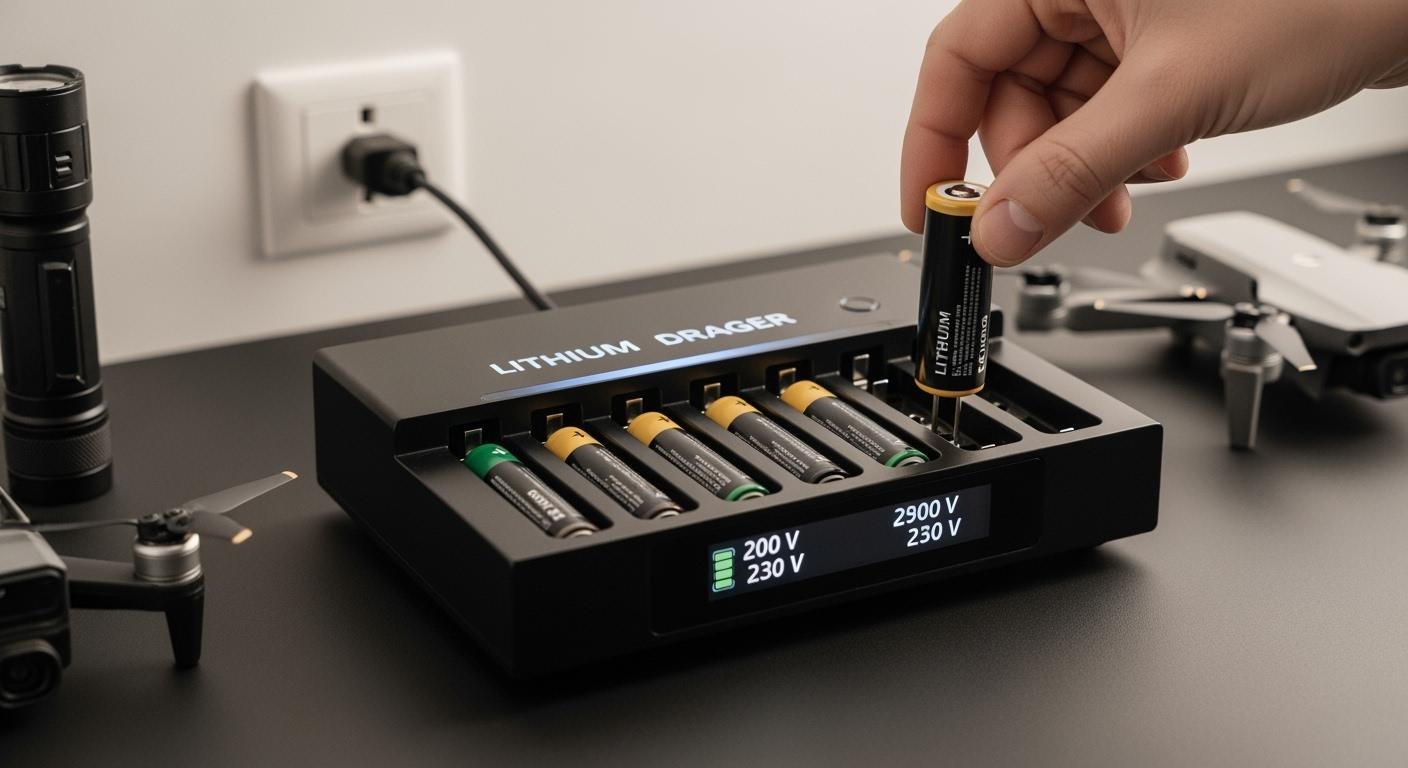
You cannot safely use a normal charger for your lithium battery. A normal charger uses charging profiles that damage your expensive battery, shorten the battery’s lifespan, and create serious safety risks. Protecting your battery investment is more important than ever.
Your Battery is a Valuable Asset 📈 The global lithium-ion battery market is growing incredibly fast:
- It is projected to reach $426.37 billion by 2033.
- This boom is fueled by electric vehicles and electronics.
A dedicated lithium battery charger is the only way to safeguard your valuable battery and ensure its peak performance.
Key Features of a Lithium Battery Charger
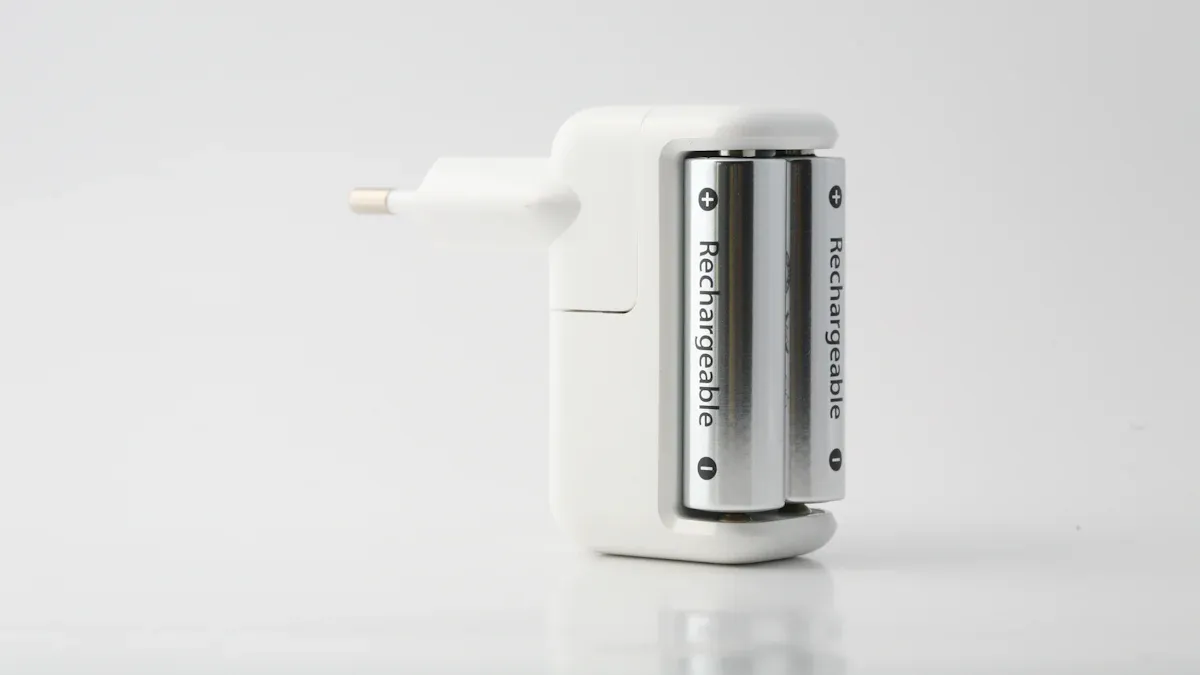
A dedicated charger is engineered with specific features that protect your battery and maximize its performance. Understanding these features shows you why a standard charger is not a safe substitute.
Tighter Voltage Tolerance
Lithium batteries are sensitive to voltage. A charger must operate within a very narrow and precise voltage window to prevent damage. For a 12V LiFePO4 battery, this means keeping the voltage strictly within a specific range.
| Battery System | Recommended Charging Voltage |
|---|---|
| 12V | 14.2V – 14.6V |
Exceeding this range, even slightly, can cause irreversible harm to the battery cells.
Constant Current/Voltage (CC/CV) Charging
A lithium charger uses a two-stage charging algorithm called Constant Current/Constant Voltage (CC/CV). This method is safer and more efficient for your battery.
- Constant Current (CC): The charger delivers a steady current, quickly charging the battery until it reaches its peak voltage (e.g., 14.6V).
- Constant Voltage (CV): The charger then holds the voltage steady. The current gradually drops as the battery safely absorbs the final bit of power.
This process ensures a fast and complete charge without the risk of overcharging.
Advanced Safety Protections
Modern lithium chargers include multiple built-in safety mechanisms. These features act as a fail-safe system to protect both you and your equipment.
Safety First! 🛡️ A quality lithium charger often includes:
- Over-Temperature Protection: Shuts down if the charger or battery gets too hot.
- Short-Circuit Protection: Instantly cuts power if a short is detected.
- Reverse-Polarity Protection: Prevents damage if you connect the clamps to the wrong terminals.
No Harmful Float or Trickle Charging
Unlike lead-acid chargers, a lithium battery charger stops charging completely once the battery is full. It does not use a “float” or “trickle” charge. A continuous trickle charge keeps a lithium battery at 100%, causing stress, generating heat, and accelerating wear on its internal components. This is one of the most damaging things you can do to a lithium battery.
The Dangers of Using a Normal Charger
Using a charger not designed for lithium chemistry is a gamble with a high-stakes outcome. A normal charger follows rules that are fundamentally incompatible with your battery. This mismatch creates three significant dangers that can ruin your investment and compromise your safety.
Permanent Damage from Overcharging
Lead-acid chargers often include a “float” or “trickle” charge stage. This stage sends a low, constant voltage to keep the battery topped off. This is one of the worst things you can do to a lithium battery.
A lithium battery requires the charger to shut off completely once full. A continuous trickle charge pushes the voltage beyond its safe limit.
| Tipo de batería | Maximum Safe Charge Voltage (12V Pack) |
|---|---|
| LiFePO₄ (LFP) | 14.4V – 14.6V |
Pushing the voltage above this range causes a destructive chain reaction inside the battery cells.
What Happens During Overcharging? ⚠️
- Generación de calor: The battery rapidly heats up.
- Internal Damage: Lithium metal begins to build up on the anode, which can cause internal short circuits.
- Gas Buildup: Harmful side reactions create gas, causing the battery to swell and potentially rupture.
This process is known as embalamiento térmico. It is an uncontrollable overheating event where one failing cell triggers a cascade failure in adjacent cells. This can release flammable gases, leading to a fire or explosion. In August 2022, a lithium-ion battery for a leaf blower exploded on its charger, burning down half a warehouse and causing over $3 million in damages. This is why using the correct lithium battery charger is a critical safety measure.
Reduced Capacity from Undercharging
Just as overcharging is a risk, undercharging is a performance killer. A standard charger is not calibrated for the voltage needs of a lithium battery. It may read the battery as “full” and shut off prematurely.
For example, a regular charger might stop charging when the battery reaches 12.8V. However, a 12V lithium battery needs to reach a voltage between 14.2V and 14.6V to achieve a 100% charge. When your charger shuts off too early, you are consistently leaving power on the table. This chronic undercharging means you never get the full performance or runtime you paid for.
Cell Damage from Equalization Modes
Many advanced lead-acid chargers have special maintenance modes called “equalization” or “desulfation.” These modes are designed to break up sulfate crystals on lead plates by applying a controlled overvoltage, often as high as 15V or more.
DANGER: Equalization Mode ⚡ An equalization charge is immediately destructive to lithium chemistry. Applying such a high voltage will cause severe and irreversible damage to the battery’s internal structure, leading to catastrophic failure.
Activating this mode on a lithium battery is a guaranteed way to destroy it. The extreme voltage will cause rapid overheating, cell rupture, and a very high risk of fire. It is the single fastest way to turn your advanced battery into a hazardous paperweight.
How to Choose the Right Charger
Selecting the correct charger is a critical step to protect your investment. You must consider three key factors to ensure you get a charger that is safe and effective for your specific battery.
Match Your Battery Chemistry
Not all lithium batteries are the same. Different chemistries, like Lithium Iron Phosphate (LiFePO4) and Nickel Manganese Cobalt Oxide (NMC), have unique voltage requirements. A charger designed for one chemistry can damage another.
| Characteristic | LiFePO₄ (Lithium Iron Phosphate) | NMC (óxido de níquel, manganeso y cobalto) |
|---|---|---|
| Tensión de carga completa | 3.65V per cell | 4,2 V por célula |
| Densidad energética | Baja | Alta |
| Seguridad | Muy alta | Alta |
Using a charger with the wrong voltage profile will either undercharge your battery or, worse, overcharge it and cause permanent damage. Always check the label on your battery and buy a charger made for its exact chemistry.
Verify Voltage and Amperage
You must match the charger’s voltage and amperage to your battery. The voltage must correspond to your battery’s system voltage. For example, a 12V LiFePO4 battery is actually a “4S” pack, meaning four cells in series. It requires a charger that can deliver up to 14.6V for a full charge.
The amperage, or charge rate, affects both charging speed and battery lifespan. A lower charge rate is gentler on the battery.
Pro Tip: C-Rate Explained 💡 For a 100Ah battery:
- A 0.2C rate (20A) is recommended for a healthy, long life.
- A 0.5C rate (50A) is the maximum for a faster charge.
Look for Smart Features
A modern lithium battery charger offers more than just power. Look for smart features that actively protect and maintain your battery. The most important feature is cell balancing. It ensures every cell inside your battery pack holds an equal amount of charge. This prevents individual cells from becoming stressed, which dramatically extends the lifespan and performance of the entire pack.
Other valuable features include built-in temperature sensors. These sensors monitor heat during charging and can automatically adjust or shut down the process to prevent overheating, adding a crucial layer of safety.
A dedicated lithium battery charger is a requirement for your battery’s safety, performance, and lifespan. Using a regular charger introduces serious risks. You expose your battery to:
- Permanent damage from overcharging.
- Overheating and swelling.
- Thermal runaway, which can cause a fire.
Protect Your Warranty! 🛡️ Using an incompatible charger can void your battery warranty, leaving you responsible for the replacement cost.
Always protect your valuable battery investment. You must pair your battery with the correct charger designed specifically for its chemistry.
PREGUNTAS FRECUENTES
Can I use a lead-acid charger with a “lithium” mode?
Yes, but be careful! ⚠️ You can use that specific mode. The “lithium” setting uses the correct charging profile. You must ensure the charger never switches to a lead-acid mode like “equalization,” as this will cause immediate damage.
What happens if I leave my lithium battery on the charger?
A proper lithium charger automatically stops charging when the battery is full. It does not use a harmful trickle charge. This feature prevents overcharging and protects your battery’s long-term health. Your battery remains safe while connected.
How do I find my charger’s amperage?
You can find the amperage on the charger’s specification label. Look for the “Output” rating, measured in Amps (A). It will look something like this:
Output: 14.6V / 20A
This example shows a 20-amp charger.
Is a more expensive charger always better?
Not necessarily. The best charger is the one that correctly matches your battery. Instead of focusing only on price, you should look for these essential features:
- The correct chemistry profile (e.g., LiFePO4)
- Cell balancing technology
- Built-in safety protections
 EN
EN ES
ES FR
FR DE
DE RU
RU ZH
ZH