

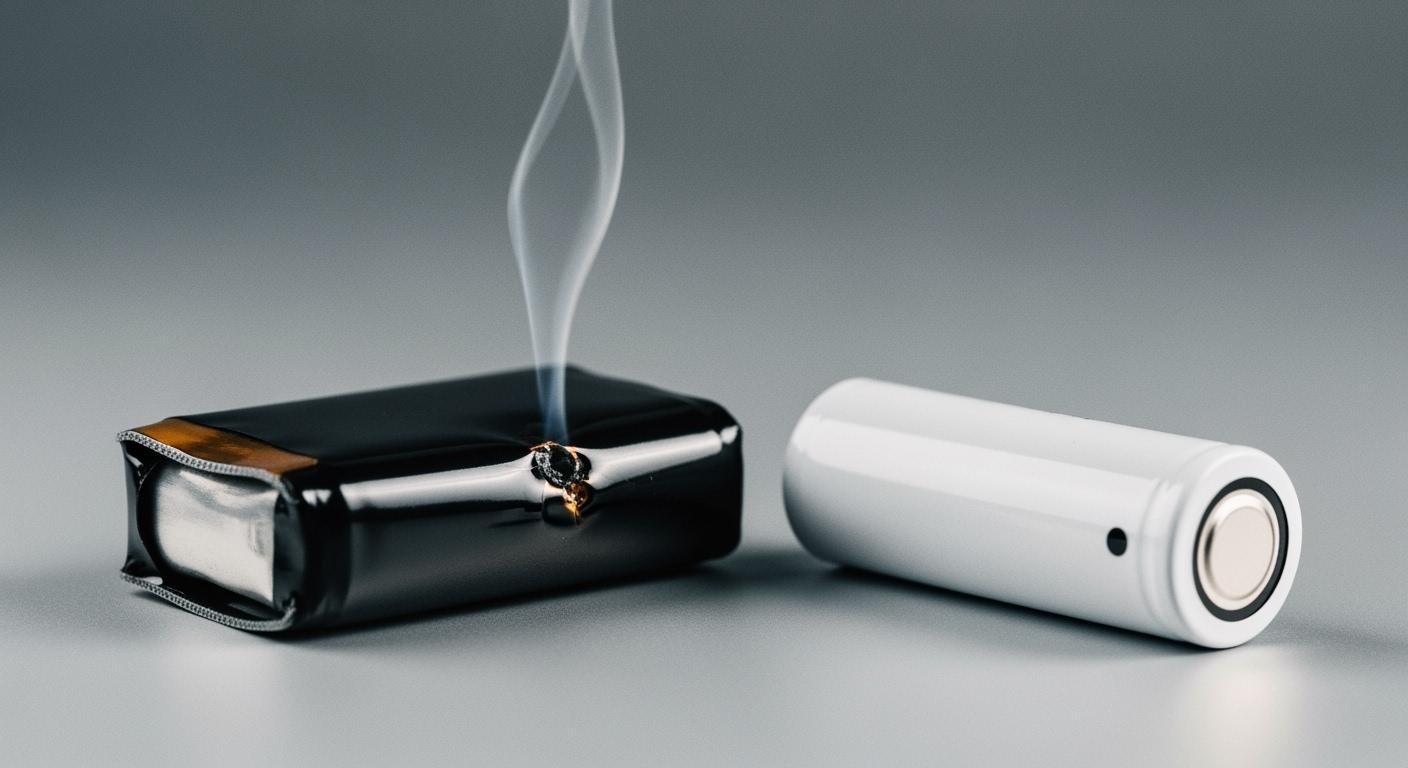
The question of which battery is safer, a lithium-ion battery or a lithium-polymer battery, is common. The answer is complex. A battery’s overall safety depends on its build quality, application, and user handling. The debate highlights a fundamental trade-off in battery design. Li-ion batteries have a key advantage, while Lipo batteries have another.
A li-ion battery gains physical protection from its rigid metal case. The lithium polymer chemistry, however, offers a lower risk of leaking flammable liquids.
This core difference defines the safety discussion for both lithium-ion batteries and the li-ion design. Understanding this helps users evaluate which of the batteries is right for their needs.
Defining Battery Safety: Li-ion vs. LiPo
Defining which battery is safer requires looking beyond simple labels. True battery safety is a combination of chemistry, construction, and testing. Organizations like Underwriters Laboratories (UL) and the International Electrotechnical Commission (IEC) create standards to evaluate these factors. A battery’s performance in these tests determines its overall safety profile.
Key Factors in Battery Safety
Experts measure safety using several key metrics. These tests push a battery to its limits to see how it fails. Understanding these factors helps clarify the safety discussion for both li-ion and other batteries.
- Thermal Stability: This measures how a battery handles heat. Testers check for thermal runaway, a dangerous overheating condition. A battery with good thermal stability manages heat effectively.
- Mechanical Resistance: This evaluates how a battery withstands physical damage. Tests include mechanical shock and puncture simulations. A strong outer case improves a battery’s safety.
- Overcharge Tolerance: This assesses the risk when a battery receives too much power. A quality battery has protections to prevent damage from overcharging.
Why There Is No Single “Safer” Battery
The ideal battery choice depends entirely on its use. There are key differences in how safety is prioritized for various applications. For example, many medical devices like infusion pumps use LiPo batteries. Their stable chemistry and lower leakage risk make them a better choice where reliability is critical.
On the other hand, a power tool might benefit more from a li-ion battery’s tough metal shell. Testing standards also vary, showing different philosophies on safety.
| Dimension | IEC 62619 (International) | UL 1973 (North America) |
|---|---|---|
| Primary Object | Cells and complete batteries | Battery modules and packs |
| Abuse Tests | Electrical, thermal, mechanical | Thermal runaway propagation |
| Pass/Fail Goal | Cell must not explode or ignite | System must contain failures |
Nota: Ultimately, the safest battery is one that is certified, high-quality, and used correctly for its intended purpose. The user’s role in handling and charging is the most important factor in overall safety.
The Safety Case for Li-ion
The well-established safety record of lithium-ion batteries is built on a foundation of robust physical design and integrated protective electronics. These elements work together to make the li-ion battery a resilient and reliable power source for countless applications. The primary arguments for li-ion safety center on its tough exterior and its internal, self-regulating mechanisms.
The Role of the Rigid Metal Case
A key advantage for li-ion batteries is their strong outer shell. Most cylindrical li-ion cells, like the common 18650 or 21700 formats, are housed in a nickel-coated steel can. Prismatic li-ion cells use a welded aluminum or steel casing. This rigid metal enclosure provides excellent structural protection against physical abuse.
Compared to a LiPo battery’s soft pouch, a li-ion battery’s metal case offers far greater resistance to punctures, crushing, and impacts. The soft casing of a LiPo is easily pierced, which can cause an immediate fire. The li-ion design, however, is durable enough for rugged environments where the battery might be dropped or hit. This physical toughness is a critical component of its overall safety profile.
Built-in Protection Circuits
Beyond their tough exterior, many li-ion batteries contain sophisticated internal safety features. These mechanisms make the battery more self-regulating and can prevent dangerous failures before they occur. A modern lithium-ion battery often includes multiple layers of protection.
These built-in safety features are designed to automatically intervene during fault conditions like overcharging, overheating, or internal short circuits, significantly enhancing the battery’s safety.
Key internal and external safety features for lithium ion batteries include:
- Dispositivo de interrupción del circuito (CID): This is a pressure-activated fuse located in the top cap of cylindrical cells. If gas pressure inside the battery builds to a dangerous level (around 1,000 kPa), the CID breaks the electrical connection permanently. This action stops the current and helps vent the gas safely.
- Positive Temperature Coefficient (PTC) Resistor: This component acts like a resettable fuse. If the battery’s temperature rises too high, the PTC’s electrical resistance increases dramatically. This increase chokes off the current flow, preventing the battery from overheating further. It can reset automatically once the temperature returns to a safe level.
- Sistema de gestión de baterías (BMS): While often external to the cells themselves, a BMS is a critical safety component for li-ion battery packs. This electronic circuit board monitors the voltage, current, and temperature of each cell. It prevents over-charging and over-discharging, balances the charge across all cells, and can shut the battery down if it detects an unsafe condition.
These layers of protection make li-ion batteries a very safe option when manufactured and used correctly. The combination of a strong physical case and smart electronic safeguards gives these batteries a strong defense against common failure modes.
The Safety Case for LiPo
While li-ion batteries rely on physical toughness, lithium polymer batteries present a strong safety case based on their chemical composition. The design of a lithium-polymer battery focuses on internal stability and a more predictable failure mode. These characteristics give lithium polymer technology its own set of safety advantages, particularly concerning the electrolyte it contains.
Lower Risk of Electrolyte Leakage
The most significant safety feature of a lithium polymer battery is its electrolyte. Unlike many li-ion cells that use a liquid electrolyte, a lithium-polymer battery uses a solid or gel-like polymer. This semi-solid design dramatically reduces the risk of leaking flammable liquid if the battery’s soft pouch is damaged. This containment is a core part of its safety profile.
The electrolyte in lithium polymer batteries can be one of several types, each with different components:
- Solid Polymer Electrolyte (SPE): This type uses polymers like Poly(ethylene oxide) (PEO) mixed with lithium salts.
- Gel Polymer Electrolyte (GPE): This is more common. It involves a polymer matrix, such as Polyvinylidene fluoride (PVDF), that traps liquid plasticizers and lithium salts. The plasticizers are often carbonates like Ethylene carbonate (EC) and Dimethyl carbonate (DMC).
This chemical makeup means the electrolyte does not flow freely. A puncture in a LiPo battery might expose the internal chemistry, but it is far less likely to result in a dangerous spill of flammable liquid compared to a compromised li-ion cell.
Stability and Failure Mode
Proponents argue that lithium polymer chemistry offers better thermal stability. While any lithium-based battery can fail, the failure mode of LiPo batteries is often less violent than the explosive thermal runaway that can occur in high-density li-ion cells. The primary hazard for LiPo batteries is physical damage, especially punctures.
When a puncture exposes the battery’s internal components to air and moisture, a chemical reaction begins. This exposure can cause the battery to swell rapidly with gas and often leads to a vigorous fire rather than a shrapnel-producing explosion. The interaction with moisture is particularly dangerous.
When exposed directly to water, the lithium within lithium batteries can, unfortunately, have a dramatic and potentially dangerous chemical reaction. They combine to form combustible hydrogen and lithium hydroxide, both of which battery owners should avoid.
The gases produced during a LiPo failure can also be hazardous. Common gas species generated from the breakdown of lithium-based batteries are often toxic, including carbon monoxide (CO) and hydrogen fluoride (HF). However, the general stability of the polymer electrolyte helps manage the energy release, making the failure intense but often more contained than a catastrophic li-ion event. This predictable, albeit still dangerous, failure is a key aspect of its safety argument.
Common Risks for Lithium-ion Batteries
Despite their robust design, lithium-ion batteries carry specific risks. The primary concerns for li-ion batteries are thermal runaway and manufacturing defects. These issues can lead to dangerous failures if not properly managed. Understanding these risks is crucial for overall battery safety.
Understanding Thermal Runaway
Thermal runaway is the most significant hazard associated with a lithium-ion battery. It is a chain reaction where a battery’s internal temperature increases uncontrollably. This runaway process can be triggered by overcharging, physical damage, or an internal short circuit. The extreme heat causes a series of dangerous chemical reactions inside the li-ion battery.
A thermal runaway event can release a battery’s stored energy very quickly. This can result in smoke, fires, or even a violent explosion.
The chemical process of a runaway event involves several stages:
- The battery releases stored electrochemical energy.
- Lithium atoms move from the anode to the cathode’s surface layers.
- The cathode material breaks down, releasing oxygen that then oxidizes the electrolyte.
This catastrophic process has led to numerous product recalls. In 2024 alone, 15 recalls for consumer products involved li-ion batteries, affecting over 870,000 units due to fire risks.
Dangers of Manufacturing Defects
The manufacturing process for li-ion batteries is extremely sensitive. Tiny mistakes can introduce defects that compromise the battery’s safety and lead to catastrophic failures. These defects often create internal short circuits, a primary cause of battery failures.
Contamination is a major problem. Microscopic metallic particles, such as copper or iron, can get inside the battery during production. These particles can eventually pierce the thin separator layer between the anode and cathode. This penetration creates a short circuit, which generates a hot spot and can ignite the flammable electrolyte. Many manufacturers use advanced quality control, like X-ray inspection and contamination testing, to find these flaws. However, defects can still slip through, making it essential to use batteries from reputable sources. The safety of a lithium ion battery heavily depends on a flawless manufacturing environment.
Common Risks for LiPo Batteries
Lithium polymer batteries offer great performance, but they come with unique risks. Their soft pouch design makes them vulnerable to physical damage. Users must understand these dangers to ensure proper handling and safety. The two most common hazards for LiPo batteries are punctures and swelling.
The Hazard of Punctures
The soft casing of a lithium-polymer battery is its biggest weakness. The squeezing or puncturing of lithium polymer batteries can cause an immediate and dangerous chemical reaction. When the internal layers are breached, they react with air and moisture. This reaction can lead to a rapid release of energy, often resulting in a vigorous fire. The risk is not just theoretical; it has caused serious incidents.
- A helicopter paramedic carried a lithium polymer battery in a flight suit pocket with some keys.
- The pilot saw a flash of light, and the cabin quickly filled with smoke.
- The paramedic’s suit was on fire, and they had to be pulled from the helicopter to have the burning material cut away.
This event highlights the extreme danger of a damaged lithium polymer battery. Even small impacts can compromise the battery’s integrity and lead to a fire.
Identifying Dangerous Swelling
A swollen or “puffy” battery is a clear sign of internal failure. This swelling happens when the chemical components inside the lithium-polymer batteries break down and release gas. Several conditions can cause a battery to swell:
- Sobrecarga: Charging a battery beyond its maximum voltage causes the electrolyte to decompose and produce gas.
- High Temperatures: Heat speeds up chemical reactions, increasing gas production and making the battery swell.
- Aging: Over time, the materials inside all batteries degrade, which can release gas as a byproduct.
A swollen lithium polymer battery is unstable and poses a significant fire risk. It should be removed from service immediately. Proper disposal is critical for safety.
Never put swollen LiPo batteries in the regular trash. Do not place the battery in water. If it is warm or smoking, move it outdoors to a fireproof container away from flammable materials. Once the battery is stable, take it to a local e-waste collection site for safe disposal.
Universal Battery Safety Practices
Regardless of whether a device uses a lithium-ion battery or a lithium-polymer battery, user behavior is the most critical factor in overall safety. Following universal best practices for charging, handling, and inspection minimizes risks for all lithium batteries. These practical tips for safe battery usage are essential for every owner.
Safe Charging and Discharging
Proper charging is fundamental to battery safety. Users should always use the charger that came with their device or a certified replacement from the manufacturer. Using incorrect or uncertified chargers can lead to overcharging, which fire officials identify as a primary cause of embalamiento térmico. This is a major safety concern for both li-ion and lithium polymer batteries. It is also important to respect the battery’s C-rate, which defines its charge and discharge speed.
| Química de la batería | Typical C-rate | Maximum C-rate | Application Examples |
|---|---|---|---|
| NMC Lithium Battery | 1C | Up to 10C | Electric vehicles, high power use |
| LiFePO4 Lithium Battery | 1C | Up to 3C | Energy storage systems, power tools |
⚠️ Alerta: Never exceed the manufacturer’s recommended C-rate for charging or discharging. Always use battery management systems (BMS) to monitor temperature, voltage, and current in real time.
Proper Handling and Storage
Correct handling and storage extend the life of a battery and prevent accidents. People should store li-ion batteries in a cool, dry place. The ideal long-term storage temperature is between 15°C and 25°C (59°F to 77°F). High heat accelerates degradation and increases safety risks. When traveling, especially by air, specific rules apply. Spare lithium ion and lithium polymer batteries, including power banks, must be in carry-on luggage. Their terminals must be protected from short circuits by keeping them in retail packaging or a protective pouch.
Inspección de daños
Regular inspection helps identify a failing battery before it becomes a hazard. Users should visually check their batteries for any signs of damage, such as swelling, punctures, or leaking fluid. A multimeter can also help assess a battery’s health. A healthy, fully charged 12V lithium-ion battery should read around 12.6 volts. A reading below 12.4 volts often indicates the battery is discharged or weak.
To check the voltage safely:
- Set the multimeter to DC voltage (around 20V for a 12V battery).
- Connect the red probe to the positive (+) terminal.
- Connect the black probe to the negative (-) terminal.
- Read the voltage displayed on the multimeter.
This simple test provides a quick snapshot of the battery’s condition and is a key part of routine safety checks.
The debate over which battery is safer has no simple answer. A li-ion battery offers better physical safety. A lithium-polymer battery provides greater chemical stability. The li-ion design is tough, while the lithium polymer chemistry reduces leakage risks. Ultimately, no single battery is inherently safer than another.
User responsibility is the most critical factor in battery safety. Proper handling makes both li-ion batteries and lithium polymer batteries a safer choice. Your application determines the best battery. A durable li-ion is great for tools, while lightweight lipo batteries suit drones. Always prioritize safety guidelines for your specific battery.
PREGUNTAS FRECUENTES
Which battery is better for my device?
The best battery depends on the device’s needs. A li-ion battery’s tough case is great for power tools. A lightweight LiPo battery is often better for drones and RC cars where weight matters most. Users should choose based on durability versus weight requirements.
What should I do if my battery starts to swell?
A swollen battery is a serious fire hazard. A person must stop using it immediately.
Safely move the battery outdoors to a fireproof container. Keep it away from anything that can burn. Once stable, take it to an e-waste disposal center.
Can I use any charger for my lithium battery?
No. Users must only use the charger made for their specific battery. Using the wrong charger can lead to overcharging. This is a major cause of battery fires. Always use certified chargers to ensure safety and prevent dangerous failures.
How do I safely get rid of an old lithium battery?
Never throw lithium batteries in the regular trash. They can start fires in garbage trucks or at waste facilities. A person should take old batteries to a special e-waste collection site or a battery recycling center for safe disposal.
 EN
EN ES
ES FR
FR DE
DE RU
RU ZH
ZH