

Lithium Titanate Oxide (LTO) batteries are widely regarded as the safest lithium battery technology available. However, Lithium Iron Phosphate (LiFePO4) batteries offer exceptional safety and are far more common. In 2022, NMC batteries held 60% of the EV market, but the market for LiFePO4 batteries is growing rapidly. These safer lithium-ion batteries demonstrate superior thermal stability.
Nota: The robust chemistry of lithium iron phosphate prevents the kind of thermal events seen in other lithium-ion batteries. No confirmed fires in LFP-based Teslas have ever been reported.
LTO: The Safest Lithium Battery Chemistry

Lithium Titanate Oxide (LTO) technology sets the highest standard for safety in the world of lithium-ion batteries. Its unique chemical structure provides unmatched stability. This makes it the top choice for applications where failure is not an option. The Department of Defense, for example, has utilized LTO batteries for years, a testament to their proven safety in critical situations.
LTO vs. LiFePO4 (LFP) Safety
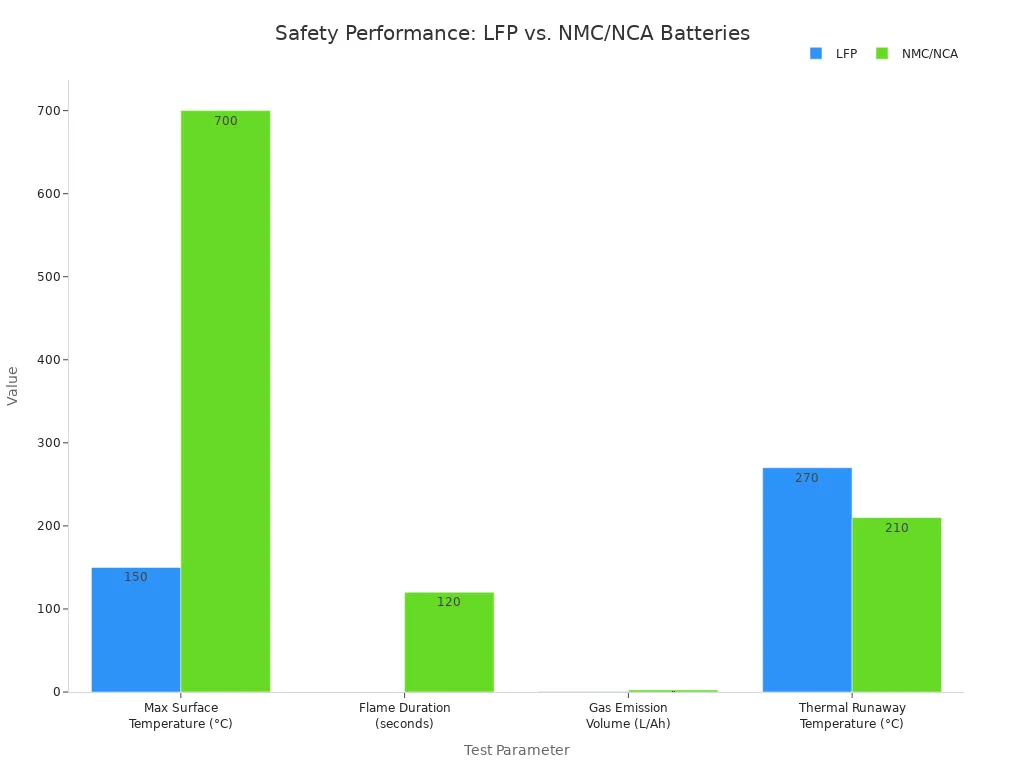
Many people consider LiFePO4 batteries an extremely safe option. This is true. The lithium iron phosphate chemistry has a very high thermal runaway threshold of around 518°F (270°C). This resistance to overheating makes LiFePO4 batteries a popular choice for safety-conscious users.
Safety tests show the resilience of LiFePO4 batteries. During short-circuit tests, large LiFePO4 batteries did not explode or ignite. They did get very hot and release gas through safety vents. Overcharging can also cause LiFePO4 batteries to swell or vent if safety circuits fail. While they are designed to fail safely without fire, they can still be damaged.
Safety Note: LTO is demonstrably safer under the most extreme abuse. In tests involving punctures, crushing, or severe overcharging, LTO cells resist thermal runaway entirely. These are conditions where even robust LiFePO4 batteries can eventually fail. This makes LTO the safest lithium battery chemistry for the most demanding environments.
LTO vs. NMC Stability
The comparison between LTO and Nickel Manganese Cobalt (NMC) is much clearer. NMC batteries are known for their high energy density. This feature makes them popular in many electric vehicles. However, this performance comes with higher safety risks. NMC chemistry is more volatile and has a greater chance of thermal runaway.
Key safety risks associated with NMC lithium-ion batteries include:
- Thermal Runaway: A dangerous chain reaction inside the battery can cause it to overheat, leading to fires or explosions.
- Chemical Instability: The battery is less stable, especially when it is fully charged.
- Vulnerability to Damage: Punctures, crushing, or strong impacts can cause internal short circuits and catastrophic failure.
- Flammable Components: The electrolyte liquid inside the battery can catch fire during a failure event.
- Manufacturing Defects: Tiny errors during production can create hidden weaknesses that lead to problems later.
- Aging Risks: The battery can become less safe as it gets older and is used more.
For any system where safety is the absolute top priority, LTO technology is the clear winner over NMC. Its inherent stability provides a level of security that other chemistries cannot match.
Safety Profile Comparison

Understanding the safety differences between battery chemistries helps users choose the right technology. This section compares LTO, LFP, and NMC batteries on key safety metrics. It provides a quick reference for evaluating the safest cells by chemistry.
Thermal Runaway Resistance
Thermal runaway is an uncontrolled chain reaction where a battery overheats. This process can lead to fire or explosion. A battery’s resistance to this event is a critical safety measure.
- LTO: Lithium Titanate batteries show virtually no risk of thermal runaway. Their chemical structure is incredibly stable, even at high temperatures or during a massive overcharge.
- LFP: LiFePO4 batteries have excellent thermal stability. Their cathode material does not release oxygen until around 518°F (270°C). This high threshold makes them very resistant to overheating. In contrast, NMC batteries can enter thermal runaway at a much lower temperature of approximately 410°F (210°C). The stable chemistry of LiFePO4 batteries contains far less combustion energy than other lithium-ion batteries.
- NMC: Nickel Manganese Cobalt batteries have the lowest thermal runaway resistance of the three. Their chemistry is more likely to break down and release oxygen when overheated, which fuels a fire.
The operating temperature range also affects stability. LTO cells perform well in extreme cold and heat, from -40°F to 167°F (-40°C to 75°C). LiFePO4 batteries operate reliably from -4°F to 140°F (-20°C a 60°C). This wide range makes LiFePO4 batteries a dependable choice for many climates.
Response to Physical Damage
Physical damage like a puncture or crash is a major safety concern. A battery’s reaction to this abuse shows its true stability.
During nail penetration tests, the differences are clear. The surface temperature of a punctured LFP cell stays below 302°F (150°C) and produces no flame. An NMC cell, however, can exceed 1292°F (700°C) and burn for over two minutes. The safest cells by chemistry, LTO and LFP, are designed to fail gracefully.
Crush tests reveal similar results. LiFePO4 batteries can withstand significant force and deformation before an internal short circuit occurs. Even then, the reaction is far less violent than in an NMC cell. This resilience makes LiFePO4 batteries a much safer option in applications where impacts are possible. For the absolute highest level of safety under physical abuse, LTO remains the safest lithium battery.
Comparing the Safest Lithium Battery Cells
A direct comparison highlights the strengths of each chemistry. While LTO is the champion of safety, LiFePO4 batteries offer a fantastic, accessible balance of safety and performance.
| Safety Metric | LTO (Lithium Titanate) | LFP (fosfato de litio y hierro) | NMC (Nickel Manganese Cobalt) |
|---|---|---|---|
| Thermal Runaway | Extremely high resistance. Does not experience thermal runaway. | High resistance. Occurs around 518°F (270°C). | Lower resistance. Occurs around 410°F (210°C). |
| Puncture/Crush | No fire or explosion. Remains stable. | No fire. May vent smoke but remains contained. | High risk of fire and explosion. |
| Overcharge | Very high tolerance. Does not ignite. | High tolerance. Swells or vents but no fire. | Low tolerance. Prone to fire. |
| Toxicidad | Bajo | Non-toxic materials (iron, phosphate). | Contains cobalt and nickel, which are more toxic. |
Environmental Safety Note: The materials in LiFePO4 batteries, like iron and phosphate, are abundant and non-toxic. This makes them a more environmentally friendly choice compared to the cobalt and nickel used in NMC batteries.
When purchasing any battery system, look for products that meet key safety standards. These certifications confirm the battery has passed rigorous abuse testing. Important standards include:
- UL 1642: A standard for testing lithium cells.
- UL 2580: A standard for batteries used in electric vehicles.
- CEI 62619: An international standard for industrial lithium batteries.
- UN 38.3: A requirement for the safe transport of all lithium-ion batteries.
These certifications provide third-party validation that the battery system is designed with safety as a priority.
The Science Behind LTO and LFP Safety
The impressive safety records of LTO and LiFePO4 batteries come from their unique internal chemistry. Understanding the science reveals why these technologies are so stable and reliable.
LTO’s Stable Titanate Anode
The anode is a key component for battery safety. LTO batteries use a lithium titanate anode, which is fundamentally safer than the graphite anodes in other lithium-ion batteries. This safety comes from several properties.
- “Zero-Strain” Property: En LTO crystal structure barely changes during charging and discharging. This stability prevents the material from breaking down over time.
- No Dendrite Formation: LTO has a high electrical potential. This feature prevents the growth of sharp, needle-like structures called lithium dendrites. Dendrites can cause internal short circuits and fires in other batteries.
- Minimal Volume Change: The anode material does not swell or shrink much. This structural integrity ensures a long and safe operational life.
Inherent Safety of LiFePO4 Batteries
The safety of LiFePO4 batteries is built into their cathode material. The lithium iron phosphate chemistry uses a special crystal structure called an olivine structure. This structure contains very strong phosphorus-oxygen (P-O) bonds. These bonds create a rigid framework that is difficult to break, even under extreme heat.
This robust structure is why LiFePO4 batteries are so resistant to thermal runaway. The strong bonds lock oxygen inside the battery. Other lithium-ion batteries can release this oxygen when they overheat, which can fuel a fire. The stable chemistry of LiFePO4 batteries prevents this dangerous reaction. This makes LiFePO4 batteries an incredibly safe choice for many applications.
The Role of a Battery Management System (BMS)
Even the safest battery needs a brain. A Battery Management System (BMS) acts as the control center for the battery pack. It is essential for the safety of any system, including those with LiFePO4 batteries.
Important Note: A BMS performs critical safety functions. It monitors the voltage of every cell, preventing overcharging and over-discharging. If the BMS detects a problem like high temperature or a voltage outside the safe range, it will automatically disconnect the battery to prevent damage or failure. The BMS ensures all cells work together, which maximizes safety and extends the life of LiFePO4 batteries.
For applications where safety is the absolute priority, LTO is the superior choice due to its unmatched stability, though its cost ($800-$1200/kWh) is high. In contrast, LiFePO4 batteries offer an excellent and more accessible balance of safety and performance. With a lower cost ($300-$600/kWh), the lithium iron phosphate chemistry makes them the safest lithium battery option for most consumer needs like RVs and solar storage.
Remember, the safety of all lithium-ion batteries depends on the entire system. A high-quality Battery Management System (BMS) y correct installation are non-negotiable to prevent failures and ensure the long-term safety of LiFePO4 batteries.
PREGUNTAS FRECUENTES
Which lithium battery is the safest?
Lithium Titanate (LTO) batteries provide the highest level of safety. Their unique chemistry offers unmatched stability against physical damage and overheating. This makes LTO the top choice for applications where failure is not an option.
Why are LiFePO4 batteries more popular than LTO?
LiFePO4 batteries offer a fantastic balance of safety, performance, and cost. LTO technology is much more expensive. The lower cost of LiFePO4 makes it a more practical and accessible safe battery for consumers.
Are NMC batteries dangerous?
NMC batteries have a higher safety risk than LTO and LFP. They are more vulnerable to damage and have a lower thermal runaway temperature.
A high-quality Battery Management System (BMS) is essential. It helps manage these risks and makes the battery safer for use in products like electric vehicles.
What is the most important safety feature for any lithium battery?
The Battery Management System (BMS) is the most critical safety component. It acts as the battery’s brain, monitoring voltage and temperature. A good BMS prevents dangerous conditions like overcharging and ensures the battery operates safely.
 EN
EN ES
ES FR
FR DE
DE RU
RU ZH
ZH