

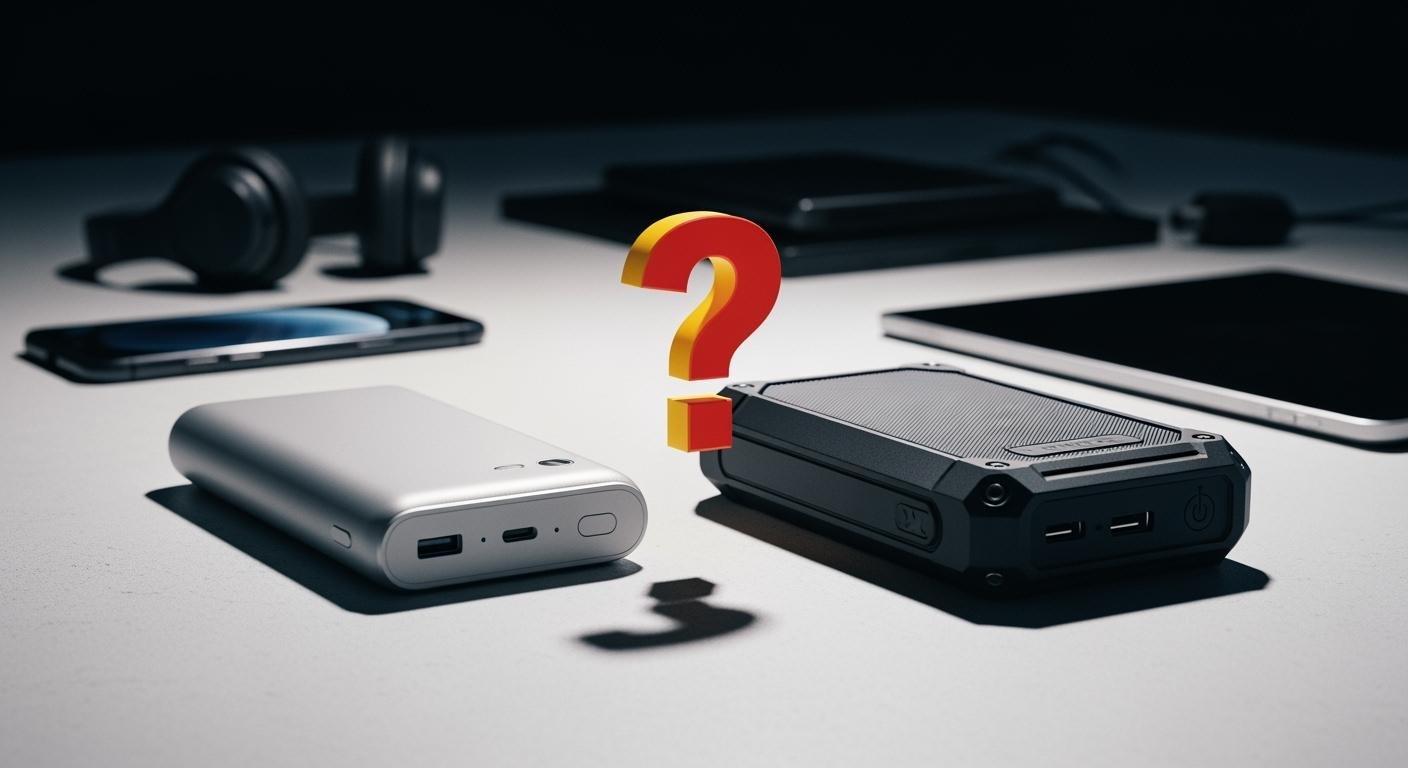
You have probably heard people use the terms “power pack” and “power bank” for the same thing. This common mix-up can be confusing. The market for these devices is growing quickly, with global sales projected to reach over $55 billion by 2030. Let’s clear things up so you can find the right product.
Quick Answer: A power bank charges your phone and small gadgets. A power pack is a larger unit that can run appliances like a mini-fridge.
This guide will help you understand the key differences.
What is a Power Bank?
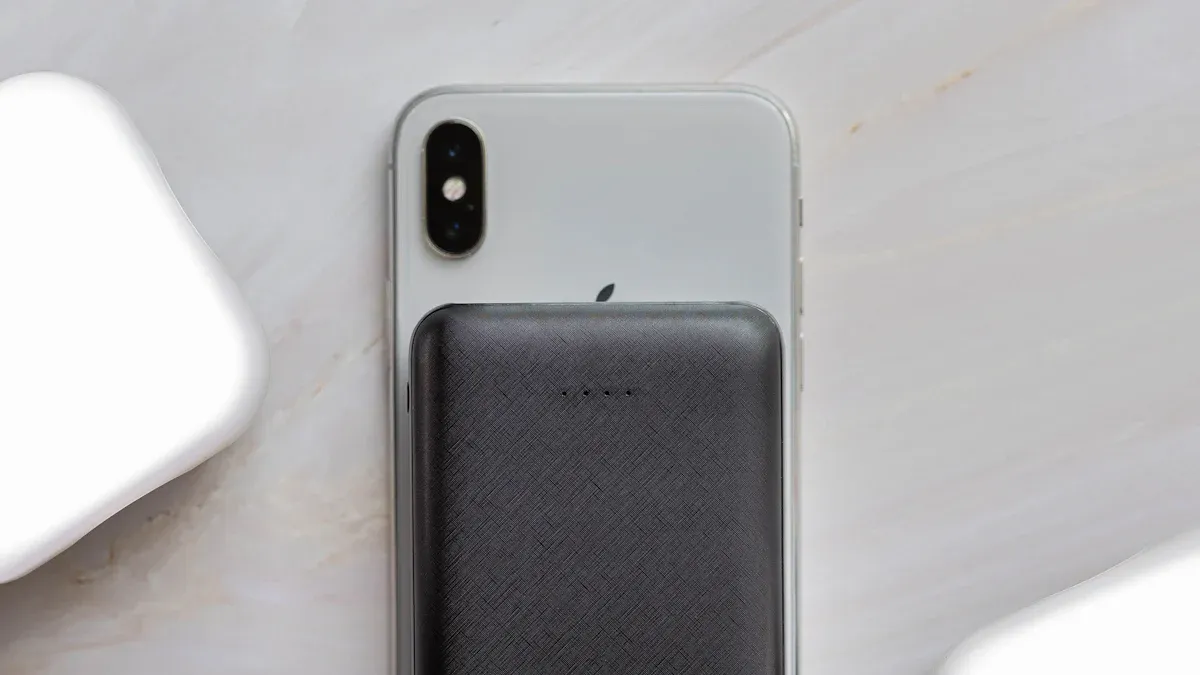
A power bank is a small, versatile, battery-powered charger for your personal electronics. Think of it as a pocket-sized lifeline for your phone, headphones, or tablet. Its main advantage is portability. You can easily slip a portable power bank into a bag or pocket for daily use, which sets it apart from larger power units. Some people also call smaller, single-device versions a “portable charger.”
Core Function and Connectivity
A power bank stores energy so you can charge your devices anywhere. Most connect to your gadgets using standard USB ports (like USB-A and USB-C). The internal batteries are typically one of two types:
- Lithium-Ion (Li-Ion): This is the most common type. It offers a good balance of energy, weight, and cost.
- Lithium-Polymer (LiPo): This type allows for thinner designs and is generally safer than Li-ion.
Both technologies help keep your power bank lightweight and efficient.
Capacity and Power Output
You measure a power bank’s capacity in milliamp-hours (mAh). A higher number means more charging power. The right capacity for you depends on your needs, but most fall within a standard range.
| Gerätetyp | Typical mAh Range |
|---|---|
| Power Bank | 10,000–40,000 |
A 10,000 mAh power bank is a popular choice. It can charge an average smartphone two to three times, making it perfect for a long day or a weekend trip. Besides capacity, you should also consider the charging speed, which determines how quickly it can power up your devices.
Common Use Cases for a Power Bank
You will find a power bank incredibly useful in many everyday situations. It ensures your essential gadgets stay powered when you are away from an outlet.
- Charging Smartphones on the Go: Keep your phone alive for calls, navigation, and entertainment while commuting or traveling.
- Powering Wearable Devices: Ensure your smartwatch or wireless earbuds never run out of battery.
- Extending Gaming Sessions: Play longer on portable consoles like the Nintendo Switch without interruption.
- Keeping Tablets Ready: Power your tablet for work, school, or entertainment during long flights or meetings.
What is a Power Pack?
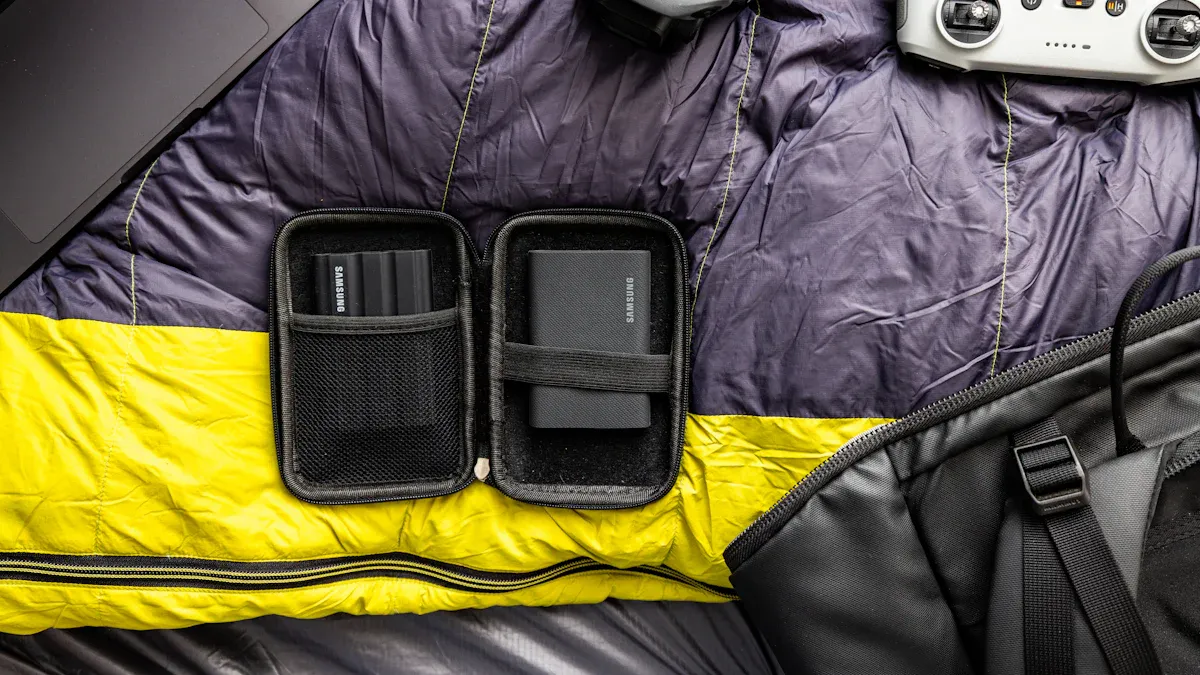
A power pack is a high-capacity battery system designed for bigger jobs. You will often see it called a portable power station. Think of it as a miniature, silent generator that you can take anywhere. It is much larger and more powerful than a power bank.
Core Function and Versatility
A power pack’s main job is to run devices that need more energy than a simple USB port can provide. Its versatility comes from its multiple output options.
The key feature of a portable power station is its inclusion of AC outlets, just like the ones in your wall. This allows you to plug in and power larger electronics and small appliances directly.
Along with AC outlets, most units also include USB-A, USB-C, and DC ports, making them a central hub for all your power needs.
Capacity and High Power Output
You measure a power pack’s capacity in Watt-hours (Wh). Some smaller units designed for laptops have capacities around 90 Wh. However, most models offer much more. You also need to know the difference between its two power output ratings:
- Continuous Power: The wattage it can supply consistently for normal operation.
- Peak Power: The higher wattage it can provide for a few seconds to start up appliances.
Understanding this helps you choose a portable power station that can handle your devices’ initial power surge.
Common Use Cases for a Power Pack
The rise in outdoor recreation, now a $1.1 trillion industry, has made the portable power station a must-have for many. It is perfect for off-grid adventures and emergencies.
- Powering Camping and RV Trips: You can run a 45-watt mini-fridge for over 30 hours or power lights and fans.
- Providing Emergency Backup Power: During an outage, a 500Wh portable power station can run a CPAP machine for several nights.
- Creating a Mobile Workstation: Keep laptops, cameras, and drones charged for days when you are working remotely in the field. A portable power station ensures your essential gear stays online.
Key Differences at a Glance
Choosing the right device is simple when you understand the core differences. Let’s break down what sets a power bank apart from a power pack.
Portability vs. Power
You must decide between carrying convenience and raw power. This is the most significant trade-off.
- Power Banks: These devices prioritize portability. You will find them slim and pocket-friendly, making them easy to carry for daily use. A typical power bank weighs less than two pounds and fits easily into a backpack.
- Power Packs: These units offer much more power but are larger. A portable power station like the EcoFlow RIVER 2 is about the size of a boombox stereo. It weighs just under 8 pounds, so you would carry it for a specific purpose, not every day.
Output Ports: USB vs. AC
The ports on a device determine what you can charge. A power bank offers basic connections, while a power pack provides more versatile options. Most power banks use USB-A and USB-C ports. Modern USB-C ports with Power Delivery (PD) offer a faster charging speed for compatible devices.
A power pack includes these USB ports plus standard AC outlets, just like the ones in your home. This feature lets you power much larger electronics.
| Merkmal | USB-A | USB-C Power Delivery |
|---|---|---|
| Gestaltung | Flat, rectangular | Oval-shaped, reversible |
| Stromlieferung | 2.5W to 12W | Up to 240W |
| Common Devices | Keyboards, older phones | Laptops, modern phones |
Device Compatibility
Your power needs will guide your choice. A power bank is perfect for personal electronics. A power pack handles much bigger tasks.
You can use a power bank to charge:
- Smartphones and tablets
- Wireless headphones
- Smartwatches
- Portable gaming consoles
You need a power pack to run appliances that require an AC outlet, such as:
- Mini-fridges and coolers
- Coffee makers
- Televisions
- Laptops with high power demands
Recharging Methods
You also need to consider how you will recharge the unit itself. Both devices can be charged from a wall outlet, but their methods and times differ.
A 10,000mAh power bank typically takes 4 to 6 hours to recharge using a standard USB wall adapter.
A 500Wh power pack offers more flexibility.
- AC Wall Outlet: Recharging takes about 4 to 8 hours.
- Solar Panel: A 100W solar panel can recharge it in about 5 hours under optimal sun conditions.
- Car Charger: You can also plug it into your vehicle’s 12V outlet on the go.
Safety First! 🛡️ When you buy any charging device, look for safety certifications. These marks show the product meets important safety standards. Key certifications include UL (for safety performance), FCC (for electronic interference), and CE (for European standards). They ensure the product is reliable and safe for you to use.
Clarifying Other Common Terms
The world of portable power has a few other terms that can add to the confusion. Understanding them helps you navigate the market with even more confidence. Let’s look at what makes each one unique.
The Battery Case
A battery case is a phone case with a built-in battery. You get both device protection and extra power in one package. This all-in-one design is convenient because you do not need to carry extra cables. However, it is designed for a specific phone model and usually has a lower capacity than a standalone power bank.
| Merkmal | Power Bank | Battery Case |
|---|---|---|
| Versatility | Charges any USB device | Charges one specific phone |
| Protection | Offers no phone protection | Protects phone from drops |
| Convenience | Requires a separate cable | All-in-one, no cable needed |
The Battery Pack
You will hear the term “battery pack” used to describe many different things. It is a very general term. A battery pack is simply a set of individual battery cells connected together in a housing. This broad definition covers a wide range of products. For example, the battery in a cordless drill is a battery pack. The large battery systems in electric vehicles are also a type of battery pack. Some people even use the term battery pack when referring to a power bank. Because the term is so broad, it is better to use more specific names when you are shopping.
The Portable Power Station
“Portable power station” is the industry-standard term for the large devices we have called power packs. Companies like Goal Zero und EcoFlow use this name to distinguish these powerful units from smaller power banks.
A portable power station is essentially a large battery with multiple outputs, including AC, USB, and 12V ports.
This versatility is what defines a portable power station. It is designed to run appliances that you would normally plug into a wall. When you search for a “portable power station,” you will find products built for camping, home backup, and off-grid work. The term portable power station helps you find exactly what you need for bigger jobs. A portable power station is your best choice for serious power needs.
Now you know the key difference between these devices. A power bank is a pocket-sized charger for your personal electronics. A power pack, or portable power station, is a larger unit with AC outlets for appliances. Understanding this distinction helps you choose the right product for your needs, whether you need daily charging or off-grid backup power. You can now shop with confidence and find the perfect solution to keep your world powered on.
FAQ
Can I take a power pack on a plane? ✈️
You can usually take a power pack or power bank under 100Wh in your carry-on luggage. You cannot put them in checked bags.
Pro Tip: Always check your airline’s specific rules before you fly. Regulations can change, so it is best to confirm ahead of time.
What does mAh mean?
The term mAh stands for milliamp-hour. It measures the energy capacity of a battery. A higher mAh number means the power bank holds more charge and can power your devices for a longer time.
How do I choose the right size power bank?
You should consider what you need to charge. A 10,000 mAh power bank is great for charging a smartphone two or three times. For a tablet or multiple devices, you might want a 20,000 mAh model or larger.
Can a power bank charge a laptop?
Most standard power banks cannot charge a laptop. However, some powerful models with a USB-C Power Delivery (PD) port can. You must check the power bank’s output to see if it meets your laptop’s power requirements.
 EN
EN ES
ES FR
FR DE
DE RU
RU ZH
ZH