

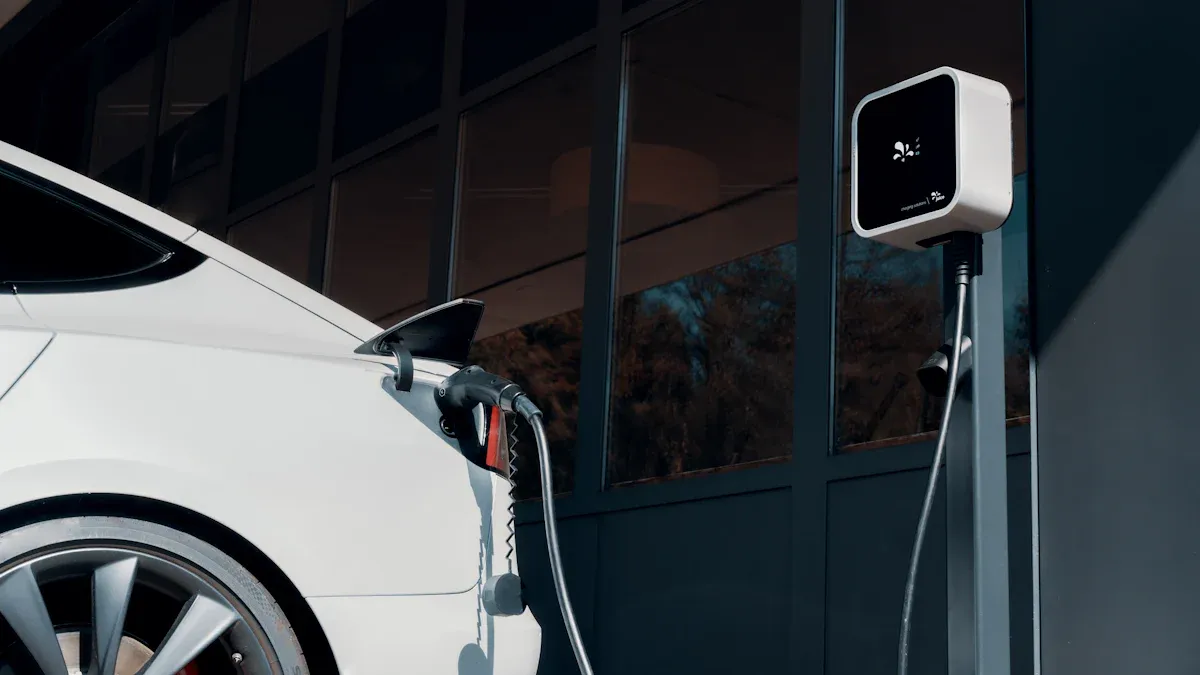
You see more vehicles using lithium car batteries every year. This shift happens for good reasons. Lithium batteries last longer, charge faster, and weigh less than older options. Many car owners choose them because they offer better safety and help with sustainability. Sales of lithium batteries have doubled every few years, especially as electric vehicles become popular. You also benefit from lower maintenance and more reliable performance.
Did you know? Most lithium now goes into batteries, and experts expect this trend to grow as electric cars take over the roads.
What Makes Lithium Car Batteries Unique
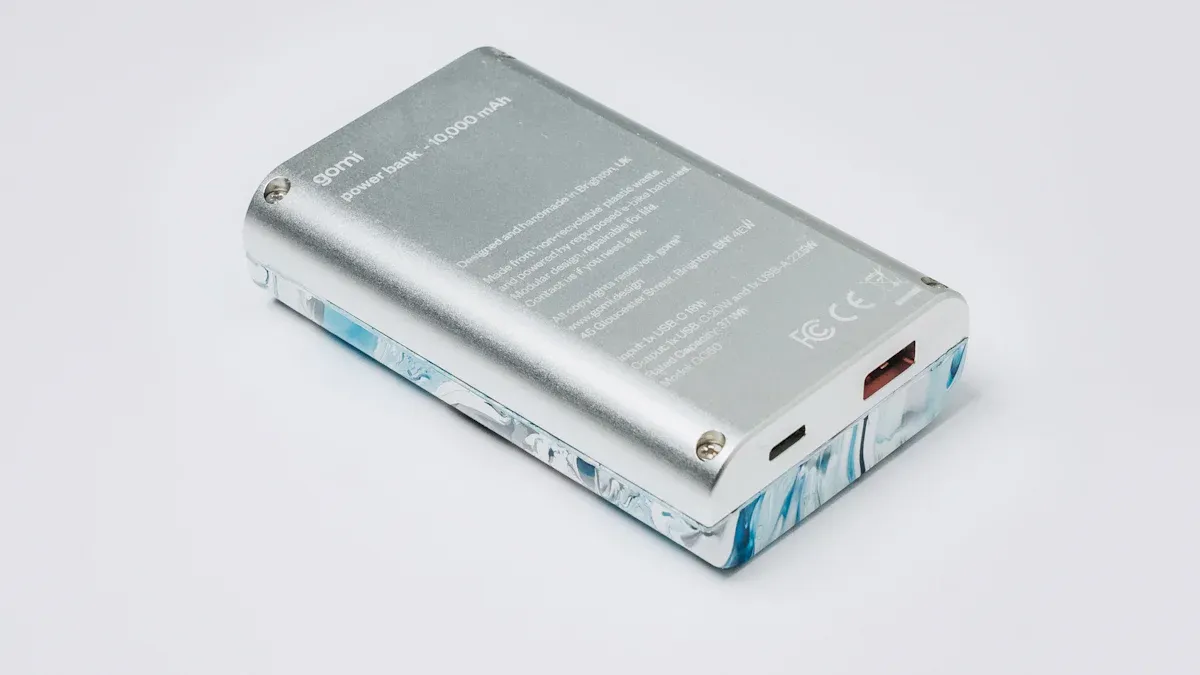
When you look at modern vehicles, you notice that lithium batteries stand out from traditional options. These batteries use advanced technology that gives you more power, longer life, and greater convenience. You get a battery that works better for electric vehicles and helps you save time and money.
Advanced Battery Chemistry
Lithium batteries use special chemistry to store and release energy. You find two main types in cars: NMC (nickel manganese cobalt) and LFP (lithium iron phosphate). Each type has its own strengths:
- NMC batteries use nickel and cobalt in the cathode. This gives you a denser energy output, which means more power in a smaller space.
- LFP batteries use lithium iron phosphate. These batteries are safer and last longer, but they hold a bit less energy.
- NMC batteries have a looser oxygen bond. This can make them more likely to overheat, while LFP batteries stay more stable.
- NMC batteries work at 3.7 volts, which can cause them to wear out faster. LFP batteries run at 3.2 volts, so they last longer and stay steady.
You benefit from these chemical differences because they give you choices. If you want more power, you might pick NMC. If you want safety and a longer life, LFP could be the better option. Both types help electric vehicles run smoothly and efficiently.
Comparison to Lead-Acid Batteries
You may wonder how lithium car batteries compare to the older lead-acid type. The table below shows the main differences:
| Merkmal | Lithium Car Batteries | Lead-Acid Batteries |
|---|---|---|
| Chemical Process | Uses lithium-ion technology with complex mechanisms | Simple chemical process with lead and sulfuric acid |
| Components | Cathode (lithium cobalt oxide), Anode (graphite) | Plates of lead dioxide and sponge lead |
| Wirkungsgrad | Higher energy density and efficiency | Lower efficiency and shorter lifespan |
| Power-to-Weight Ratio | Impressive power-to-weight ratio | Heavier and less efficient |
| Usage | Preferred for electric and hybrid vehicles | Reliable but older technology |
You see that lithium-ion batteries give you more energy in a lighter package. They use advanced materials like lithium cobalt oxide and graphite, while lead-acid batteries rely on heavy lead plates. This means you get a battery that is easier to handle and fits better in modern vehicles.
Experts often point out several user benefits when you choose lithium batteries over traditional ones:
- You get an extended lifespan. Lithium batteries can last ten years or more, while lead-acid batteries usually last three to five years.
- You enjoy a longer cycle life. Lithium batteries can handle over 4,000 charge cycles, compared to just 200-400 for lead-acid.
- You can use more of the battery’s energy. Lithium batteries allow you to discharge up to 100%, while lead-acid batteries should not go below 50%.
- You benefit from higher efficiency. Lithium batteries lose less energy and charge faster.
- You spend less time on maintenance. Lithium batteries need little care and do not suffer from problems like sulfation.
- You save space and weight. Lithium batteries are lighter and more compact, making them perfect for vehicles with limited room.
Tip: If you want a battery that lasts longer, charges faster, and saves space, lithium-ion batteries offer clear advantages over lead-acid options.
You now see why lithium car batteries have become the top choice for electric vehicles and other modern cars. Their advanced chemistry and design give you better performance, more safety, and greater value.
Lifespan of Lithium Auto Batteries
Durability and Cycle Life
You notice that lithium auto batteries offer an extended lifespan compared to traditional batteries. Most lithium batteries last 2-3 times longer than lead-acid batteries. You can see this difference in the table below:
| Akku-Typ | Average Lifespan (Cycles) | Depth of Discharge (DOD) |
|---|---|---|
| Lithium | 2,000−4,500+ | 100% DOD / 50% DOD |
| Lead-acid | 450−800+ | 100% DOD / 50% DOD |
Lithium batteries withstand thousands of charge-discharge cycles before losing capacity. You get more value from each battery because you can use a deeper discharge without harming the battery lifespan. The chart below shows how different lithium chemistries perform at various depths of discharge:
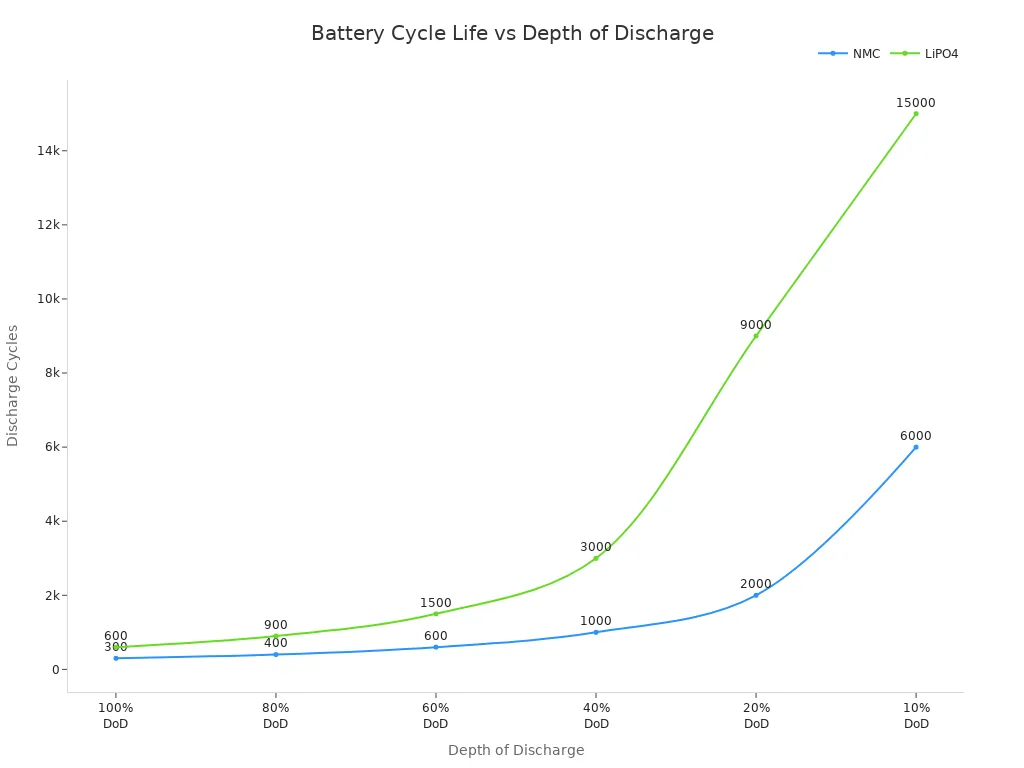
You benefit from this durability because lithium auto batteries keep your vehicle running longer and require fewer replacements.
Replacement Frequency and Value
You save time and money with lithium auto batteries. These batteries usually last 15-20 years or up to 300,000 miles, while conventional batteries need replacement every 3-5 years. The table below highlights this difference:
| Akku-Typ | Typical Lifespan |
|---|---|
| Lithium Auto Batteries | 15-20 years or 150,000-300,000 miles |
| Conventional Batteries | 3-5 years |
You only need to buy one lithium battery for your car over a decade, while you might replace conventional batteries two or three times. This extended lifespan reduces costs for labor, disposal, and new batteries. You also enjoy lower maintenance and faster charging. The total cost of ownership drops because lithium batteries last longer and work more efficiently.
Tip: Choosing lithium car batteries means fewer replacements, less hassle, and more value for your money.
You see that lithium auto batteries give you a reliable, long-lasting power source. Their battery lifespan and durability make them a smart choice for modern vehicles.
Performance and Efficiency of Lithium-Ion Batteries
Hohe Energiedichte
You get more power in a smaller package with lithium-ion batteries. These batteries offer superior energy density, which means they store more energy for their weight. This feature lets you drive electric vehicles farther on a single charge. You can see how different battery types compare in the table below:
| Akku-Typ | Energiedichte (Wh/kg) |
|---|---|
| LTO | 50-80 |
| LCO | 150-200 |
| NMC | 150-220 |
| LFP | 90-160 |
Lithium batteries like NMC and LCO give you the highest energy density. This advantage helps you save space and reduce weight in your vehicle. You also enjoy a greater depth of discharge, which means you can use more of the battery’s energy without harming its lifespan. With lithium car batteries, you get both power and efficiency.
Fast Charging and Discharge Rates
You want your vehicle ready to go quickly. Lithium-ion batteries support fast charging and high discharge rates. These features improve your driving experience and reduce waiting time. The table below shows how charging and discharging affect performance:
| Aspekt | Impact on Performance |
|---|---|
| Hohe Entlassungsraten | Enhances acceleration but can lead to quicker battery depletion and degradation. |
| Fast Charging | Improves convenience but may reduce battery life and efficiency over time. |
| Rate Tolerance | High discharge rates are tolerated better than high charge rates, but can still shorten battery life. |
| Thermal Management | Rapid rates increase risks of thermal runaway; slower rates manage heat better. |
| Environmental Sensitivity | Charging slows in cold; discharging is faster in hot climates. |
| Operational Efficiency | Fast charging decreases efficiency over time; moderate discharging maintains it. |
| BMS Role | Adjusts parameters during charging and discharging to optimize performance and safety. |
You benefit from higher efficiency and charging speed, but you should balance fast charging with battery health. The battery management system (BMS) helps protect your battery by adjusting charging and discharging rates. This system keeps your lithium auto batteries safe and reliable.
Tip: For the best lifespan, use moderate charging speeds when possible.
Impact on Driving Experience
You notice real performance advantages when you use lithium auto batteries in electric vehicles. These batteries give you quick acceleration, smooth power delivery, and longer driving range. Improvements in anode and cathode materials boost energy density and charging speed. For example, NMC cathodes provide high specific energy, while LFP cathodes offer thermal stability and a long lifespan.
Innovations in separators and electrolytes also improve battery performance. Stronger separators and better lithium salts help your battery charge faster and last longer. You enjoy a more reliable and enjoyable driving experience with lithium batteries.
With lithium-ion batteries, you get a combination of superior energy density, fast charging, and consistent performance. These features make your electric vehicle more efficient and fun to drive.
Maintenance and Convenience of Lithium Batteries
Minimal Maintenance Needs
You save time and effort when you choose lithium batteries for your car. These batteries offer reduced maintenance compared to older battery types. You do not need to check water levels or clean terminals, which are common tasks with lead-acid batteries. Sealed lead-acid batteries lower the need for maintenance, but they do not remove it completely. Lithium batteries stand out because they are maintenance-free throughout their lifespan. You install them and let them work without worrying about regular servicing.
- You do not need to check water levels.
- You avoid cleaning battery terminals.
- You skip regular servicing.
- You experience reduced maintenance for your vehicle.
- You enjoy more time on the road and less time in the garage.
Tip: With lithium batteries, you spend less time on upkeep and more time driving.
User-Friendly Features
You benefit from several user-friendly features when you use lithium batteries in your car. These features make your driving experience smoother and safer. The table below shows some of the most important features you will find in modern lithium batteries:
| Merkmal | Beschreibung |
|---|---|
| Faster Charging Times | Lithium-Batterien charge quickly, so you do not wait long for your car to be ready. |
| Longer Lifespan | With proper care, lithium batteries last between 8 to 15 years, giving you peace of mind. |
| Lightweight Design | The lighter weight of lithium batteries improves vehicle efficiency and driving range. |
| Enhanced Safety Features | These batteries resist impacts and work well in different weather conditions. |
| Smart Battery Management | Built-in systems monitor battery health and help extend battery life and efficiency. |
You notice that lithium batteries offer features that make your car easier to use and maintain. Smart battery management systems keep your batteries working at their best. Enhanced safety features protect you and your vehicle. Lightweight design helps your car run more efficiently. You get reduced maintenance and more convenience every day.
Weight and Space Advantages
Lightweight Design
You notice a big difference in weight when you compare lithium batteries to traditional lead-acid batteries. Lithium batteries weigh much less, which makes them easier to handle and install. For example, a typical lead-acid battery can weigh between 40 and 50 pounds. In contrast, lithium batteries of similar capacity weigh only about 25 pounds. This lighter design helps you save space and makes your car feel less bulky.
| Akku-Typ | Weight (approx.) | Weight Comparison |
|---|---|---|
| Lead-Acid Battery | 40-50 pounds | 3 times heavier |
| Lithium-Ion Battery | 25 pounds | Lighter alternative |
You benefit from this weight reduction because it makes your car more efficient and easier to maintain. You do not have to struggle with heavy batteries during replacement or installation. The lighter weight also means less strain on your vehicle’s frame and suspension.
Note: Lighter lithium batteries can improve your car’s handling and make maintenance tasks much simpler.
Effects on Vehicle Efficiency
You gain several advantages when your car uses lithium batteries. The reduced weight leads to better fuel efficiency and longer driving ranges. A recent study shows that using advanced materials in lithium batteries can cut battery weight by 50%. This change can double the driving range of electric vehicles. You spend less money on electricity and enjoy smoother acceleration.
- Higher energy density lets you drive farther without adding extra weight.
- Lighter batteries improve acceleration and handling.
- Better efficiency means lower costs per mile.
You see that lithium batteries help your car perform better in many ways. You get more miles from each charge, and your car responds faster when you press the pedal. The lighter design also means you need fewer batteries to power your vehicle, which saves space and reduces overall weight.
Tip: Choosing lithium batteries gives you a lighter car, better efficiency, and a longer driving range.
Cost and Value of Lithium Car Batteries
Upfront Cost vs. Long-Term Savings
You may notice that lithium auto batteries have a higher upfront cost compared to traditional options. When you look at the cost comparison, you see that lead-acid batteries are usually hundreds or even thousands of dollars less expensive. Lithium battery systems can range from $5,000 to $15,000, including installation. You might pay two or three times more for lithium at first, but these batteries last five to ten times longer. This means you spend less money over the life of your vehicle.
- Lead-acid batteries cost less at the start.
- Lithium auto batteries cost more but last much longer.
- You replace lithium batteries less often, which saves you money.
Lithium-Batterien typically last between 8 to 15 years. You do not need to replace them as often as lead-acid batteries. You also spend less on maintenance because lithium batteries need little care. Over time, the higher initial cost is balanced by fewer replacements and lower maintenance costs. You save money on fuel because electric vehicles use energy more efficiently with lithium batteries. The long-term value of lithium batteries becomes clear when you add up these savings.
Tip: If you want to lower your total cost of ownership, lithium auto batteries offer better long-term value.
Value for Modern Vehicles
Lithium batteries give modern vehicles many advantages. You get higher energy density, which lets electric vehicles travel farther on a single charge. Advanced battery materials help you charge faster, so your car is ready to go when you need it. The longer lifespan of lithium batteries means you do not worry about frequent replacements.
- Energy density increases driving range.
- Charging efficiency improves convenience.
- Longer lifespan reduces overall costs.
- Sustainability supports eco-friendly choices.
You also help the environment when you choose lithium batteries. Many companies recycle lithium batteries and use sustainable materials. This matches the values of people who care about the planet. Electric vehicles with lithium batteries offer better performance, lower costs, and greater value for you and your family.
| Merkmal | Benefit for Modern Vehicles |
|---|---|
| Die Energiedichte | Longer driving range |
| Aufladegeschwindigkeit | Less waiting time |
| Lebenserwartung | Fewer replacements |
| Nachhaltigkeit | Lower environmental impact |
You see that lithium auto batteries improve the value of electric vehicles and other modern cars. You get more for your money and support a cleaner future.
Sustainability and Environmental Impact
Eco-Friendly Materials and Recycling
You help protect the planet when you choose lithium batteries for your car. Manufacturers now use eco-friendly materials to improve the sustainability of lithium. Some companies create battery materials from recycled lithium-ion batteries, which reduces waste and saves resources. You also see new battery designs that use lithium iron phosphate as a cathode. This material does not contain cobalt, making it safer for the environment. Recent advancements allow the use of organic substances instead of nickel or cobalt, which further supports the sustainability of lithium.
Here is a table showing some eco-friendly materials used in lithium batteries:
| Material Type | Environmental Benefit |
|---|---|
| Recycled lithium-ion materials | Reduces waste and saves resources |
| Lithium iron phosphate (LFP) | Cobalt-free, safer for the environment |
| Organic substances | Less reliance on nickel and cobalt |
You may wonder how well these batteries are recycled. Lead-acid batteries have a very high recycling rate, but lithium-ion batteries lag behind. You can see the difference in the table below:
| Akku-Typ | Recycling Rate |
|---|---|
| Lithium-Ionen-Batterien | < 15% |
| Lead-acid batteries | 99% |
You notice that lithium auto batteries still need better recycling systems. Improving recycling will boost the sustainability of lithium and lower the environmental impact.
Reduced Emissions and Energy Use
You lower your carbon footprint when you use lithium batteries in electric vehicles. These batteries help reduce emissions during vehicle operation. Electric cars powered by lithium batteries produce less CO2 than gasoline cars. If you charge your car with renewable energy, you can achieve even greater fuel efficiency. For example, electric vehicles using clean energy can reach 110-120 miles per gallon equivalent, while those using coal still perform better than most gasoline cars.
You should also consider the environmental impact over the lifespan of your batteries. Lithium batteries require more energy to produce, but they deliver greater energy efficiency during use. Lead-acid batteries have a lower manufacturing impact because they are recycled more often. However, lithium batteries last longer and endure deeper discharges, which means you get more energy over their entire lifespan.
Note: The sustainability of lithium depends on better recycling and cleaner energy sources. You can help by choosing batteries with longer lifespans and supporting recycling programs.
You see that lithium batteries offer strong sustainability benefits. They reduce emissions, use eco-friendly materials, and provide a longer lifespan. You support a cleaner future when you choose lithium auto batteries for your vehicle.
Safety Features of Lithium Batteries
Eingebaute Schutzmechanismen
You get advanced safety features when you choose lithium batteries for your car. Manufacturers design these batteries with several layers of protection to keep you safe. Here are some of the most important built-in safeguards:
- Batterie-Management-System (BMS) watches over battery performance. It prevents overcharging and overdischarging, balances cells, manages temperature, and protects against short circuits.
- Built-in fire extinguishers activate if the battery overheats or fails. These devices suppress fires automatically.
- Thermal regulation uses heated cells to stop overheating and freezing. This keeps your batteries working safely in hot or cold weather.
You benefit from these protections every time you drive. The BMS checks the battery’s health and adjusts settings to avoid problems. Fire extinguishers and thermal controls add extra layers of safety, so you can trust your lithium batteries in many conditions.
Safe Operation
You can feel confident using lithium batteries because they pass strict safety tests. The failure rate for these batteries has dropped from one-in-200,000 to one-in-10 million. Testing follows SAE standards, which check how batteries perform under vibration, shock, and real-life driving. Companies like Trojan Battery use four levels of safety redundancy and both internal and external evaluations.
Common safety incidents with lithium batteries include overheating, overcharging, and damage from drops or vibration. You can see how these risks are managed in the table below:
| Common Causes of Lithium-Ion Battery Fires | Preventative Safety Measures | Mitigating Safety Measures |
|---|---|---|
| Overcharging the battery | Efficient cooling system | Fire-fighting equipment nearby |
| Non-compliant charging equipment | High-quality chargers and cables | Emergency response plan |
| Battery overheating | Robust battery box | Separator shutdown mechanisms |
| Herstellungsfehler | Charging environment monitoring | Venting mechanisms |
| Hohe Entladungsrate | Regular inspections | |
| Short circuit | Safe storage practices | |
| Physical damage | Improved thermal stability |
You lower your risk by using proper charging equipment and storing batteries safely. Regular inspections and emergency plans help you respond quickly if something goes wrong. These steps make lithium batteries a reliable choice for your vehicle.
You gain many advantages when you choose lithium car batteries for electric vehicles. These batteries last longer, need less maintenance, and help you save on cost over time. To decide if they fit your needs, review your vehicle’s value, how long you plan to keep it, and battery compatibility. The table below highlights key factors to consider:
| Faktor | Beschreibung |
|---|---|
| Sicherheit | Thermal stability and reliability |
| Life Cycle | Long-lasting performance |
| Kosten | Upfront investment, long-term savings |
| Chemie | Suitability for your vehicle type |
For the best results, talk to a professional before making your choice.
FAQ
How long does a lithium car battery last?
You can expect a lithium car battery to last between 8 and 15 years. The exact lifespan depends on how you use and charge your battery.
Can you replace a lead-acid battery with a lithium battery?
You can replace a lead-acid battery with a lithium battery in most vehicles. You should check your car’s compatibility and consult a professional before making the switch.
Do lithium car batteries need special maintenance?
You do not need to perform regular maintenance on lithium car batteries. These batteries are sealed and designed to work without checking water levels or cleaning terminals.
Are lithium car batteries safe to use?
You get built-in safety features with lithium car batteries. Battery management systems and thermal controls help prevent overheating, overcharging, and short circuits.
What happens to lithium batteries when they reach the end of their life?
Many companies recycle lithium batteries. You can take your old battery to a recycling center. Recycling helps reduce waste and supports sustainability.
 EN
EN ES
ES FR
FR DE
DE RU
RU ZH
ZH