

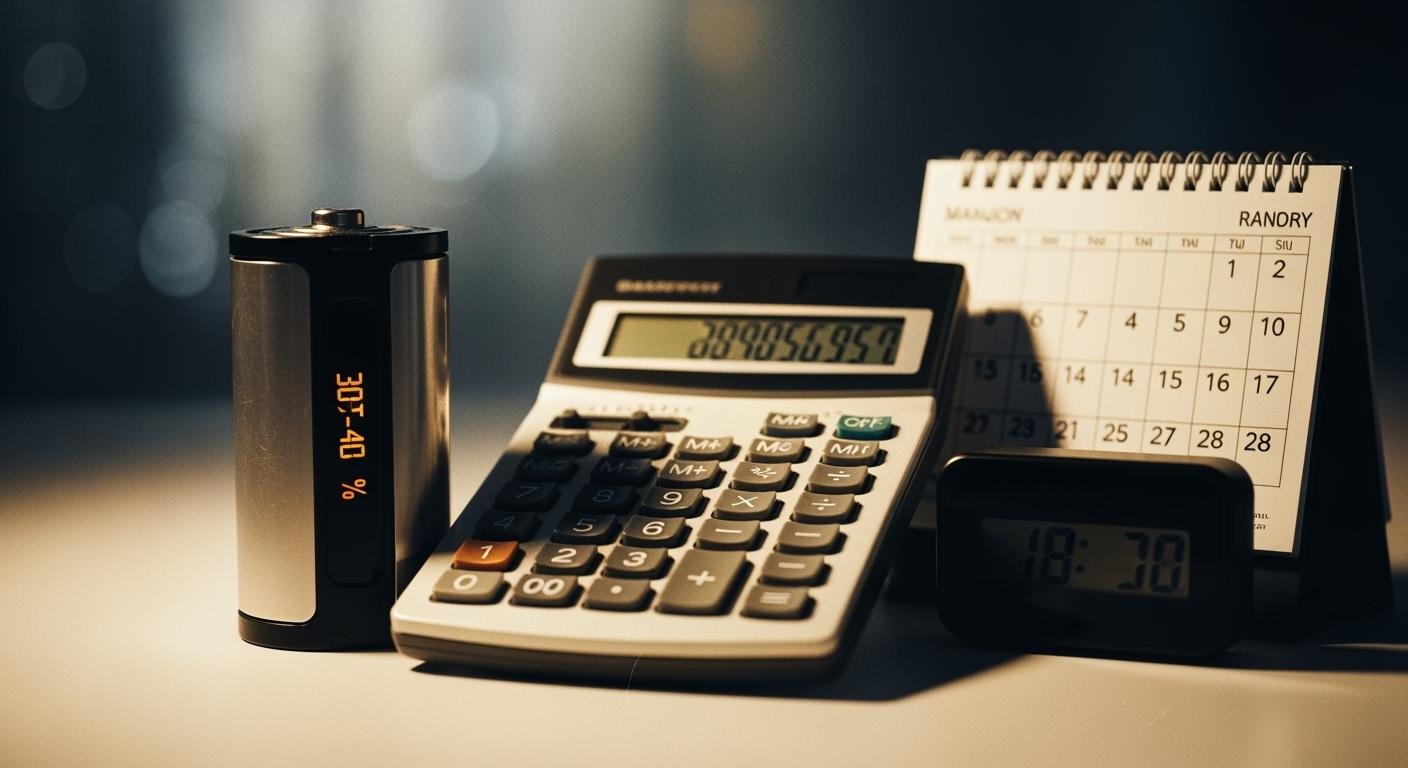
The typical lifespan of battery packs is about two to three years. Your power bank can handle 300 to 500 usage cycles before its battery health declines. If you charge your power bank daily, its average lifespan might drop to just one or two years. You can think about a battery pack’s lifespan in two ways:
- Its long-term health in years.
- Its short-term performance, or how many charges the battery gives.
Your usage habits and how you care for the device ultimately determine its final battery life and lifespan.
How Long Does a Power Bank Last?
You may wonder, “how long does a power bank last?” The answer depends on several key elements. A power bank’s overall health is not just about the years it sits on your desk. It involves its charge cycles, capacity, internal quality, and the environment you use it in. Understanding these factors helps you get the most out of your device and predict its power bank lifespan.
Lifespan in Years vs. Charge Cycles
You can measure a power bank lifespan in two primary ways: its age in years and the number of charge cycles it completes. A charge cycle happens every time you use and recharge the battery.
- What is a charge cycle? It is one full discharge and recharge of the battery. For example, using 50% of your power bank today and recharging it, then using another 50% tomorrow and recharging it, equals one full cycle.
- When is a battery “old”? Manufacturers consider a battery to have reached the end of its lifespan when it can no longer hold more than 80% of its original capacity.
- Tiefe der Entleerung (DOD): This term describes how much of the battery’s capacity you use in a cycle. While some batteries are rated for 100% DOD, frequent deep discharges can often shorten the battery’s longevity.
Most power banks are designed for 300-500 charge cycles. If you use and recharge your power bank daily, you could reach this limit in about a year or two.
The Role of Capacity (mAh)
The capacity of a power bank, measured in milliamp-hours (mAh), tells you how much energy it can store. A 20,000 mAh battery pack holds more energy than a 10,000 mAh one. However, the advertised capacity is not what you get in real-world usage.
Anmerkung: Energy is always lost during charging. This happens for two main reasons: voltage conversion and circuit efficiency. Your power bank’s internal battery operates at a lower voltage (e.g., 3.7V) and must convert it to 5V to charge your phone. This process is not 100% efficient.
A good quality power bank has an efficiency of 80-90%. This means 10-20% of the energy is lost as heat.
| Advertised Capacity | Internal Energy (at 3.7V) | Theoretical Output (at 5V) | Real-World Output (~85% Efficiency) |
|---|---|---|---|
| 10,000 mAh | 37 Wh | 7,400 mAh | ~6,290 mAh |
| 20,000 mAh | 74 Wh | 14,800 mAh | ~12,580 mAh |
This loss is normal and explains why a 10,000 mAh power bank might only charge your 3,000 mAh phone twice, not three times. Over time, this real-world capacity will also decrease as the battery ages.
Impact of Build Quality
The quality of the internal components is one of the most critical factors that affect how long power banks last. A cheap, unbranded battery pack will not have the same lifespan as a well-made one.
The “brain” of your power bank is the Batterie-Management-System (BMS). This tiny circuit board is vital for safety and durability. A good BMS:
- Protects the battery from overcharging and over-discharging.
- Monitors the temperature to prevent overheating.
- Balances the voltage across battery cells to ensure they degrade evenly.
Without a quality BMS, the battery is vulnerable to damage that can shorten its lifespan or even make it unsafe. The quality of the lithium-ion cells themselves—the anode, cathode, and electrolyte—also plays a huge role. Higher-grade materials degrade slower, giving you a more reliable device for longer. This is a key reason why some brands offer a longer battery life.
Environmental Factors
Where you use and store your portable charger also impacts how long does a portable charger last. Extreme conditions can quickly degrade the battery’s health. These are two major factors that affect how long power banks last.
☀️ Temperatur: Lithium-ion batteries hate extreme heat.
- Optimal Range: Use and store your battery between 15°C and 35°C (59°F to 95°F).
- Danger Zone: Temperatures above 50°C (122°F) cause the battery to degrade much faster. Never leave your power bank in a hot car, as this can permanently reduce its capacity and increase safety risks.
💧 Moisture: Water and electronics do not mix. High humidity or direct exposure to moisture can ruin your power bank.
- Corrosion: Moisture can rust internal components and damage the printed circuit board (PCB), leading to malfunctions.
- Short Circuits: Water can create unintended electrical paths, causing short circuits, overheating, and even a fire hazard.
- Chemical Damage: Moisture can react with the battery’s internal chemistry, causing swelling, leakage, and a rapid loss of capacity.
So, how long does a portable charger last? It depends on your care. Keeping your device in a cool, dry place is essential for a long power bank lifespan.
Calculating Your Battery Pack’s Runtime
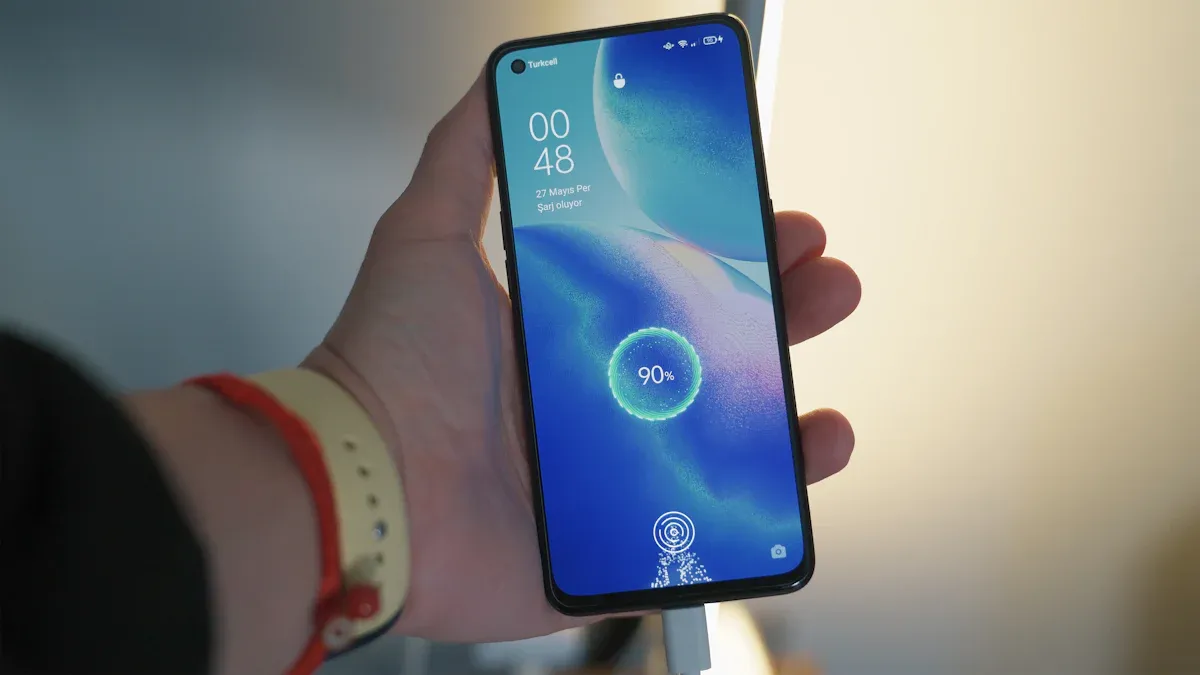
While lifespan tells you how many years your battery pack will last, runtime tells you how long it can power your devices on a single charge. You can estimate this with a simple formula. This helps you know exactly what to expect from your power bank when you are on the go.
Understanding the Runtime Formula
You can calculate the theoretical runtime of your power bank with a basic formula. This calculation gives you a starting point for understanding its performance.
The Basic Formula:
Runtime (in hours) = Battery Capacity (in mAh) / Device's Current Draw (in mA)
However, this formula is not perfect. Energy is always lost when you transfer it from the power bank to your device. This process is called “charging loss.” Much like an electric car does not store all the energy it pulls from the grid, your phone does not receive 100% of the battery pack’s power. A quality battery typically has an energy efficiency of 80-90%, meaning 10-20% of the energy is lost as heat during the transfer.
Finding Your Device’s Current Draw
To use the formula, you need to find your device’s current draw in milliamps (mA). This number tells you how much power your device consumes. You can usually find this information in a few places:
- On the original charger: Look for the “Output” text on the charging brick that came with your device.
- In the user manual: The technical specifications section often lists the input current.
- Online: A quick search for your device’s model name plus “charging specs” will often give you the answer.
A Practical Calculation Example
Let’s put the formula into practice. Imagine you have a 10,000 mAh power bank and want to charge a device that draws 1,000 mA.
Theoretical Runtime:
10,000 mAh / 1,000 mA = 10 hoursTheoretically, the battery would power your device for 10 hours.Real-World Runtime (with 85% efficiency):
10,000 mAh * 0.85 = 8,500 mAh (Usable Capacity)8,500 mAh / 1,000 mA = 8.5 hoursAfter accounting for energy loss, you can expect about 8.5 hours of runtime.
Pro Tip for More Accuracy 💡 For an even more precise calculation, especially when voltages differ, you can use Watt-hours (Wh). The formula is:
Runtime = (Battery Voltage * Battery Capacity in Ah) / Device Power in Watts
How to Maximize Battery Life
You can take simple steps to protect your battery pack and get the most out of it. Proper care is the key to maximizing battery pack lifespan. Following these tips will help you extend the lifespan of a portable charger and keep it running efficiently for years.
Follow the 20-80% Rule
You can significantly improve your battery life by changing how you charge your device. Instead of charging your power bank to 100% and letting it drop to 0%, try to keep the battery level between 20% and 80%. This practice reduces stress on the battery’s internal components.
- Why does this work? Keeping a battery at a very high charge (like 100%) creates high internal voltage, which stresses its parts.
- What about low charge? Leaving a battery completely empty can cause harmful chemical reactions. These reactions can lead to a rapid voltage drop and break down the battery’s chemical components, causing irreversible capacity loss.
Following this rule helps you avoid the most stressful states for your battery. Limiting the charge range can greatly improve its longevity and give you more charge cycles over its lifespan.
Store It in a Cool, Dry Place
Where you store your power bank matters just as much as how you use it. Extreme temperatures and moisture are two of the biggest enemies of a healthy battery. Always store your device in a cool, dry environment.
Long-Term Storage Tip If you plan to store your battery pack for several months, do not leave it fully charged or completely empty. Manufacturers recommend storing it with a 40% to 60% charge. This state of charge minimizes stress and degradation over time.
| Storage SOC | Primary Benefit | Am besten für |
|---|---|---|
| 40% – 60% | Maximizes lifespan, minimizes degradation | Long-term storage (months), seasonal use |
Leaving your device in a hot car or a damp basement can permanently damage the battery and shorten its lifespan.
Use Quality Charging Accessories
The charger and cable you use to recharge your battery pack play a vital role in its health. Always use high-quality, certified accessories from reputable brands. Cheap, unbranded chargers can be dangerous.
A certified cable, like one with MFi (Made for iPhone) certification, contains a special chip. This chip communicates with your device and protects it from voltage spikes. A low-quality cable might mimic this chip but offers no real protection, leaving your device’s internal circuits vulnerable to damage. Using a power adapter with the wrong voltage can also cause serious problems.
| Power Supply Amperage | Result |
|---|---|
| Less than needed | The device may charge very slowly or the power supply could overheat. |
| More than needed | The device will only draw the current it needs, so this is generally safe. |
| Incorrect Voltage | Can cause overheating, component failure, and permanent damage. |
Using the right accessories is a simple way to protect your investment and ensure a long battery life.
Avoid Pass-Through Charging
Pass-through charging lets you charge your device while the power bank itself is recharging. While convenient, this feature generates a lot of extra heat. Heat is the number one enemy of a lithium-ion battery.
The process of charging and discharging at the same time creates stress in a few ways:
- Increased Heat: The chemical reactions inside the battery generate heat during both charging and discharging. Doing both at once doubles the heat.
- Lithium Plating: Fast or simultaneous charging can cause lithium ions to build up on the battery’s surface instead of moving into place. This “plating” permanently reduces capacity.
Some premium brands like Belkin and Mophie design their power banks to handle pass-through charging more safely. However, if your device does not explicitly support it, it is best to avoid this practice to preserve your battery’s long-term health.
Signs You Need a New Battery Pack
Even with the best care, your power bank will eventually wear out. Knowing the warning signs helps you replace it before it fails completely or becomes a safety risk. You should watch for a few key indicators that signal the end of your battery’s life.
Diminished Capacity
The most obvious sign of a failing battery is that it no longer holds a good charge. You might notice your 10,000 mAh power bank can only charge your phone once instead of twice. Experts generally recommend replacing a battery when its maximum capacity drops to 80% of its original level. While some high-end batteries, like those in electric cars, are warrantied to 70%, the 80% rule is a good standard for consumer electronics.
You can use special tools to monitor battery health and get an exact reading. Professional tools like a Computerized Battery Analyzer (CBA) can test capacity, but for most users, simply noticing a significant drop in performance is enough to know the battery health is declining.
Extremely Slow Recharging
If your power bank takes much longer to recharge than it used to, its internal components may be failing. For example, a battery that once took ninety minutes to charge might now take over three hours. Before you blame the battery, you should test your charging equipment.
Troubleshooting Tip 💡 Try using a different charging cable and power adapter that you know work well. A frayed cable or an old, low-wattage charger can slow things down. If the charging speed is still extremely slow with new accessories, the battery itself is likely the problem.
Physical Swelling or Damage
A swollen battery is a critical warning sign that you must address immediately. Swelling occurs when the electrolyte inside the battery breaks down and releases flammable gas. This process can be accelerated by overcharging, physical damage, or simply old age.
If you notice your power bank’s case is bulging, cracked, or warped, you must stop using it right away.
⚠️ Safety First: Handling a Swollen Battery
- Do not charge it. Charging a swollen battery greatly increases the risk of fire.
- Move it to a safe place. Place it in a fireproof container (like a metal bucket with sand) and move it away from flammable materials.
- Dispose of it properly. Do not throw it in the trash. Take it to a certified e-waste collection site or a hazardous waste facility for safe disposal.
A swollen battery is unstable and poses a serious fire hazard. Your safety is more important than trying to get one last charge out of it.
Your power bank has a typical lifespan of two to four years, but your habits determine its final longevity. You can calculate its single-charge runtime and extend the lifespan of a portable charger by following proper care tips. Most importantly, you must watch for signs of failure.
⚠️ Sicherheitshinweis: A swollen or damaged battery is a serious risk. Consumer safety reports confirm that faulty batteries can overheat and cause dangerous fires. Always prioritize safety and dispose of a failing power bank properly.
FAQ
How many times can I charge my phone with a 10,000 mAh power bank?
This depends on your phone’s battery size. A 10,000 mAh power bank can typically charge a modern smartphone about 1.5 to 2 times. Remember, energy loss during transfer means you will not get the full advertised capacity.
Do portable chargers lose their charge when not in use?
Yes, do portable chargers lose their charge over time through a process called self-discharge. A quality power bank might lose only 1-2% of its charge per month. You can slow this process by storing it in a cool place.
Is it bad to leave my power bank charging overnight?
Most modern power banks have safety features to prevent overcharging. However, leaving it plugged in for long periods can still generate heat and stress the battery. It is best to unplug your device once it is fully charged.
How long does a portable charger last if I use it every day?
Daily use affects how long does a portable charger last. You can expect it to last one to two years. This happens because you will reach the battery’s 300-500 charge cycle limit much faster than with occasional use.
Why is my new power bank not giving the full advertised capacity?
This is normal and expected. Energy is lost as heat during the charging process due to voltage conversion. A good power bank is about 85% efficient, so a 10,000 mAh unit delivers around 8,500 mAh in practice.
 EN
EN ES
ES FR
FR DE
DE RU
RU ZH
ZH