

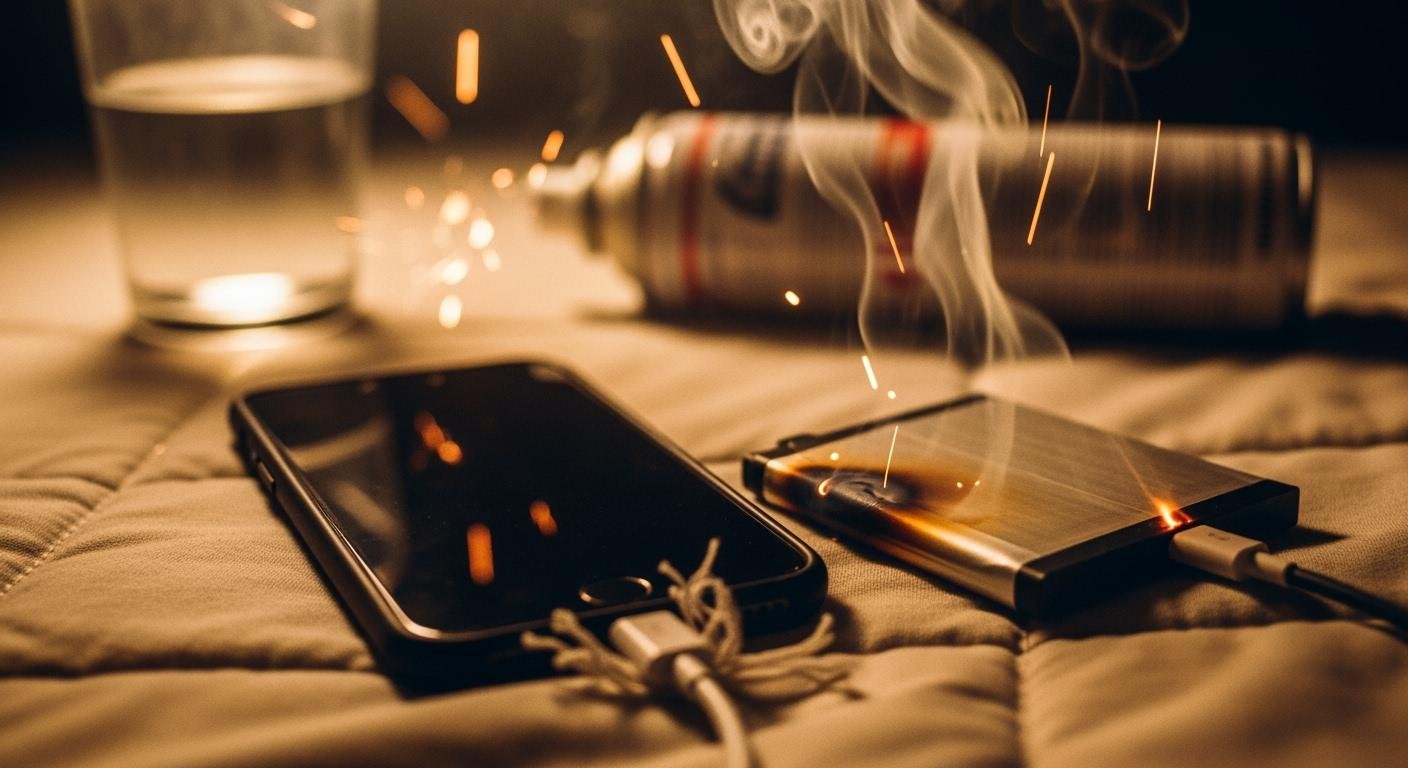
You should never charge your devices on your bed, near a doorway, or inside a hot car. Understanding where not to charge a lithium battery is the first step toward safety. A mistake with your battery carries a serious fire risk. The statistics from New York City alone highlight the danger.
| Umfang | Fires | Deaths | Injuries |
|---|---|---|---|
| NYC E-bikes (2023) | 267 | 18 | 150 |
These numbers show why proper charging habits are so important.
Soft Surfaces and Flammable Clutter

You might think charging your phone or laptop on your bed or sofa is harmless. However, this common habit presents a significant fire risk. Soft surfaces like bedding, pillows, and couch cushions are excellent insulators. While that’s great for keeping you warm, it’s dangerous for electronics. These materials trap the heat that lithium-ion batteries naturally generate during charging, blocking essential airflow.
The Danger: Trapped Heat and Fire Risk
When a charging battery cannot dissipate heat, its internal temperature rises. This creates a dangerous feedback loop where the heat accelerates the chemical reaction, generating even more heat. This process, known as thermisches Durchgehen, can cause the battery to fail catastrophically, leading to a fire or explosion. Fire officials have confirmed that devices charging on soft furniture are a known cause of house fires.
The danger is magnified because these surfaces are also highly flammable. A hot, malfunctioning lithium battery can easily ignite the materials around it. Everyday fabrics have lower ignition points than you might think.

Piling flammable clutter like books, papers, or clothing near a charging device adds more fuel, increasing the fire dangers.
The Safe Alternative: A Clear, Hard Surface
You must charge your devices on a hard, non-flammable surface where air can circulate freely. Good options include a desk, a kitchen counter, or a tile floor. This simple practice allows heat to escape, dramatically reducing the risk of overheating.
Safety Tip: Always create a safe charging station. Choose a hard, flat surface with good ventilation. Keep the area completely clear of flammable items like paper, blankets, and aerosol cans.
Following this one rule helps ensure a charging device remains a convenience, not the cause of a devastating fire.
Near Doors and Escape Routes
You might charge your e-bike or scooter in the hallway for convenience. This common practice, however, creates a life-threatening hazard. A lithium-ion battery fire can escalate from smoke to a full explosion in as little as 15 seconds. When a device is charging near a door or primary escape route, it can quickly turn your only way out into a wall of flames and toxic smoke. This elevates the fire dangers from a manageable incident to a potential catastrophe.
The Risk: Blocking Exits and Battery Fire Safety
A fire blocking an exit can trap you inside a burning building. Fire departments consistently warn that this is a critical mistake in battery fire safety. In one tragic Brooklyn incident, a man died after an e-bike battery exploded and blocked his apartment door, preventing his escape. This highlights the severe risk of charging devices in hallways or near entryways.
FDNY Chief Fire Marshal Dan Flynn commented on the incident, stating, “Do not put these devices between you and the front door. You have to have a plan. Make sure you can get out.”
This advice is crucial. A malfunctioning battery not only creates a physical barrier of fire but also releases poisonous gases like hydrogen fluoride, making any escape attempt even more perilous.
The Safe Alternative: Open, Central Locations
Your personal safety depends on maintaining a clear path out of your home at all times. You should always choose a charging location that is far away from any doors, hallways, or windows you might need in an emergency.
Consider these safer charging spots:
- In the center of a garage on a concrete floor.
- On a tile floor in a kitchen or bathroom, away from the door.
- In the middle of a living room, far from furniture and exits.
Placing your device in an open, central area ensures that if a fire does occur, it will not block your escape route.
Extreme Temperatures and Direct Sun

You must protect your lithium-ion batteries from extreme temperatures. Leaving a device to charge in direct sunlight, inside a hot car, or next to a radiator is a serious mistake. Heat acts as an accelerator for the chemical reactions inside a lithium battery. This process can cause internal layers to break down, release flammable gases, and lead to a dangerous thermal runaway event. A battery showing signs of heat damage, such as swelling or a strange smell, presents a significant fire risk.
The Danger: Heat, Cold, and Battery Damage
Extreme heat is not the only danger. You should also never charge a device when it is freezing cold. Charging lithium-ion batteries below 32°F (0°C) causes permanent and irreversible damage to internal components. This damage might not be visible immediately. However, it creates an increased fire risk every time you charge the battery in the future. Each cold-weather charge weakens the battery, making a future failure more likely. This hidden damage turns a seemingly normal charge into a major risk.
The Safe Alternative: Room Temperature Safety
Your best practice for battery safety is to always charge devices at a stable room temperature. The ideal range for charging is between 50°F and 86°F (10°C to 30°C). Consumer chargers do not adjust for temperature, so it is your responsibility to create a safe environment.
Temperature Safety Checklist 🌡️
- Never leave a charging device in a hot car or in direct sunlight.
- Keep charging devices away from heat sources like vents, radiators, or ovens.
- If your device has been in a cold car or outside, bring it inside and let it warm to room temperature for at least 30 minutes before you plug it in.
- When possible, park vehicles with large batteries (like e-bikes or cars) in a garage or shaded area to protect them from extreme sun and heat.
Following these simple rules helps prevent temperature-related damage and a potential fire.
Uncertified Chargers and Lithium Battery Safety
You might be tempted to buy a cheap, generic charger or cable. The low price seems like a great deal. However, the equipment you use is just as important as where you charge. Using uncertified or mismatched chargers is a major gamble with your safety and your devices.
The Danger: Mismatched and Cheap Chargers
Cheap, counterfeit chargers are not built to meet safety standards. They often lack proper insulation, which creates a risk of electric shock and fire. These chargers can also deliver the wrong amount of power to your device.
- Höhere Spannung: A charger with too much voltage can damage the sensitive electronic parts inside your device.
- Inconsistent Power: Cheap cables often have thin wires that cannot regulate power correctly. This can strain your device’s battery, causing it to overheat and wear out faster.
This damage isn’t always obvious. An incorrect charger can slowly degrade your lithium-ion batteries over time, increasing the chance of a sudden failure or fire. A faulty charger can even corrupt your data during a transfer or backup.
The Safe Alternative: Using Certified Equipment
You must always use the charger that came with your device or a certified replacement. Look for official certification marks that prove the product has passed strict safety tests.
Know Your Marks 🛡️
Certified chargers contain more high-quality components, so they often feel heavier than fakes. You can also check for authenticity online. For example, Apple has a public database where you can verify MFi (Made for iPhone/iPad) certified accessories. Choosing certified equipment is a critical step for good lithium battery safety. It protects your lithium battery from damage and reduces the risk of a dangerous fire.
You can protect your home and family by remembering these simple rules for lithium battery safety. Your charging habits make a significant difference. Never charge your devices in these dangerous locations:
- On your bed, sofa, or other soft surfaces.
- Near a doorway or your only escape route.
- In direct sunlight or a hot car.
- Inside a cluttered drawer or cabinet.
For your safety, always charge on a hard, flat surface, in a cool and open space, and away from your escape path.
FAQ
How do I know if my battery is damaged?
You should look for physical signs of damage. A damaged battery might be swollen, dented, or punctured. You may also notice a strange smell or excessive heat during charging. Stop using a damaged battery immediately.
What should I do if my battery gets wet?
You must not charge a wet battery. Water can damage the internal parts and create a short circuit. Let the device dry completely for several days. If you have any doubts, take it to a professional for inspection.
Is it safe to charge my device overnight?
Modern devices have systems to prevent overcharging. However, you should still follow safety rules. Always charge on a hard, clear surface. Never charge on your bed. This reduces the fire risk if something goes wrong with the lithium-ion batteries.
Can I use any USB-C cable for my devices?
You should use certified cables. A cheap, uncertified cable might not handle the power correctly. This can damage your device or cause overheating. Always choose cables from trusted brands that show certification marks like UL or CE.
 EN
EN ES
ES FR
FR DE
DE RU
RU ZH
ZH