

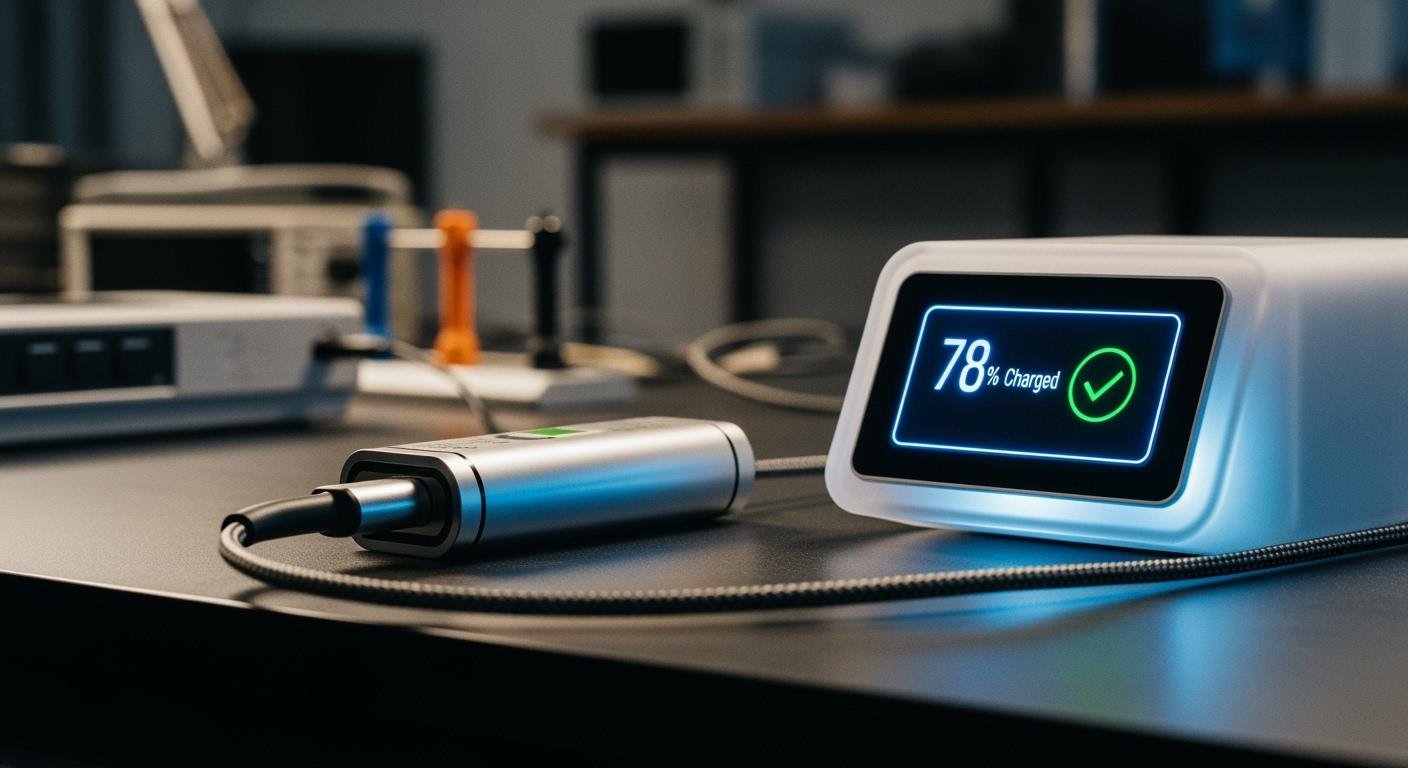
You must use a dedicated charger to safely charge a lithium battery. This charger needs to match your lithium battery’s exact chemistry and voltage. This is the only correct method for lithium battery charging. Your safety depends on proper charging.
WARNING: Never use a lead-acid charger for lithium batteries. Using the wrong charger, like a lead-acid charger, presents a serious risk. It is a direct cause of battery failure, fire, and explosion. This is a critical safety rule for all lithium-ion and other lithium battery types. Avoid this fire risk by using the correct equipment for charging your lithium battery.
Choosing the Right Charger
Selecting the correct charger is the most important step you will take to safely charge a lithium battery. You cannot use just any charger. This simple three-step guide helps you pick the perfect charger to protect your investment and ensure safety.
Step 1: Match the Battery Chemistry
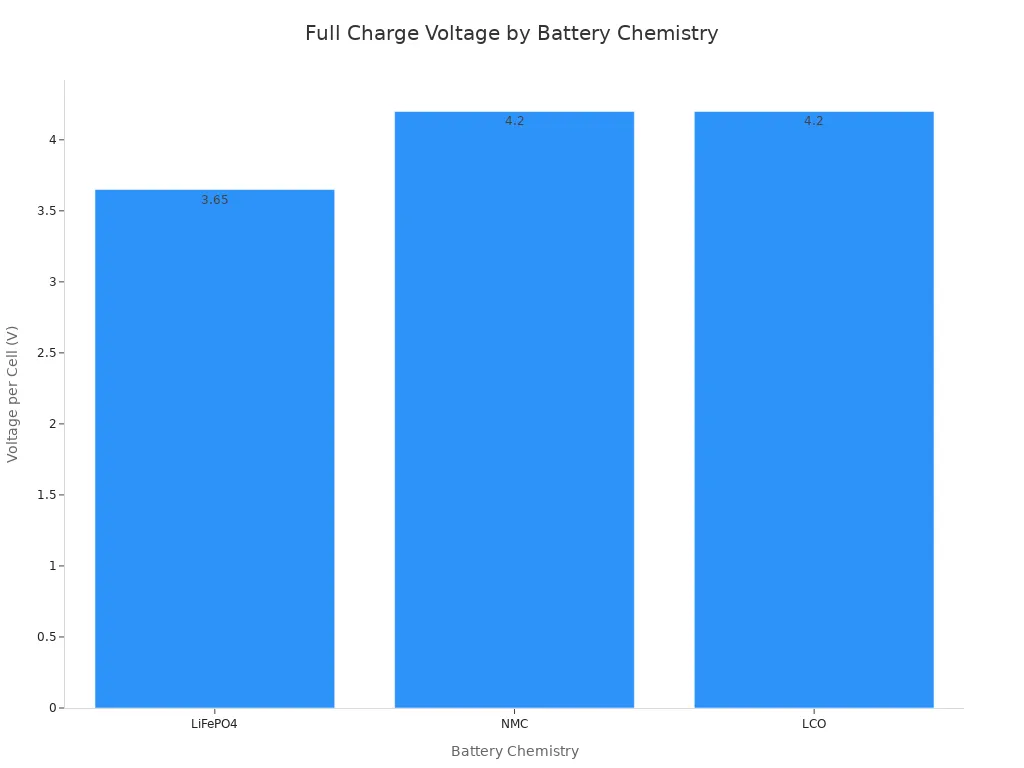
Your first task is to identify your battery’s specific lithium chemistry. Different lithium batteries have unique voltage requirements. For example, a Lithium Iron Phosphate (LiFePO4) battery has different charging needs than a Lithium Nickel Manganese Cobalt Oxide (NMC) battery. Using a charger designed for the wrong chemistry will damage your battery and create a serious safety hazard.
Always check the label on your battery or its manual. The chemistry type should be clearly stated. Your charger must explicitly support that chemistry.
Note: Each lithium chemistry has a specific full charge voltage per cell. A charger must match this voltage precisely to avoid damage.
| Characteristic | LiFePO4 | NMC | LCO |
|---|---|---|---|
| Full Charge Voltage | 3.65V per cell | 4.2V per cell | 4.2V per cell |
| Overcharge Sensitivity | More tolerant | Requires accurate BMS | Very sensitive |
| Charging Method | CC-CV | Typically faster | Lower current recommended |
Step 2: Verify Voltage and Amperage
After matching the chemistry, you must verify the charger’s voltage and amperage (current) output.
Voltage: The charger’s output voltage must match the battery pack’s full charge voltage. A 12V lithium battery does not charge at 12 volts. It requires a higher voltage to push energy into the cells. For LiFePO4 lithium batteries, the required charging voltages are very specific.
| Nominal Battery Voltage | Required Charger Output Voltage (LiFePO4) |
|---|---|
| 12V | 14.2V – 14.6V |
| 24V | 28.4V – 29.2V |
| 48V | 56.8V – 58.4V |
Amperage (Current): The charger’s amperage rating determines how fast the battery charges. This is often expressed as a “C-rate.” A good rule for longevity is to select a charger with a current output between 0.2C and 0.5C.
- To find the C-rate: Divide the charger’s current (in amps) by the battery’s capacity (in amp-hours).
- Example: For a 100Ah battery, a 0.2C charge rate is 20 amps (100Ah x 0.2 = 20A). A 0.5C charge rate is 50 amps (100Ah x 0.5 = 50A).
Charging at a lower current (closer to 0.2C) is gentler on the battery and maximizes its lifespan. A higher current (closer to 0.5C) provides faster charging but generates more heat, which can reduce the battery’s long-term cycle life. Exceeding a 1.0C charge rate significantly shortens the life of lithium batteries.

Step 3: Ensure a CC/CV Profile with Auto Cut-off
Finally, your charger must use a specific charging algorithm called Constant Current / Constant Voltage (CC/CV). This is the standard, safe method for charging lithium batteries. This process works in two main stages:
- Constant Current (CC): The charger supplies a steady, maximum current. The battery’s voltage rises during this stage.
- Constant Voltage (CV): When the battery reaches its peak voltage (e.g., 14.6V for a 12V LiFePO4), the charger holds the voltage constant. The charging current then gradually decreases as the battery fills up.
Crucially, the charger must also have an automatic cut-off feature. Once the charging current drops to a low level (around 2-5% of the battery’s Ah rating), a proper lithium charger completely stops the charging process. This full stop is essential for overcharge protection. It prevents the charger from pushing a continuous current into a full battery, which is a primary cause of cell damage and thermal runaway.
Look for chargers that are certified to safety standards like IEC 62368-1 or UL 1310. These certifications ensure the charger has been tested for proper CC/CV operation and safety protection features. This is how you safely charge a lithium battery.
The Safe Lithium Battery Charging Process

Owning the right equipment is only half the battle. You must also follow a strict process to safely charge a lithium battery. Following these steps for every charging cycle ensures maximum safety and battery longevity.
Pre-Charging Equipment Inspection
Before you connect anything, you must inspect your gear. A quick visual check prevents major problems. Your safety depends on this simple habit.
Safety Check: Look for any signs of damage on your battery and charger.
- Battery: Check for cracks, dents, or any swelling of the battery case.
- Charger & Cables: Inspect for frayed wires, loose connections, or corrosion on the terminals. Ensure the charger’s indicator lights turn on correctly.
If you see any damage, do not begin charging. Using damaged equipment is a serious fire risk for all lithium batteries.
Proper Charging and Connection Steps
You must connect your equipment in the correct order to prevent electrical arcs. This procedure is critical for lithium battery charging.
- Ensure the charger is unplugged from the wall outlet.
- Connect the charger’s clamps or plug to the lithium battery terminals.
- Plug the charger into a working wall outlet. The charger should indicate that charging has begun.
This sequence provides the best protection for your lithium battery’s electronics.
Creating a Safe Charging Environment
Where you charge your lithium batteries is just as important as how you charge them. Always choose a safe location.
Place your battery and charger on a non-flammable surface like concrete. The area should be dry and well-ventilated. Keep flammable materials like paper or gasoline far away from the charging station. The ideal ambient temperature for charging a lithium battery is between 0°C and 45°C (32°F to 113°F). Charging a lithium battery outside this range can cause permanent damage.
Disconnecting After a Full Charge
A proper lithium charger automatically stops the charging current when the battery is full. However, you should not leave the battery connected indefinitely. Once the charger indicates the charging cycle is complete, disconnect the equipment. Unplug the charger from the wall first, then disconnect it from the battery. This practice prevents any potential for a trickle current and helps maintain the long-term health of your lithium battery.
Critical Dangers and Safety Risks

Understanding the “why” behind the rules is key to your safety. Using the wrong equipment or process creates severe safety risks. These dangers are not theoretical; they are the direct consequences of ignoring proper charging protocols. Knowing these critical safety risks will help you avoid a catastrophic failure.
The Dangers of Lead-Acid Chargers
You must never use a lead-acid charger to charge lithium batteries. A lead-acid charger follows a completely different charging algorithm that is destructive to lithium chemistry. This mismatch is a primary cause of battery damage, fire, and explosion. The consequences of using a lead-acid charger are severe.
A lead-acid charger cannot communicate with a lithium battery’s Battery Management System (BMS). This forces the battery into dangerous conditions.
- Heat Accumulation: A lead-acid charger does not properly reduce the current as a lithium battery fills. This causes the battery’s temperature to rise, which can lead to thermal runaway and fire.
- Lithium Dendrite Growth: The charger’s inability to detect a full charge results in overcharging. This forces lithium ions to form sharp, needle-like crystals called dendrites. These dendrites can puncture the battery’s internal separator, causing a short circuit and a potential explosion.
- Voltage Profile Mismatch: Lead-acid chargers use voltage profiles with equalization or float stages. These modes confuse a lithium battery’s BMS, preventing it from charging correctly and shortening its life. The continuous voltage stress from a lead-acid charger causes irreversible damage.
The High Risk of Thermal Runaway
The most serious danger associated with improper charging is thermal runaway. This is a chain reaction where a battery’s temperature increases uncontrollably. The runaway process generates its own heat, making it impossible to stop once it starts. This event almost always ends in a violent fire or explosion. The risk of thermal runaway is why correct charging is so important.
You should learn to recognize the early warning signs of a battery entering thermal runaway. Immediate action could prevent a disaster.
- Strange Smells or Hissing Sounds: The battery may release flammable gases like CO, CO2, and H2. You might hear a shrill acoustic signal as safety vents open under pressure.
- Swelling or Deforming: The battery case may bulge or change shape. This is caused by internal heat and gas buildup creating strain.
- Rapid Temperature Increase: The battery will feel unusually hot to the touch.
Once a thermal runaway event begins, the temperatures become extreme. Different lithium chemistries have different thermal thresholds.
| Battery Type | Thermal Runaway Threshold |
|---|---|
| LiFePO4 | Approximately 270°C (518°F) |
| NMC | Around 210°C (410°F) |
A lithium battery fire can reach over 1,000°C (1,832°F). This intense thermal event creates a self-sustaining fire that is very difficult to extinguish. The consequences of a thermal runaway are catastrophic.
Why Float and Desulfation Modes Damage Cells
Modern lead-acid chargers have special modes that are extremely harmful to lithium batteries. These modes, “float” and “desulfation,” will cause permanent damage.
Float or Trickle Charging: A lead-acid charger may use a float mode to keep a lead-acid battery topped off. Applying this continuous low-current charge to a full lithium battery causes serious damage. It puts constant stress on the cells, leading to the breakdown of the electrolyte and the formation of dendrites. This reduces the battery’s lifespan and compromises its safety. A proper lithium charger offers protection by shutting off completely.
Desulfation Mode: This mode is the most destructive. It uses high-voltage pulses (16V to 20V+) to clean lead-acid plates. These pulses have immediate and devastating consequences for a lithium battery.
- It Destroys the BMS: The high voltage instantly burns out the battery’s electronic protection circuit. Without a functioning BMS, the battery has no defense against overcharging or short circuits.
- It Damages the Cells: The voltage spikes force lithium ions to form dendrites, creating internal short circuits. This damage makes the battery unstable and a ticking time bomb.
How Mismatched Lithium Chargers Cause Failure
Even using a charger designed for lithium can be dangerous if it is a mismatch for your specific battery. Using an NMC charger for a LiFePO4 battery, for example, introduces mismatched charging parameters. This creates a serious safety hazard.
An incorrect charging voltage leads to chronic overcharging. This causes a severe imbalance between the individual cells inside your battery pack. The BMS works to balance these cells, but a mismatched charger overwhelms its ability to do so. This constant stress places the battery at risk. Fast charging from an incorrect charger can also create voltage differences faster than the BMS can correct them. This blind charging process, where the charger cannot respond to the battery’s needs, undermines the entire safety system and leads to premature failure and significant safety risks.
Your safety is the top priority for lithium battery charging. You must follow these non-negotiable rules to charge a lithium battery correctly. This protects your lithium battery.
- Always use a dedicated charger matching your battery’s chemistry and voltage.
- Your charger must have a CC/CV profile and stop all charging when the battery is full.
- Never use a charger with “float” or “desulfation” modes.
- Follow the correct connection steps. Perform all charging in a safe area away from flammable items and exits.
Your lithium battery safety depends completely on using the right equipment and proper charging procedures.
FAQ
Can I charge a lithium battery in freezing temperatures? 🥶
No. You must not charge a lithium battery below 0°C (32°F). This action causes permanent damage and reduces the battery’s capacity. Your battery’s BMS should prevent charging in the cold. Always bring the battery to a warmer location before you attempt to charge it.
Is it safe to leave my battery on the charger overnight?
A proper lithium charger stops when the battery is full. However, you should disconnect it for safety. Leaving a battery connected for long periods is not a best practice. Unplug the charger after the cycle is complete to protect your battery.
What should I do if I drop my battery?
Important: You must inspect the battery carefully for any cracks, dents, or swelling. Do not charge a damaged battery. A damaged battery is a serious fire risk. You should contact the manufacturer or a professional for guidance on the damaged battery.
Can I use a solar panel to charge my lithium battery?
Yes, you can use solar panels. You must use a solar charge controller with a specific lithium charging profile. The controller acts like a smart charger. It regulates the voltage and current from the panels to safely charge your battery.
 EN
EN ES
ES FR
FR DE
DE RU
RU ZH
ZH