

Online searches for battery lifespan often reveal confusing and conflicting data.
This leaves many users wondering which battery lasts longer. No single battery type is universally superior. The ideal battery choice depends heavily on the specific device. This article clarifies which battery chemistry and form factor will likely extend a device’s battery longevity. Understanding this connection is key to maximizing the lifespan of any modern battery.
Lifespan Showdown: Li-Ion vs. Li-Po

When comparing Li-ion vs Li-polymer, users often find conflicting information about which battery lasts longer. The truth is that both are types of lithium-ion battery technology. The terms often describe the battery’s physical form factor. “Li-ion” typically refers to a battery with a rigid metal case (like a cylinder), while a “lithium-polymer battery” uses a flexible pouch. Their core chemistry is very similar, meaning their lifespan is affected by the same factors.
Which Battery Lasts Longer: A Look at Charge Cycles
A charge cycle represents one full discharge and recharge of a battery. Manufacturers often rate battery lifespan in cycles. You might see figures suggesting a lithium-ion battery lasts 500–1000 cycles. However, these numbers vary wildly based on battery quality, usage, and the device itself. For example, a high-quality battery in an electric vehicle is engineered for a very long cycle life, while a battery in a budget gadget may not be.
| Battery Type | Cycle Life (cycles) |
|---|---|
| Li-ion | 500–1000 |
| Li-Polymer | Comparable under similar conditions |
In real-world use, some users report that their lithium polymer batteries show significant capacity loss after just 150 heavy cycles. This highlights that manufacturing quality and usage conditions heavily influence battery performance and longevity.
Degradation and Performance Over Time
All batteries degrade. This means their ability to hold a charge decreases with every cycle. Many manufacturers consider a battery to be at the end of its useful lifespan when its capacity drops to 80% of the original. For many consumer devices, this point is reached after 300-500 full cycles. For instance, Apple designs its standard iPhone models to retain up to 80% of their original capacity after 500 complete charge cycles.
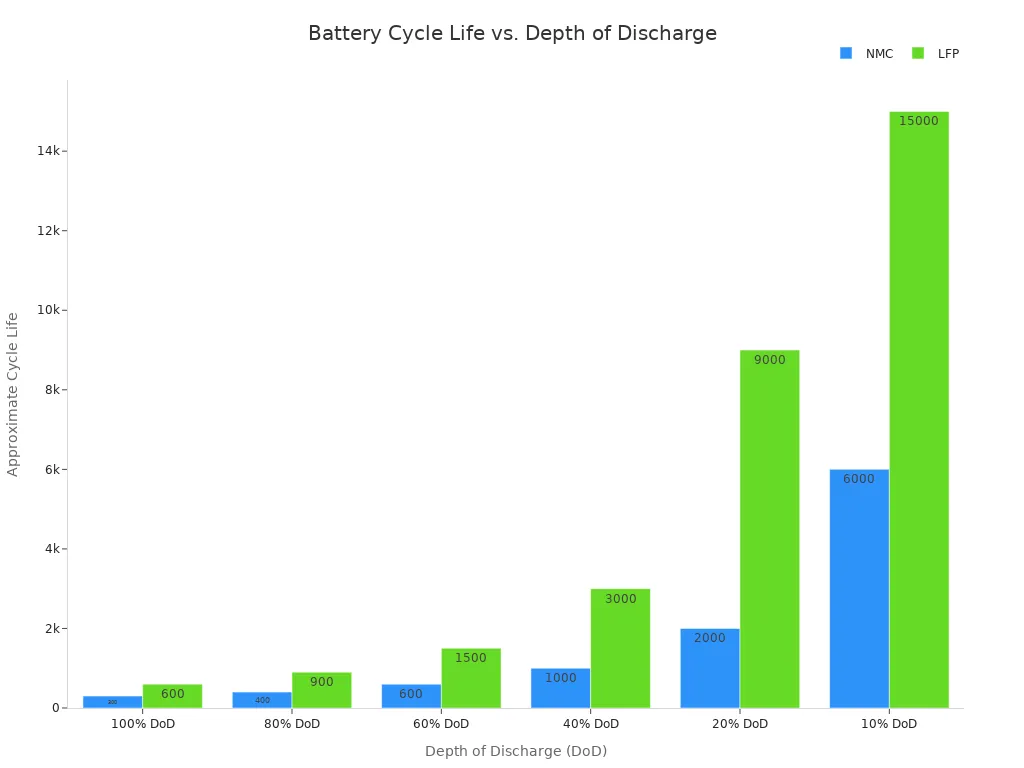
The way you use your battery has the biggest impact on its degradation rate. A key factor is the Depth of Discharge (DoD), which is how much of the battery’s capacity you use before recharging.
Pro Tip: A partial discharge reduces stress on lithium-based batteries. Shallow discharges significantly prolong their cycle life. Keeping your battery charged between 20% and 80% is a simple way to achieve an extended lifespan.
The chart below shows how a smaller DoD dramatically increases the number of available cycles. This is true for both common types of li-ion batteries, though some chemistries handle deep discharges better than others.
Extreme temperatures also accelerate battery degradation. Heat is a major enemy of battery health. A lithium-polymer battery can be slightly more sensitive to high temperatures, which speeds up its chemical breakdown. Storing any modern battery in a cool place is crucial for its longevity.
Self-Discharge Rates When Idle
A battery loses charge even when it is not in use. This process is called self-discharge. Both li-ion batteries and lithium polymer batteries have very low self-discharge rates compared to older battery technologies. After an initial small drop, a healthy lithium-ion battery typically loses only 1-3% of its charge per month when stored at room temperature.
However, the state of charge matters. A fully charged battery will lose its power much faster.
| State of Charge | Self-Discharge at 25°C (77°F) |
|---|---|
| Full Charge | Up to 20% per month |
| 40–60% Charge | Around 4% per month |
For long-term storage, experts recommend keeping the battery at a 40-60% charge level. This simple step minimizes capacity loss and protects overall battery performance, ensuring the battery has a better chance of a long lifespan when you use it again.
Core Differences Beyond Longevity
While longevity is a key concern, the choice between a lithium-ion battery and a lithium-polymer battery often comes down to other critical differences. These factors influence a device’s design, power, and safety. Understanding them reveals why manufacturers select a specific battery technology.
Form Factor: The Flexibility of a Lithium-Polymer Battery
The most significant difference is physical shape. A standard lithium-ion battery is enclosed in a rigid metal case, limiting its design. In contrast, lithium polymer batteries use a flexible pouch. This design offers several advantages:
- It eliminates the heavy metal enclosure, making the battery lighter.
- It achieves 90-95% packaging efficiency, making the most of internal space.
- It allows for ultra-thin, curved, or custom shapes for devices like smartwatches and thin laptops.
This flexibility gives designers incredible freedom. The unique form of a lithium-polymer battery is essential for modern compact electronics.
Energy Density and Power
Energy density refers to how much energy a battery can store for its weight. Both li-ion batteries and lithium polymer batteries offer excellent energy storage. A modern lithium-polymer battery typically provides an energy density between 100 and 265 Wh/kg. While their core chemistry provides similar power, the lighter weight of the lithium-polymer battery often gives it a practical advantage in portable devices where every gram counts. This affects the number of available cycles and overall battery performance.
Safety Profile and Durability
All batteries carry safety risks. A rigid lithium-ion battery is very durable, but if punctured, it can experience thermal runaway. This process creates intense heat and flammable gases. The soft pouch of a lithium-polymer battery makes it more vulnerable to punctures and damage. Swelling is another major concern for this battery type. Gas buildup from chemical reactions causes the battery to inflate, indicating severe degradation and a high risk of fire. Proper handling is crucial for the lifespan of any battery.
Manufacturing Cost and Price
Cost is a major factor for manufacturers. Cylindrical li-ion batteries are generally cheaper to produce in large volumes. The manufacturing process for a lithium-ion battery is highly standardized, which lowers the price. In contrast, lithium polymer batteries are more expensive. Their flexible nature requires a more complex and less automated manufacturing process, increasing the final cost per battery.
Best Battery for Your Device
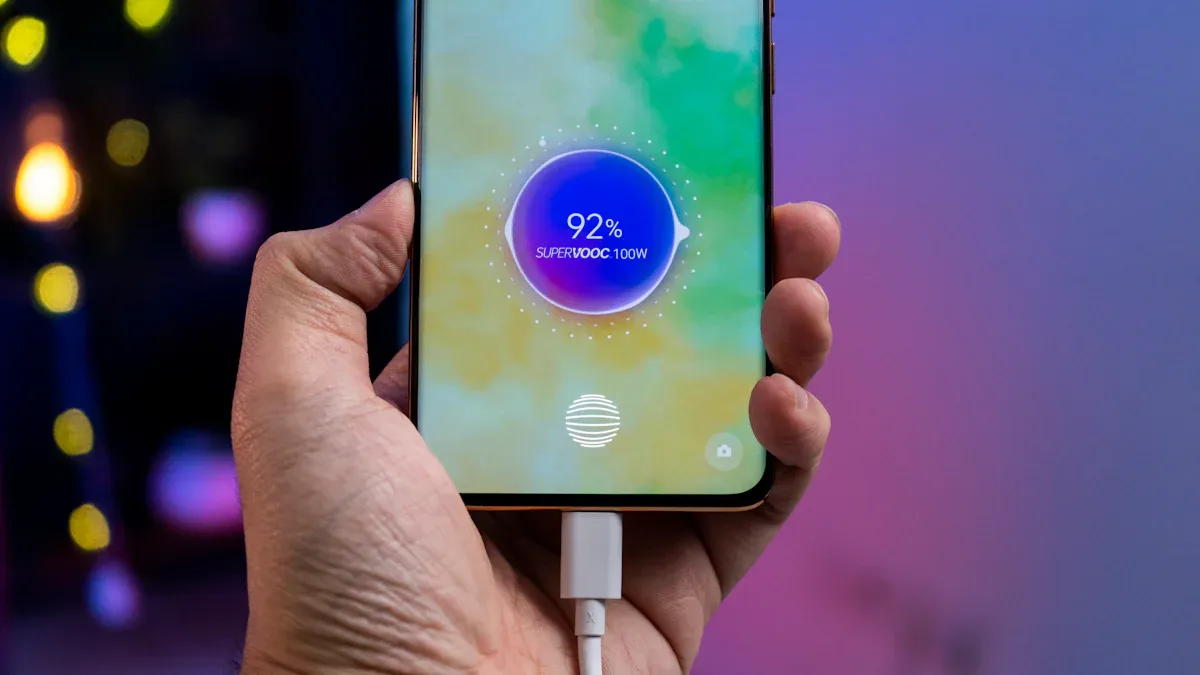
The ideal battery for a device depends on its specific needs for shape, power, and durability. Manufacturers choose a battery technology that balances performance with the physical design of the product. This choice directly impacts the device’s overall lifespan and user experience.
Smartphones & Laptops: The Case for the Lithium Ion Battery
Manufacturers often choose a rigid lithium-ion battery for mainstream smartphones and laptops. This decision comes down to a combination of high energy density, standardized manufacturing, and cost-effectiveness.
Many of these devices use Lithium Cobalt Oxide (LCO) chemistry, a type of lithium-ion battery. LCO offers very high energy density, which is perfect for low-load applications like phones. It allows the battery to provide smaller amounts of power over a long time. This characteristic is essential for a device that needs to run all day.
The lightweight and compact nature of these li-ion batteries is critical. They enable the slim, portable designs that consumers expect from modern gadgets, providing long-lasting power without adding bulk.
The rigid metal case of a standard lithium-ion battery also offers good durability. The table below summarizes why this battery type is a go-to choice for these popular electronics.
| Feature | Lithium-ion Batteries |
|---|---|
| Structure | Rigid metal shell, often cylinders or rectangles |
| Energy Density (Wh/kg) | 150-250 (High, more power for same weight) |
| Cost | Lower manufacturing cost, generally cheaper than lithium polymer |
| Lifespan | Usually last longer, can be charged 500-1,000 times |
| Ideal Applications | Smartphones, laptops, power tools, electric vehicles |
Ultimately, the standardized shapes and lower production cost make the lithium ion battery a reliable and economical choice for high-volume consumer electronics.
EVs & Power Tools: Durability and Power
Electric vehicles (EVs) and power tools require a battery that prioritizes durability, safety, and the ability to deliver immense power quickly. For these demanding jobs, specific types of li-ion batteries are the clear winners.
In the EV world, cylindrical cells like the 21700 are popular. The 21700 cell is larger than older cells, allowing it to store more energy and manage heat better. This design, using advanced lithium-ion chemistry, offers an energy density of up to 300 Wh/kg. Its robust construction ensures a long cycle life, with some chemistries offering up to 5,000 cycles. This extended lifespan reduces the total cost of ownership for an EV owner.
Power tools need a battery that can handle heavy, continuous loads. Special “Li-ion Power Cells” are engineered for this purpose.
- High-Current Discharge: They are built for continuous power delivery, often 20A or more.
- Low Internal Resistance: This feature allows high current flow with minimal temperature rise, improving safety and performance.
- Stable Voltage: The battery maintains stable power even under a heavy load.
These cells are rated by their discharge capability, or “C-rate.” A 1C rating means the battery can discharge its entire capacity in one hour. Power tools require a much higher C-rate. A Li-ion Power Cell might have a 5C rating, while a LiFePO4 battery can reach an incredible 25C. This means it can discharge its full capacity in just a few minutes, providing the intense burst of energy needed to drill through concrete or saw through thick wood. The chart below shows how different chemistries compare in their ability to handle large loads.

The high number of charge cycles and the raw power of these li-ion batteries make them indispensable for heavy-duty applications.
Drones & Wearables: Advantages of Lithium Polymer Batteries
Drones and wearable devices have unique design constraints that make lithium polymer batteries the ideal choice. For these products, a lightweight and flexible form factor is more important than maximum durability or the lowest cost.
The most significant advantage of a lithium-polymer battery is its physical adaptability.
- It uses a flexible pouch instead of a heavy metal case.
- This allows manufacturers to create a battery in thin, curved, or unusual shapes.
- The battery can conform to body movements in a smartwatch, improving comfort.
- This flexibility lets designers use every millimeter of space inside a compact device.
For drones, flight time is everything. The performance of a drone is directly tied to its battery’s power-to-weight ratio. While a lithium-polymer battery may have a slightly lower energy density than a rigid lithium-ion battery, its lighter casing gives it a practical advantage. This is why the lithium-polymer battery dominates the consumer drone market, holding a market share of around 60%. Lighter lithium polymer batteries allow a drone to stay in the air longer and be more agile.
For both drones and wearables, the custom shape and lower weight of lithium polymer batteries are critical. This technology enables the creation of comfortable smartwatches and high-performance drones. The question of which battery lasts longer is secondary to which battery enables the device’s core function, and for these gadgets, the answer is often a lithium-polymer battery. The ability to achieve thousands of cycles is less critical than fitting the power source into a tiny, lightweight product.
The choice between a lithium-ion battery and a lithium-polymer battery depends on the device’s needs. A rigid lithium-ion battery is often selected for its durability, lower cost, and long cycle life. In contrast, a flexible lithium-polymer battery is essential for thin, modern gadgets. Engineers carefully select the right battery chemistry and design to meet specific performance requirements. The question of which battery lasts longer is complex. The best battery is the one engineered for your device.
The ultimate longevity of any battery depends more on proper care than its type. Following best practices for charging and temperature control will have the biggest impact on the battery lifespan, ensuring a longer lifespan for your lithium-ion battery or lithium-polymer battery.
FAQ
Does a modern battery have a “memory effect”?
No, this issue does not affect a modern lithium-ion battery. Older battery types required full discharges to maintain capacity. Users can charge their lithium-based battery at any level without causing harm to the battery.
Can you overcharge a new battery?
Modern devices contain protection circuits. These systems prevent the battery from overcharging. The circuit stops the current once the battery reaches 100%. This safety feature protects the battery from damage, making it safe to leave a device plugged in.
What is the best way to store a battery?
For long-term storage, keep the battery charge between 40% and 60%. Store the battery in a cool, dry place. Storing a fully charged or empty battery for a long time can permanently reduce the battery capacity.
Why does my new device’s battery drain so fast? 🔋
A new battery requires a few charge cycles to reach its full potential. Initial setup processes also consume significant battery power. The battery performance typically improves after a few days as the battery settles and background tasks finish.
 EN
EN ES
ES FR
FR DE
DE RU
RU ZH
ZH